
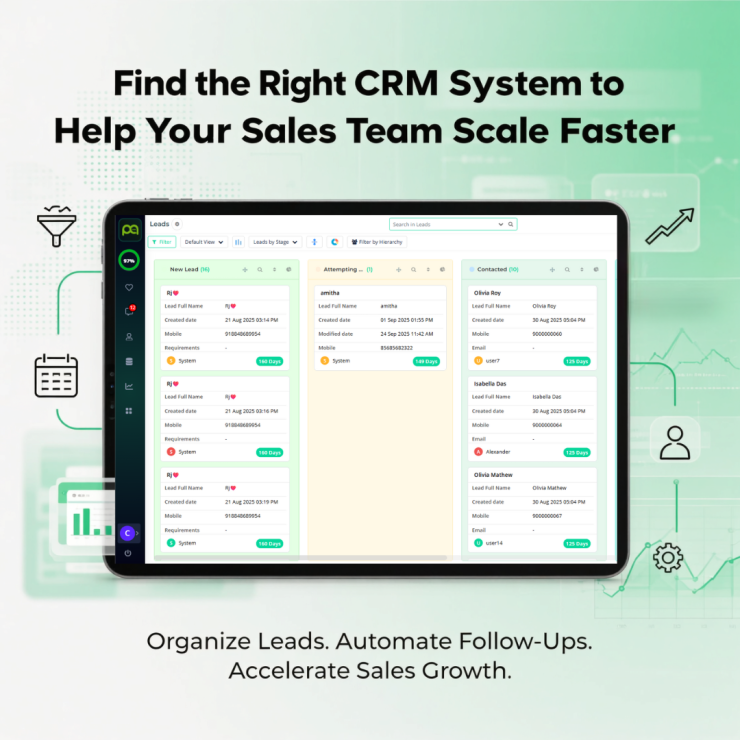
Sales teams today operate in a very different environment than they did even a few years ago. Buyers expect faster responses, personalized conversations, and seamless follow-ups across channels. At the same time, sales managers need visibility into pipelines, forecasts, and performance without relying on spreadsheets or disconnected tools. This is why choosing the best CRM for sales teams has become a strategic decision rather than a software purchase.
A modern CRM is not just a database. It is the operational backbone that connects leads, conversations, deals, and revenue into a single system that sales teams can rely on every day.
Why Do Sales Teams Need a Dedicated CRM System?
Many sales teams start with basic tools such as email inboxes, spreadsheets, or personal contact lists. As lead volume grows, this approach quickly breaks down. Follow-ups are missed, conversations lose context, and managers struggle to understand what is actually happening in the pipeline.
A purpose-built CRM for sales teams solves this by centralizing information and standardizing workflows. Every lead, deal, and interaction is recorded, creating a clear picture of the sales journey from first contact to closed revenue. This is why high-performing organizations consistently invest in reliable sales team CRM software rather than relying on manual processes.
What Makes the Best CRM for Sales Teams?
The best CRM is not defined by the longest feature list. It is defined by how well it supports real sales behavior. A strong system helps representatives stay organized, managers stay informed, and leadership stay confident in forecasts.
At its foundation, a good CRM provides structured sales pipeline management. Deals move through clearly defined stages, allowing teams to track progress and identify bottlenecks early. With built-in deal tracking, sales reps always know which opportunities need attention and which are close to conversion.
Equally important is visibility into future revenue. A capable CRM supports accurate forecasting by analyzing pipeline health, historical performance, and current deal velocity. This turns the system into a practical sales forecasting tool, rather than a static record.
Lead Management That Supports Real Sales Work
Lead handling is where many sales processes fail. Enquiries arrive from multiple sources, but without structure, valuable prospects slip through the cracks. The best CRM for sales teams treats lead management as a continuous process rather than a one-time event.
Effective systems support structured lead-to-deal tracking, allowing teams to see exactly how prospects move through the funnel. Leads can be qualified using scoring rules, ensuring that sales reps focus on the most promising opportunities. Intelligent lead assignment automation ensures enquiries reach the right person quickly, which is critical for conversion.
For teams dealing with high inbound volume, a CRM that supports inbound lead management and automated routing becomes essential. This is where sales lead automation reduces manual effort while improving response time.
Automation That Improves Efficiency Without Losing Control
Automation is one of the biggest advantages of modern sales CRMs, but only when it is applied thoughtfully. The best systems use automation to eliminate repetitive work, not to replace human judgment.
With a well-designed sales automation CRM, routine tasks such as follow-ups, reminders, and activity logging happen automatically. This allows sales reps to focus on conversations rather than administration. Built-in task management ensures nothing is forgotten, while workflow rules keep processes consistent across the team.
When automation is combined with structured workflows, sales teams gain speed without sacrificing accuracy. This is especially valuable for growing teams that need consistency as they scale.
Collaboration and Team Visibility
Sales is rarely an individual effort. Deals often involve multiple touchpoints, handovers, and internal discussions. The best CRM systems are designed for collaboration, not isolation.
A multi-user CRM with role-based access ensures that everyone sees what they need without exposing sensitive information unnecessarily. Shared pipelines allow teams to coordinate efforts, while managers gain a clear view of overall performance through dedicated dashboards.
This level of visibility supports better coaching and accountability. Managers can track activity, understand conversion patterns, and identify where additional support is needed.
Reporting, Analytics, and Performance Tracking
Data is only useful when it leads to insight. The best CRM for sales teams transforms raw activity into meaningful analytics that support decision-making.
Real-time dashboards show pipeline health, deal progress, and revenue trends at a glance. Detailed reports help teams analyze performance over time, understand win-loss patterns, and measure the impact of specific strategies. When paired with clear performance metrics, CRM data becomes a powerful management tool rather than a passive record.
This level of insight is essential for teams that want to grow predictably rather than reactively.
Adapting CRM to Different Sales Models
Not all sales teams operate the same way. Some focus on inside sales, others manage field teams, and many now operate remotely. The best CRM systems are flexible enough to support these different models.
Small teams benefit from simplicity and fast onboarding, while growing organizations need scalable workflows. Enterprise sales teams require deeper reporting and access control, especially in complex B2B environments. A modern CRM should adapt to these needs without forcing teams to change how they sell.
Mobile access and communication integrations also matter. Sales reps increasingly rely on messaging, calls, and email from a single interface. A CRM that supports these channels naturally fits into daily sales activity.
How CRM Helps Sales Teams Perform Better?
A CRM improves sales performance by creating clarity. Reps know who to contact and when. Managers know what is happening in the pipeline. Leadership knows where revenue will come from.
Instead of relying on memory or manual updates, teams work from shared, real-time data. This reduces friction, improves accountability, and creates a consistent experience for prospects. Over time, these improvements compound into higher conversion rates and stronger customer relationships.
Why Picky Assist CRM Is a Strong Choice for Sales Teams?
For businesses looking for a CRM built around real conversations and practical automation, Picky Assist CRM stands out as a strong option. It is designed to help sales teams manage leads, conversations, and follow-ups without unnecessary complexity.
Picky Assist CRM combines structured pipelines with automation that supports daily sales work. It helps teams capture leads, track deals, and manage communication from a centralized system. With built-in collaboration features and clear visibility into performance, it supports both individual productivity and team-level growth.
For sales teams that rely heavily on messaging and fast responses, Picky Assist offers a practical balance between automation and personalization, making it well-suited for modern sales environments.
How to Choose the Best CRM for Your Sales Team?
Choosing the right CRM starts with understanding how your sales team actually works. The best system aligns with your sales process, supports your communication style, and scales with your growth.
Look for clarity rather than complexity. A CRM should make sales work easier, not heavier. When the system fits naturally into daily workflows, adoption follows and results improve.
FAQs on Best CRM for Sales Teams
1. What is the best CRM for sales teams?
The best CRM for a sales team is one that aligns with how the team actually sells. It should make it easy to manage leads, track deals, and follow up consistently while giving managers clear visibility into pipeline health and performance. A good CRM supports daily sales activity rather than adding extra administrative work.
2. How does a CRM improve sales performance?
A CRM improves sales performance by creating structure and clarity. Sales representatives can see exactly which leads need attention, managers can monitor progress in real time, and leadership can rely on accurate data for forecasting. This shared visibility helps teams respond faster and close deals more consistently.
3. Do small or growing sales teams really need a CRM?
Yes. Small and growing sales teams often benefit the most from a CRM because it prevents early chaos as lead volume increases. A CRM helps teams build good habits from the start, ensuring that conversations, follow-ups, and opportunities are not lost as the business scales.
How do sales teams choose the right CRM?
Sales teams should choose a CRM by first understanding their sales process, communication channels, and reporting needs. The right system should fit naturally into daily workflows, be easy for the team to adopt, and scale as the business grows. Simplicity and usability are often more important than advanced features.
Can a CRM support remote or distributed sales teams?
Yes. Modern CRM platforms are designed to support remote and distributed sales teams by providing centralized access to customer data, shared pipelines, and real-time updates. This ensures that team members stay aligned and informed regardless of location.




Add comment