

The way businesses communicate with customers has changed permanently. Emails are opened less often, phone calls go unanswered, and traditional support systems feel slow and impersonal. Meanwhile, WhatsApp has become the default communication channel for billions of people worldwide. This is why CRM and WhatsApp integration has become a critical foundation for sales, marketing, and customer support teams. When WhatsApp is connected directly to a CRM system, conversations stop being isolated messages and start becoming structured, measurable, and revenue-generating customer relationships.
What is CRM and WhatsApp Integration?
CRM with WhatsApp integration means connecting WhatsApp with a customer relationship management platform so every conversation is captured, organized, and actionable. Instead of chats living on individual phones or disconnected inboxes, they flow into a centralized system where teams can collaborate and respond intelligently.
A well-built WhatsApp CRM allows businesses to manage customer profiles, conversation history, lead status, and engagement data in one place. When described as a WhatsApp integrated CRM, the objective is the same, turning informal messaging into structured customer relationship management on WhatsApp.
This approach is especially powerful when implemented as a CRM with WhatsApp Business integration, using official tools rather than personal messaging apps.
Why Are Businesses Moving to WhatsApp-Based CRM Systems?
Customers prefer WhatsApp because it feels immediate, familiar, and personal. Businesses benefit because WhatsApp conversations tend to convert faster than emails or web forms. When WhatsApp operates independently, however, these benefits are limited. Conversations are difficult to track, leads get missed, and teams lack visibility.
Integrating WhatsApp with CRM solves this problem. It enables real-time customer communication while preserving data continuity. Every message becomes part of the customer journey, allowing teams to understand intent, personalize responses, and follow up at the right moment.
This shift has also given rise to conversational CRM and chat-based CRM models, where dialogue, not forms or tickets, is the primary interface between businesses and customers. WhatsApp naturally fits this model, making it a powerful messaging CRM channel when paired with the right system.
How WhatsApp CRM Works in Practice?
To function at scale, WhatsApp CRM relies on the WhatsApp Business API. Unlike the standard WhatsApp app, the API allows businesses to connect WhatsApp directly to their CRM, automate responses, and support multiple agents simultaneously.
When a customer sends a message, it enters the CRM as part of an ongoing conversation. The system identifies the contact, pulls up previous interactions, and records the exchange automatically. This is how CRM for WhatsApp conversations creates continuity, even when different team members respond over time.
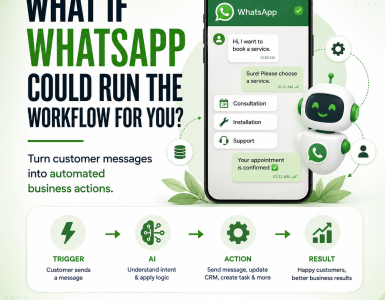
Behind the scenes, automation rules determine what happens next. Simple questions can be handled instantly, while complex enquiries are routed to the right team. This is where WhatsApp automation CRM adds real value, not by replacing humans, but by removing friction and delays.
WhatsApp Lead Management and Sales Enablement
One of the strongest use cases for CRM with WhatsApp integration is lead management. WhatsApp enquiries often come with high intent, but without structure, many are lost or delayed. A WhatsApp lead management CRM ensures that every enquiry is captured, qualified, and followed up.
Sales teams using a WhatsApp sales CRM can track leads from the first message through to conversion. The CRM records interest level, previous conversations, and engagement patterns, enabling smarter follow-ups. This approach is especially effective for businesses that rely on speed, such as real estate, education, e-commerce, and services.
With the right setup, WhatsApp CRM for sales teams supports automated nurturing sequences, reminders, and pipeline tracking. Over time, this evolves into full WhatsApp funnel automation, where leads are guided through awareness, consideration, and decision stages directly inside WhatsApp.
WhatsApp Marketing Automation and Campaign Management
WhatsApp is no longer limited to one-to-one conversations. When connected to CRM, it becomes a powerful marketing channel. A modern CRM tool for WhatsApp marketing enables businesses to segment audiences, personalize outreach, and measure campaign performance.
Using WhatsApp marketing automation CRM, brands can run targeted campaigns based on customer behavior, purchase history, or engagement signals. This allows for meaningful communication rather than broadcast spam. Campaign results feed back into the CRM, enabling WhatsApp conversion tracking and smarter optimization.
Over time, this approach supports structured WhatsApp campaign management and even WhatsApp retargeting, where businesses re-engage customers based on past interactions in a compliant and relevant way.
Customer Support, Helpdesk, and Omni-Channel Experience
Customer support is another area where CRM with WhatsApp integration delivers immediate impact. Customers expect fast responses, and WhatsApp provides a familiar interface for support conversations. When paired with CRM, support teams gain full context for every enquiry.
A dedicated WhatsApp customer support CRM allows teams to manage cases, track resolution times, and maintain service quality. Features such as WhatsApp ticketing and WhatsApp helpdesk integration help structure support workflows without losing the conversational tone customers prefer.
Many businesses extend this into an omni-channel CRM with WhatsApp, where email, chat, and messaging platforms are handled from a single system. A unified inbox CRM ensures no message is missed and enables seamless WhatsApp customer interaction management across departments.
Automation Without Losing the Human Touch
One common concern is whether automation makes conversations feel robotic. In reality, automation enhances human interaction when used correctly. A thoughtful WhatsApp automation CRM handles repetitive tasks, acknowledgements, FAQs, follow-ups, so agents can focus on meaningful conversations.
This balance enables personalized WhatsApp messaging at scale. Customers feel heard, while businesses maintain efficiency. The result is centralized WhatsApp communication that still feels one-to-one.
Is WhatsApp CRM Legal and Compliant?
Yes, when implemented correctly, WhatsApp CRM is both legal and compliant. Businesses must use the official WhatsApp Business API, collect customer opt-ins, and follow messaging guidelines. A professional CRM system helps manage consent records and ensures responsible communication.
Compliance is not just about regulation, it also protects brand trust. Customers are more likely to engage when they feel respected.
The Future of Customer Relationship Management Is Conversational
Customer expectations are not going backward. Messaging-first engagement is becoming the norm, and WhatsApp sits at the center of this shift. Businesses that adopt CRM with WhatsApp integration are not just improving communication, they are redefining how relationships are built and maintained.
By combining structure with conversation, automation with empathy, and data with context, WhatsApp CRM represents the future of customer relationship management on WhatsApp.
FAQs on CRM with WhatsApp Integration
1. What is CRM with WhatsApp integration?
CRM and WhatsApp integration is the process of connecting WhatsApp with a customer relationship management system so that all customer conversations are stored, tracked, and managed in one place. Instead of treating WhatsApp as a standalone messaging tool, businesses use it as part of a structured CRM workflow that supports sales, marketing, and customer support. This approach helps teams maintain context, respond faster, and build long-term customer relationships through WhatsApp.
2. How does WhatsApp CRM work?
A WhatsApp CRM works by connecting WhatsApp to a CRM platform using the WhatsApp Business API. When a customer sends a message, it automatically appears inside the CRM, linked to the customer’s profile. The system records conversation history, enables automated responses, and allows multiple team members to collaborate. This makes WhatsApp a conversational, data-driven communication channel rather than an isolated chat app.
3. Why should businesses integrate WhatsApp with CRM?
Businesses integrate WhatsApp with CRM because customers expect quick, personalized responses on messaging platforms. CRM integration ensures that WhatsApp conversations are not lost or duplicated and that every interaction contributes to a complete customer profile. This improves lead response time, sales conversion rates, customer satisfaction, and overall operational efficiency.
4. How can WhatsApp leads be managed inside a CRM?
WhatsApp leads can be managed in a CRM by automatically capturing enquiries as leads when a conversation starts. The CRM assigns each lead to a sales representative, tracks conversation progress, and records engagement history. This structured approach ensures timely follow-ups and enables teams to prioritize high-intent prospects while maintaining visibility across the sales pipeline.
5. How can WhatsApp be automated using a CRM?
WhatsApp can be automated using a CRM through predefined workflows and intelligent chatbots. Common automations include instant replies, lead qualification questions, appointment reminders, and follow-up messages. Automation reduces response time and manual effort while ensuring customers receive consistent and relevant communication.
6. Is WhatsApp CRM legal and compliant?
Yes, WhatsApp CRM is legal and compliant when businesses use the official WhatsApp Business API and follow WhatsApp’s messaging policies. Customers must provide explicit consent to receive messages, and businesses should avoid unsolicited communication. A CRM system helps manage consent records and ensures compliant communication at scale.
7. Can WhatsApp CRM be used for customer support?
WhatsApp CRM is highly effective for customer support. Support teams can view full conversation history, assign enquiries to the right agents, and track resolution times. When integrated with helpdesk features, WhatsApp becomes a reliable channel for handling support requests while maintaining a personal and conversational experience for customers.
8. How does WhatsApp CRM improve sales performance?
WhatsApp CRM improves sales performance by enabling faster responses, better lead tracking, and personalized follow-ups. Sales teams can see customer context before responding, automate repetitive tasks, and nurture leads through structured workflows. This leads to higher engagement and improved conversion rates.
Add comment