
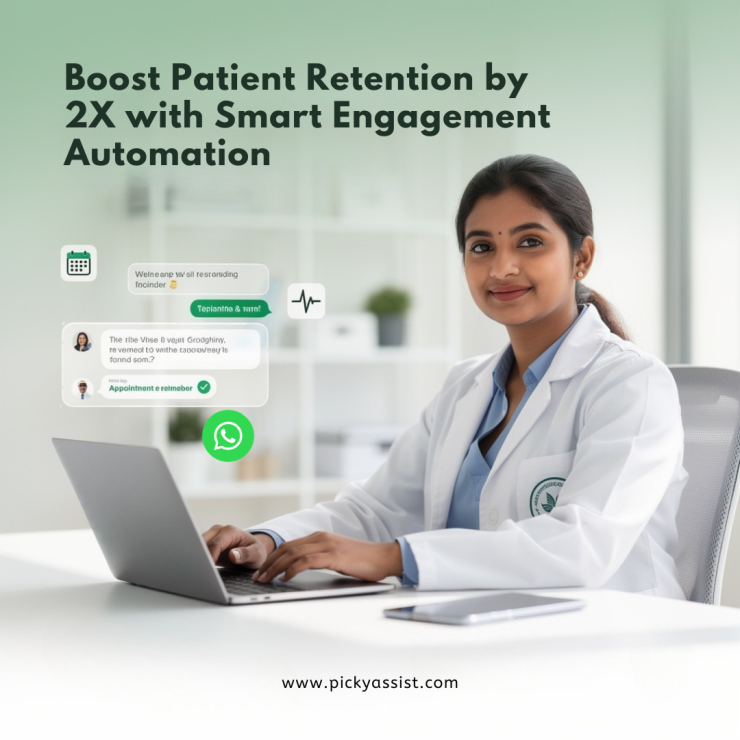
Healthcare has changed. Patients no longer want one-way communication, long response times, and disconnected care experiences. Instead, they expect fast updates, self-service options, personalized reminders, and support on the channels they already use. That is exactly why patient engagement software has become essential for modern clinics, hospitals, dental practices, diagnostic centers, and health-focused businesses.
A strong patient engagement platform does far more than send appointment reminders. It helps healthcare providers automate follow-ups, improve patient outreach, reduce no-shows, streamline care journeys, and build stronger long-term relationships with patients. As digital adoption rises, providers are also looking for patient engagement technologies that improve both patient satisfaction and operational efficiency.
In this in-depth guide, you will learn what patient engagement software solutions actually do, which features matter most, how different industries use them, and why Picky Assist can serve as a practical digital patient engagement platform for clinics and healthcare providers that want faster communication, better patient retention, and stronger revenue outcomes.
What is Patient Engagement Software?
Patient engagement software is a digital system that helps healthcare providers interact with patients before, during, and after care. It supports communication, education, reminders, scheduling, follow-ups, surveys, outreach campaigns, and ongoing health engagement through digital channels.
In simple terms, it helps providers stay connected with patients across the entire care journey.
Depending on the product, patient engagement applications may include:
- Appointment reminders
- Two-way messaging
- Online scheduling
- Digital forms
- Follow-up automation
- Patient education delivery
- Feedback collection
- Medication reminders
- Care coordination workflows
- Chatbots and AI-powered conversations
- Broadcast campaigns for outreach and reactivation
These capabilities matter because patient engagement is no longer limited to front-desk calls or portal logins. Today, the best systems meet patients where they already are. Mobile-first access, self-service communication, and timely reminders are major drivers of adoption in modern healthcare engagement platform design. Official platform pages and industry analyses repeatedly point to automated reminders, mobile-first access, and faster delivery of timely information as core functions of these systems.
Why Patient Engagement matters more than ever?
Healthcare teams face constant pressure to do more with less. Front-desk teams manage calls, rescheduling, confirmations, missed appointments, recall campaigns, and patient questions every day. At the same time, patients expect fast, convenient communication.
This gap creates operational friction. When teams rely on manual outreach, they lose time, miss follow-ups, and struggle to keep patients engaged.
That is why patient engagement software solutions are becoming essential. They help providers:
1. Reduce No-Shows
Automated reminders, confirmations, and pre-visit instructions help patients arrive prepared and on time. This is one of the most widely cited benefits of a modern patient engagement platform.
2. Improve Response Times
Patients do not want to wait hours for a scheduling update or a basic answer. Messaging automation and chatbots reduce that delay.
3. Increase Retention
Consistent post-visit communication, recalls, reactivation campaigns, and personalized follow-ups help bring patients back.
4. Support Better Care Adherence
Medication reminders, care education, chronic care prompts, and follow-up sequences encourage patients to stay on track. Research on AI in patient education and engagement also highlights personalized content delivery, virtual assistants, and digital tools as helpful ways to improve comprehension and participation.
5. Reduce Staff Workload
Smart workflows act like productivity software for healthcare teams. They automate repetitive outreach, reduce manual calling, and free staff for higher-value work.
6. Strengthen the Overall Patient Experience
When communication feels timely, relevant, and easy to access, the patient journey feels smoother. That improves satisfaction and trust.
Core features of the Best Patient Engagement Software
Not all patient engagement tools are equal. Some focus only on reminders. Others provide a broader patient engagement platform with multichannel communication, workflow automation, and CRM-style tracking.
The best patient engagement software usually includes the following capabilities.
Automated Appointment Reminders
This is the baseline feature. Reminders reduce no-shows and help patients prepare for visits. Leading healthcare engagement platforms and dental communication systems consistently highlight reminders as a core requirement.
Two-Way Messaging
Patients should be able to confirm, reschedule, ask simple questions, or respond directly. Two-way engagement creates a smoother experience than one-way notifications.
Online Scheduling and Self-Service Flows
A strong digital patient engagement platform should make booking easy without requiring a call for every action.
Chatbots and Conversational Automation
AI chatbots can answer FAQs, guide scheduling, route conversations, qualify patient needs, and support 24/7 engagement. Picky Assist explicitly offers AI chatbots, flow builders, and automation across messaging channels, and its healthcare-focused materials describe appointment scheduling, reminders, prescription inquiries, and chronic-condition follow-up prompts through WhatsApp automation.
Personalized Follow-Up Workflows
Follow-ups should reflect the patient’s treatment stage, appointment type, or care need. A good platform supports segmentation and event-based automation.
Multichannel Communication
Patients use different channels. Some prefer WhatsApp, others email, SMS, or web chat. Modern patient engagement technologies work best when they support several communication channels from one system.
Campaign and Recall Management
This includes wellness campaigns, seasonal health reminders, inactive patient reactivation, vaccination reminders, recall notices, and dental hygiene reminders.
Digital Forms and Pre-Visit Information
These tools reduce paperwork and help patients complete required steps before their appointment.
Feedback and Survey Collection
Post-visit feedback helps providers measure service quality and identify pain points.
Integration Capabilities
The software should connect with CRMs, scheduling systems, spreadsheets, or practice workflows. Picky Assist highlights connectors and automation integrations as part of its broader platform architecture.
What makes Picky Assist relevant for Patient Engagement?
Picky Assist is especially relevant for healthcare providers that want fast, conversational engagement rather than a static portal-only experience. Based on Picky Assist’s official website and healthcare-related materials, the platform aligns with patient engagement needs in several ways.
Automation-First Communication
Picky Assist is built around the idea that repeatable communication should be automated. In healthcare, that means clinics can automate booking confirmations, reminder flows, follow-ups, recall campaigns, re-engagement messages, and support responses.
WhatsApp-Based Patient Outreach
Many patients respond faster on messaging apps than on email or phone. Picky Assist’s focus on WhatsApp automation makes it valuable as a patient outreach software solution for clinics that want to engage patients on a channel they already check regularly.
AI Chatbots for Healthcare
Picky Assist’s healthcare content directly positions chatbot automation as a way to reduce no-shows, schedule appointments, and improve communication. That maps closely to what buyers expect from a software for patient engagement today.
Better Follow-Ups and Returning Patients
The main Picky Assist site highlights a healthcare-related result of “+10% More Returning Patients via Automated Follow-ups,” which is highly relevant to engagement and retention goals.
CRM-Like Workflow Possibilities
Although Picky Assist is not marketed as a traditional hospital EHR portal, its automation, chat, and connector layers can support many CRM-style engagement workflows for healthcare teams. This matters because engagement often breaks down when patient communication, reminders, and follow-up logic sit in disconnected tools.
Flexible for Different Healthcare Segments
Because Picky Assist focuses on communication automation rather than a narrow clinical module, it can fit clinics, wellness providers, diagnostic businesses, specialty practices, and outreach-heavy healthcare operations.
Picky Assist as a Digital Patient Engagement Platform
A digital patient engagement platform should not only communicate with patients. It should also move them through a journey.
That journey may include:
- Inquiry to appointment booking
- Booking to reminder and confirmation
- Visit to feedback collection
- Consultation to treatment adherence reminders
- Discharge to follow-up check-in
- Dormant patient to recall campaign
Picky Assist supports this type of journey-based engagement through automation, conversational interfaces, and multichannel messaging. Its platform and blogs emphasize flow-based communication, AI chatbots, and connectors that can trigger event-based actions.
So, while many top patient engagement platforms center heavily on portal access, Picky Assist can serve organizations that need agile outreach, fast communication, and marketing-plus-service automation in one place.
That makes it particularly useful for providers that need:
- High patient response rates
- Fast inquiry handling
- Ongoing outreach campaigns
- Appointment communication
- Automated follow-ups
- Re-engagement of inactive patients
- Support through messaging apps
Use cases for Patient Engagement Software in Healthcare
A good patient engagement platform should map to real-world use cases. Here is how it applies across healthcare settings.
1. General Clinics
Clinics can use patient engagement software for lead capture, appointment booking, reminders, pre-visit instructions, post-visit feedback, and recall campaigns.
2. Specialty Practices
Dermatology, fertility, physiotherapy, mental wellness, and other specialty providers often need more guided follow-ups and patient education journeys.
3. Hospitals and Multi-Location Care Networks
Larger organizations benefit from workflow consistency, centralized communication logic, and scalable patient outreach.
4. Diagnostic Centers
Labs and diagnostic centers need reminder flows, report-ready notifications, patient education, and repeat visit reminders.
5. Wellness and Preventive Care Providers
These providers often depend on recurring visits, package renewals, and ongoing engagement, making automation especially important.
6. Dental Practices
Dental patient engagement software is a fast-growing category because dental clinics depend heavily on recalls, treatment reminders, hygiene reminders, and schedule optimization. Industry sources on dental communication software consistently emphasize automated reminders, two-way messaging, online scheduling, and digital forms as core needs.
For dental providers, Picky Assist can support outreach-heavy communication workflows such as:
- Appointment confirmations
- Hygiene recall reminders (in Dental Cleaning)
- Treatment follow-up messages
- Missed visit reactivation
- Patient education sequences
- Feedback collection after treatment
Patient Engagement Software vs Traditional Patient Portals
Many providers assume that a patient portal alone solves engagement. It does not.
Patient portals are useful, especially for records access, forms, and secure information. However, actual engagement often happens outside the portal. Research on EHR portals shows that patient use depends heavily on usability, support, and workflow design, and that barriers such as digital literacy still limit adoption.
That is why many organizations combine portal-style access with more proactive patient engagement applications such as:
- Messaging
- AI chatbots
- Reminders
- Outreach campaigns
- Education sequences
- Re-engagement automation
Picky Assist fits strongly into that proactive layer. It does not wait for patients to log in. Instead, it helps providers reach patients directly through conversation-based channels.
How Patient Engagement Software Improves Productivity?
The best patient engagement software solutions do not only improve patient experience. They also function as productivity software for internal teams.
Here is how.
Fewer Manual Calls
Automated reminders and chatbot triage reduce routine staff workload.
Faster Scheduling and Confirmation
Instead of phone-based coordination, patients can respond through digital channels.
Centralized Communication
A connected system reduces confusion caused by scattered tools.
Better Follow-Up Consistency
Automation ensures that every patient gets the right message at the right time.
Easier Campaign Execution
Providers can launch reactivation, screening, or education campaigns without manually contacting every patient.
For busy healthcare teams, that productivity gain is a big reason to invest in a health engagement platform.
What to Look for When Comparing Top Patient Engagement Platforms?
When buyers evaluate top patient engagement software or the best patient engagement platform, they should look beyond brand names and feature checklists. The right choice depends on workflow fit.
Here are the most important criteria.
1. Channel Fit
Does the platform communicate where your patients actually respond? For many providers, messaging-first engagement performs better than portal-first engagement.
2. Automation Depth
Can the system trigger reminders, follow-ups, campaigns, and reactivation automatically?
3. Two-Way Communication
Can patients reply, ask questions, or confirm actions easily?
4. Ease of Use
Complex tools often fail because staff avoid using them.
5. Integration Readiness
Can it connect with your CRM, spreadsheet workflows, scheduling stack, or existing systems?
6. Segmentation and Personalization
Can you create different patient journeys based on specialty, appointment type, treatment stage, or inactivity?
7. Scalability
Can the platform support multiple providers, branches, or high-volume communication needs?
8. ROI Potential
Will it reduce no-shows, bring patients back, and save team time?
Picky Assist performs especially well for buyers who prioritize automation, multichannel messaging, WhatsApp engagement, chatbot flows, and outreach-focused workflows.
Is Picky Assist One of the Best Patient Engagement Software Options?
For organizations that need a portal-heavy, EHR-native environment, a traditional enterprise platform may be the first comparison point. However, for providers that need strong communication automation, patient outreach, reminders, chatbot engagement, and follow-up journeys, Picky Assist deserves serious consideration. That is because it addresses many of the practical goals providers have when searching for.
Picky Assist’s strengths are especially relevant when the real problem is not storing patient data, but getting patients to respond, return, confirm, engage, and act.
In that sense, Picky Assist works well as a communication-led consumer health engagement platform for private clinics, health service businesses, specialty centers, and multi-touch patient journeys.
Patient Engagement Technologies Shaping the Future
The future of engagement is not just digital. It is conversational, predictive, and personalized.
Current patient engagement technologies increasingly include:
- AI chatbots
- Workflow automation
- Mobile-first communication
- Personalized health education
- Automated outreach campaigns
- Multichannel messaging
- Data-driven segmentation
A 2024 review on AI in patient education and engagement found that AI-driven platforms can improve comprehension, satisfaction, and personalized content delivery through virtual assistants and related digital tools.
This shift matters because patient expectations are rising. Static systems will feel outdated. Patients want fast answers, flexible communication, and fewer administrative hurdles.
That is why a platform like Picky Assist, with chatbot and automation capabilities, aligns with where healthcare engagement is heading.
What About Clinical Trial Patient Engagement Software?
Clinical trial patient engagement software is a more specialized category. It supports trial recruitment, consent education, visit reminders, participant retention, and protocol communications.
While not every general engagement platform is built specifically for clinical research, some communication workflows overlap. Messaging automation, reminders, FAQs, and follow-up sequences can all support trial communication in the right setup.
Providers or research teams exploring this area should focus on compliance, consent workflow support, data handling, and participant communication journeys.
Why Do Dental Providers Need Specialized Engagement Workflows?
Dental patient engagement software deserves extra attention because dentistry depends heavily on recurring visits and proactive patient communication.
Dental clinics often need to manage:
- Hygiene recalls
- Pending treatment follow-ups
- Missed appointment recovery
- Post-procedure care instructions
- Review requests
- Reactivation of inactive patients
Industry sources on dental communication software repeatedly point to automated reminders, digital forms, scheduling tools, and two-way messaging as critical capabilities.
Picky Assist can support these communication layers through automated messaging and workflow logic, making it a useful option for dental practices that want to improve retention and reduce manual calling.
How to Measure ROI from Patient Engagement Software?
Many providers buy software without defining success. That is a mistake.
Track these metrics instead:
- No-show reduction rate
- Appointment confirmation rate
- Patient response time
- Rebooking rate
- Returning patient percentage
- Campaign conversion rate
- Staff time saved
- Review and feedback completion rate
- Recall recovery rate
- Patient lifetime value impact
Picky Assist’s official site itself frames value around automation-led growth and highlights improved returning-patient outcomes, which is the kind of ROI healthcare teams should measure closely.
Who Should Use Picky Assist for Patient Engagement?
Picky Assist is a strong fit for:
- Clinics with high appointment volumes
- Healthcare teams struggling with no-shows
- Providers wanting WhatsApp-based patient communication
- Businesses needing automated follow-ups
- Specialty centers running recurring patient outreach
- Dental clinics focused on recalls and reactivation
- Multi-location providers needing scalable messaging automation
- Healthcare marketers who want both engagement and outreach from one platform
It is especially useful when engagement needs to feel immediate, conversational, and easy for patients.
Conclusion
The wider market reflects that momentum: researchers estimate the global patient engagement solutions market at tens of billions of dollars and still growing rapidly, driven by digital health adoption, mobile access, and patient-centric care models.
For healthcare providers, the challenge is not whether to adopt software for patient engagement. The real challenge is choosing a solution that fits actual workflows, supports patient outreach at scale, and creates measurable business value. That is where Picky Assist stands out.
Picky Assist is not positioned as a traditional hospital portal or static communication tool. Instead, it works as an automation-first communication and engagement system that helps healthcare businesses manage WhatsApp, chatbots, email automation, workflows, CRM-style patient communication, and follow-up journeys in one connected ecosystem.
Picky Assist’s official platform emphasizes automation across modern messaging channels and highlights healthcare use cases such as increasing returning patients through automated follow-ups. Its healthcare-focused blog content also specifically discusses reducing no-shows, improving scheduling, and using WhatsApp AI chatbots for healthcare engagement.
As the market grows and patient expectations rise, providers need patient engagement solutions that do more than check a feature box. They need platforms that actually drive action.
Picky Assist stands out because it approaches engagement from the communication layer outward. Through WhatsApp automation, AI chatbots, multichannel workflows, connectors, and follow-up automation, it aligns closely with what many clinics and healthcare businesses truly need from a patient engagement platform today.
Its own healthcare content and site positioning strongly support use cases such as appointment scheduling, reminders, re-engagement, and automated patient follow-up. For providers that want a practical, automation-first, outreach-ready solution, Picky Assist is a compelling choice in the broader category of patient engagement platforms.
FAQs About Patient Engagement Software
1. What is patient engagement software?
Patient engagement software is a digital solution that helps healthcare providers communicate with patients through reminders, scheduling, messaging, follow-ups, education, and outreach. It improves both patient experience and operational efficiency.
2. What features should the best patient engagement software include?
The best platforms usually include automated reminders, two-way messaging, self-scheduling, digital forms, chatbot support, follow-up automation, and multichannel communication. Dental-focused and general healthcare sources consistently highlight those capabilities.
3. Is Picky Assist a patient engagement platform?
Picky Assist is not presented as a traditional hospital portal. However, based on its official website and healthcare materials, it can function as a communication-led patient engagement platform through WhatsApp automation, AI chatbots, multichannel messaging, and follow-up workflows.
4. Why is WhatsApp useful for patient engagement?
WhatsApp can improve response speed and convenience because patients already use it regularly. For appointment reminders, confirmations, follow-ups, and support conversations, messaging-first engagement can outperform slower channels in many workflows. Picky Assist’s healthcare content is built strongly around this model.
5. How does patient engagement software reduce no-shows?
It sends automated reminders, confirmations, and pre-visit instructions before appointments. Many platforms also support two-way communication so patients can confirm or reschedule quickly.
6. What is dental patient engagement software?
Dental patient engagement software helps clinics manage hygiene recalls, appointment reminders, treatment follow-ups, inactive patient reactivation, and patient communication. Industry sources show that reminders, scheduling, digital forms, and two-way messaging are especially important in dentistry.
7. How is patient engagement software different from a patient portal?
A patient portal is usually a records-access and self-service environment. Patient engagement software is broader and more proactive. It reaches out to patients with reminders, campaigns, education, and follow-ups instead of waiting for them to log in. Research on portal use shows that usability and digital literacy remain adoption challenges.
8. Can patient engagement software improve staff productivity?
Yes. It works like productivity software for healthcare teams by reducing manual calls, automating routine communication, centralizing outreach, and making follow-ups more consistent.
9. What should I look for in top patient engagement platforms?
Look for automation depth, multichannel communication, two-way messaging, personalization, ease of use, integration options, and clear ROI potential. These factors determine whether the software will actually improve patient communication and business performance.
10. Is patient engagement software only for hospitals?
No. Clinics, dental practices, wellness providers, diagnostic centers, specialty clinics, and healthcare service businesses can all benefit from patient engagement software.
Add comment