
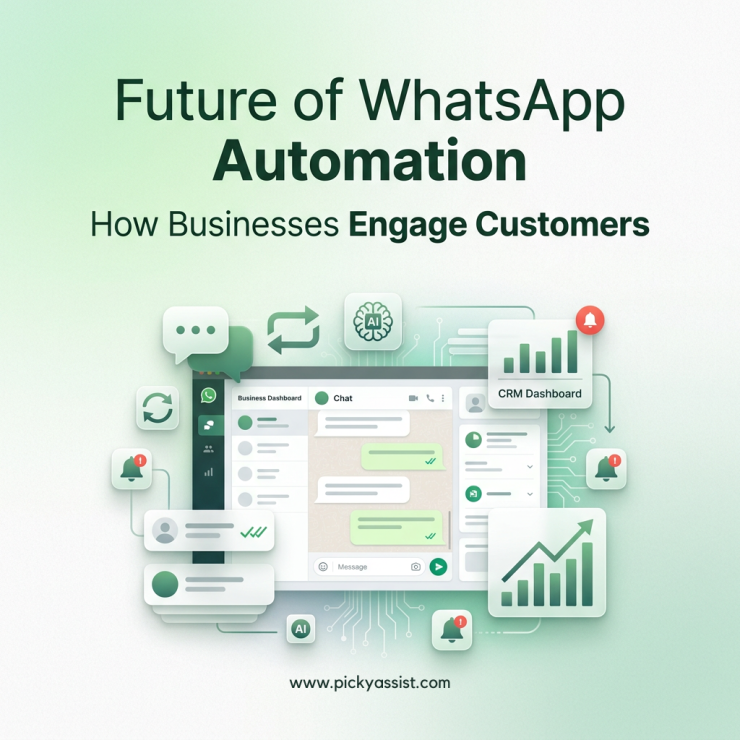
WhatsApp is no longer just a messaging app. With over 2 billion active users globally, it has evolved into a powerful business communication channel. As customer expectations shift toward instant, personalized, and conversational experiences, the future of WhatsApp automation is becoming a critical topic for growing businesses. WhatsApp automation is reshaping how brands sell, support, and retain customers at scale. This blog explores where WhatsApp automation is heading, what technologies are driving this change, and how platforms like Picky Assist are enabling businesses to stay ahead.
Why WhatsApp Automation is the Future of Customer Communication?
Modern customers expect:
- Immediate responses
- Context-aware conversations
- Seamless transitions from enquiry to conversion
- Zero friction across channels
Traditional tools like email and manual chat handling can no longer keep up.
WhatsApp automation solves this by combining:
- High open rates (often above 90%)
- Real-time conversations
- Automation powered by AI and workflows
- Secure, opt-in communication
As businesses scale, manual WhatsApp handling becomes unsustainable. Automation is no longer optional.
Key Trends Shaping the Future of WhatsApp Automation
1. AI Chatbots Will Become Smarter and More Human
The next generation of AI chatbots will move far beyond scripted replies.
Future-ready WhatsApp AI chatbots will:
- Understand user intent, not just keywords
- Handle complex multi-step conversations
- Personalize responses using CRM data
- Escalate to human agents intelligently
Platforms like Picky Assist AI Chatbot already enable businesses to:
- Qualify leads automatically
- Answer FAQs instantly
- Book appointments
- Share documents, catalogs, and order updates
As AI models improve, WhatsApp chatbots will feel less like bots and more like digital assistants.
2. WhatsApp Broadcaster Will Shift from Bulk to Intelligent Messaging
Bulk blasting is fading fast.
The future of WhatsApp broadcasting lies in:
- Segmented audiences
- Behavior-based triggers
- Timing optimization
- Personalization at scale
Instead of sending the same message to thousands, businesses will use intelligent WhatsApp broadcasters to:
- Send reminders based on user actions
- Trigger follow-ups after inactivity
- Share offers relevant to past purchases
- Deliver transactional updates automatically
With tools like Picky Assist WhatsApp Broadcaster, businesses can run compliant, opt-in campaigns that improve engagement—without risking blocks or spam complaints.
3. Deep CRM Integration Will Become the Standard
WhatsApp automation without CRM is incomplete.
The future belongs to systems where WhatsApp is fully integrated with:
- CRM platforms (Zoho, HubSpot, Salesforce, etc.)
- Lead sources (Facebook Ads, Google Ads, websites)
- Order management and support systems
With CRM-connected WhatsApp automation, businesses can:
- View complete customer history inside chat
- Automate follow-ups based on deal stages
- Assign conversations to the right team
- Track conversions from WhatsApp
Picky Assist enables this by acting as a bridge between WhatsApp and your internal systems, turning conversations into structured data.
4. End-to-End Automation Across the Customer Lifecycle
The future of WhatsApp automation is not limited to customer support.
It will cover the entire lifecycle, including:
- Lead capture
- Lead qualification
- Sales follow-ups
- Payment reminders
- Order confirmations
- Post-purchase support
- Feedback and retention campaigns
Businesses that automate only replies will fall behind. Businesses that automate journeys will win.
5. Compliance, Consent, and Trust Will Matter More Than Ever
As WhatsApp tightens its policies, automation tools must prioritize:
- Opt-in messaging
- Approved templates
- Quality scores
- User experience
Future-ready platforms like Picky Assist are built around:
- WhatsApp Business API compliance
- Template management
- Opt-in workflows
- Quality monitoring
This ensures long-term scalability without account bans or delivery issues.
How Picky Assist is Powering the Future of WhatsApp Automation?
Picky Assist is designed for businesses that want more than basic automation.
With Picky Assist, you get:
- AI-powered WhatsApp Chatbots
- Smart WhatsApp Broadcaster
- CRM and backend integrations
- Multi-agent inbox and automation rules
- Lead tracking and analytics
Whether you’re in E-commerce, Education, Real Estate, Healthcare, or Financial Services, Picky Assist helps you transform WhatsApp into a revenue and support engine.
What Businesses Should Do Today to Prepare for the Future?
To stay ahead, businesses should:
- Move from manual WhatsApp handling to automation
- Implement AI chatbots for first-level interactions
- Use WhatsApp broadcaster responsibly with segmentation
- Integrate WhatsApp with CRM and internal systems
- Focus on conversational experience, not just speed
The future of WhatsApp automation belongs to businesses that treat conversations as strategic assets, not operational overhead.
WhatsApp Automation is No Longer a Trend
The future of WhatsApp automation is clear:
- More intelligence
- More personalization
- More automation
- More measurable business impact
With AI chatbots, intelligent broadcasters, and platforms like Picky Assist, WhatsApp is becoming the most powerful customer engagement channel of the decade.
Businesses that adopt early will build stronger relationships, faster conversions, and scalable growth, right inside the world’s most popular messaging app.
FAQ on The Future of WhatsApp Automation
1. What is WhatsApp automation?
WhatsApp automation uses tools like AI chatbots, workflows, and broadcasters to automatically respond to messages, qualify leads, send updates, and manage conversations on WhatsApp without manual intervention.
2. Why is WhatsApp automation important for the future?
The future of WhatsApp automation lies in meeting customer expectations for instant, personalized communication. As enquiry volumes grow, automation ensures faster responses, better engagement, and scalable operations.
3. How do AI chatbots improve WhatsApp automation?
AI chatbots analyze user intent and context to deliver accurate, personalized responses. They can handle FAQs, capture lead details, schedule appointments, and escalate complex queries to human agents, 24/7.
4. Is WhatsApp broadcasting still effective?
Yes, but only when done intelligently. Modern WhatsApp broadcasters focus on segmentation, opt-in users, and personalized messaging instead of bulk promotions. This improves engagement and avoids spam-related blocks.
5. Is WhatsApp automation safe and compliant?
When built on the WhatsApp Business API and used with opt-in templates, WhatsApp automation is fully compliant. Platforms like Picky Assist ensure policy adherence and long-term account safety.
6. Which businesses benefit most from WhatsApp automation?
Any business that relies on customer conversations can benefit. WhatsApp automation benefits industries such as:
- E-commerce
- Education & EdTech
- Real Estate
- Healthcare
- Financial Services
- Travel & Hospitality
Add comment