
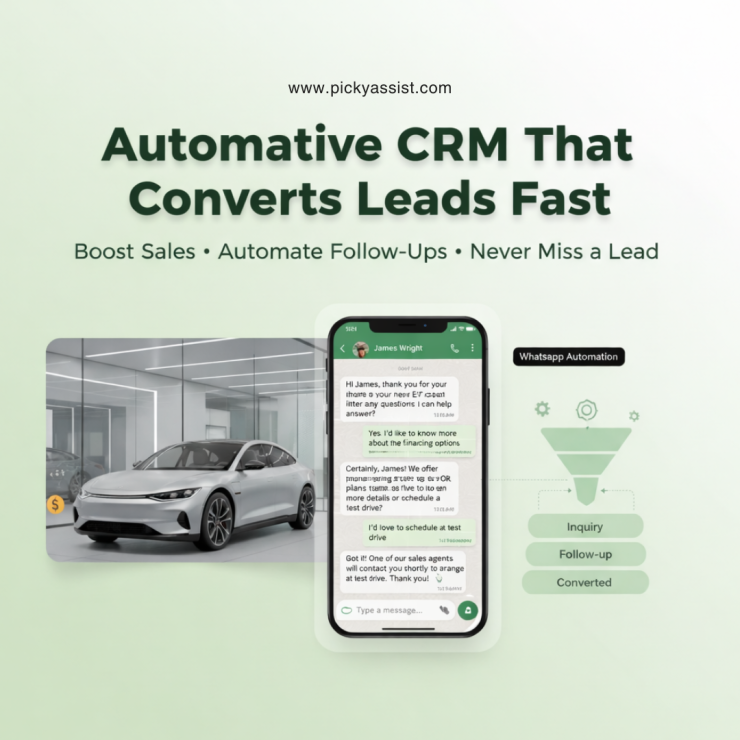
In the past, a CRM was a digital filing cabinet, a place where data went to sit. Today, the “Invisible Showroom” exists across WhatsApp, Instagram DMs, and website live chats. Today’s buyers do not wait for callbacks, visit just one showroom, or rely only on in-person interactions. Instead, they expect instant responses, personalized communication, and a seamless experience from inquiry to ownership. This is exactly why a CRM for the automobile industry has become a critical system for dealerships, service centers, and automotive businesses. It is no longer just about storing customer data, it is about managing conversations, automating follow-ups, and converting interest into revenue.
However, many businesses still struggle with disconnected tools, delayed responses, and missed opportunities. The real value of CRM in automotive lies in its ability to unify lead management, communication, and customer experience into one streamlined process.
This guide explores how modern automotive CRM software works, what features truly matter, how chatbots and automation transform engagement, and where Picky Assist fits as a practical solution.
What is a CRM for the Automobile Industry?
A CRM for the automobile industry is a system designed to manage customer relationships across the entire automotive lifecycle, from lead generation and test drives to post-sale service and retention. Unlike generic tools, automotive CRM systems are built to handle long buying cycles, high-value transactions, and repeated service interactions. They combine lead tracking, communication, and automation into a unified workflow.
At a deeper level, customer relationship management in the automobile industry enables businesses to manage every interaction with precision. This includes responding to inquiries instantly, tracking customer preferences, and ensuring consistent engagement across all touchpoints.
Why is CRM in Automotive more important than ever?
The role of CRM in the automobile industry has expanded significantly due to digital transformation and rising customer expectations.
Instant Response is now the standard
Customers expect immediate replies when they inquire about a vehicle. A delay often results in lost leads. This is where auto CRM software combined with automation becomes essential.
Lead Volume has increased across channels
Leads now come from ads, websites, social media, and marketplaces. Without a structured automotive lead management system, businesses struggle to manage this volume effectively.
Customer Experience drives revenue
Modern buyers evaluate not just the vehicle but the overall experience. A well-implemented CRM in automobiles ensures consistent communication, which directly impacts conversions and retention.
Sales and Service are interconnected
A customer’s journey does not end after purchase. Service reminders, renewals, and feedback loops are equally important. This is why CRM software for the automotive industry must support both sales and after-sales engagement.
How Chatbots and Automation transform Automotive CRM
One of the biggest advancements in CRM automotive software is the integration of AI chatbots and automated workflows.
Instant Enquiry Handling
Modern automotive CRM tools can automatically respond to incoming WhatsApp messages from ads or websites. Instead of waiting for a sales executive, customers instantly receive:
- Vehicle details
- Brochures
- Images and videos
- Pricing or EMI options
This ensures that no lead goes unattended, even outside business hours.
Intelligent Lead Qualification
Chatbots do more than just respond, they qualify leads. Based on user responses, the system can identify intent, preferences, and readiness to purchase. This makes the automotive lead management software more effective by prioritizing high-quality leads for sales teams.
Automated Test Drive and Booking Workflows
A strong car dealer CRM system should simplify scheduling. Automation enables customers to book test drives directly through chat, receive confirmations, and get reminders without manual intervention. Rescheduling options can also be handled automatically, reducing friction in the process.
Smart Routing of Conversations
Not every inquiry belongs to the same team. A well-designed dealer CRM software routes conversations to the right department, sales, service, or parts, along with full context. This improves response accuracy and reduces delays.
Re-Engagement Campaigns for Lost Opportunities
Many leads go cold due to lack of follow-up. Automated campaigns help re-engage these prospects through WhatsApp reminders, offers, or updates. This is where automotive CRM features directly impact revenue by recovering missed opportunities.
Feedback Collection and Upselling
After a service or purchase, automated messages can collect feedback and promote additional offerings such as insurance, accessories, or maintenance packages. This strengthens customer relationships and increases lifetime value.
Key Features that define the Best Automotive CRM
When evaluating the best automotive CRM, businesses must focus on features that drive real outcomes.
Lead Management and Pipeline Visibility
A strong automotive CRM system organizes leads into structured pipelines, helping teams track progress and identify bottlenecks.
Communication-Centric Engagement
A modern car sales CRM must support real-time messaging across WhatsApp, SMS, and other channels.
Automation and Workflow Management
The best automotive CRM software simplifies repetitive tasks such as follow-ups, reminders, and notifications.
Integration with Dealership Operations
A reliable auto dealership CRM software integrates with existing systems, ensuring smooth data flow across departments.
Service and Retention Capabilities
From reminders to feedback collection, CRM software for dealerships must support ongoing engagement beyond the initial sale.
Use Cases across Automotive Teams
A well-implemented CRM for the automobile industry delivers value across multiple departments.
Sales Teams
Sales teams benefit from instant lead responses, automated follow-ups, and easy sharing of vehicle details. With structured workflows, they can book more test drives and improve conversion rates.
Service Teams
Service teams use auto repair CRM software capabilities to confirm bookings, send reminders, and collect feedback. This reduces missed appointments and improves repeat visits.
Marketing Teams
Marketing teams use CRM data to run targeted campaigns. They can send WhatsApp promotions for new launches, festive offers, and re-targeting campaigns for unconverted leads.
Finance and Operations
CRM systems also support payment reminders, insurance renewals, and booking fee collection. This reduces reliance on manual calls and paperwork.
Management and Owners
Leadership teams gain visibility into sales performance, lead sources, and ROI. This makes it easier to identify gaps and optimize processes.
Test Drive and Delivery Coordination
Automated scheduling ensures that test drives are confirmed on time. Customers receive location details, updates, and delivery timelines without manual coordination.
Types of Automotive CRM Systems
Different businesses require different types of auto CRM systems.
Dealership CRM
A dealership CRM or CRM for car dealership focuses on lead management, sales tracking, and customer communication.
CRM for Auto Repair Shops
Service businesses rely on CRM for auto repair shops to manage bookings and customer history.
Integrated CRM Solutions
Larger businesses often use dealer CRM systems that combine sales and service operations.
Specialized CRM Use Cases
Solutions such as auto detailing CRM cater to niche segments within the automotive industry.
How to Choose the Best CRM for the Automotive Industry?
Selecting the best CRM systems for the automotive industry requires a clear understanding of business needs.
The right solution should align with your workflow, support automation, and enable fast communication. It should also be easy to use, scalable, and cost-effective.
When comparing automotive CRM providers, focus on how well the system supports lead engagement rather than just feature lists.
How Picky Assist helps Automotive Businesses?
Picky Assist brings together messaging, automation, and CRM workflows into a practical system.
Handling Enquiries Instantly
It enables instant responses to WhatsApp inquiries from ads or websites. Customers receive relevant information without waiting, improving engagement from the first interaction.
Automating Test Drives and Bookings
Picky Assist simplifies scheduling by sending confirmations, reminders, and rescheduling options automatically.
Smart Lead Assignment
Every inquiry is routed to the right team with complete context, ensuring faster and more accurate responses.
Re-Engagement Campaigns
Automated follow-ups help bring back cold leads and recover missed opportunities.
Feedback and Upselling
The platform collects customer feedback and promotes additional services such as insurance or accessories.
Department-Level Impact
Sales teams close more deals through faster responses. Service teams reduce missed appointments. Marketing teams run targeted campaigns. Management gains real-time visibility into performance.
Common Mistakes to Avoid
Many businesses fail to get value from CRM in automotive due to poor implementation.
Choosing overly complex systems, ignoring communication channels, and failing to define workflows are common issues. A CRM should simplify operations, not complicate them.
Implementation strategy for success
Start by defining clear goals such as improving lead conversion or reducing no-shows. Then map the customer journey and identify key touchpoints. Implement automation for high-impact interactions such as inquiries and reminders. Finally, track performance and continuously optimize workflows.
What’s next in the CRM for the Automobile Industry?
The future of CRM software for the automotive industry lies in automation, personalization, and real-time engagement. As customer expectations continue to evolve, businesses will rely more on intelligent systems that can respond instantly, qualify leads, and maintain consistent communication.
Wrapping Up
A CRM for the automobile industry is no longer just a database, it is the backbone of customer engagement, sales efficiency, and long-term growth.
The right CRM helps automotive businesses manage leads effectively, improve communication, and deliver better customer experiences.
For organizations that prioritize speed, automation, and communication, Picky Assist offers a practical and scalable solution. It strengthens engagement, improves response time, and supports growth without unnecessary complexity.
FAQs on CRM for the Automobile Industry
1. What is a CRM for the automobile industry?
It is a system that helps manage customer interactions, sales processes, and service workflows in automotive businesses.
2. What is the best automotive CRM software?
The best solution depends on your needs. Some focus on enterprise features, while others like Picky Assist focus on communication and automation.
3. How does automotive CRM improve lead conversion?
It enables instant responses, automated follow-ups, and structured lead tracking, improving conversion rates.
4. Can CRM be used for auto repair shops?
Yes, tools like auto repair CRM helps manage service operations and customer engagement.
5. What are key automotive CRM features?
Key features include lead management, automation, omnichannel communication, and performance tracking.
6. How do chatbots help in automotive CRM?
They handle inquiries instantly, qualify leads, and automate scheduling, improving efficiency and response time.
7. What is the role of CRM in automobile industry growth?
CRM improves customer experience, streamlines operations, and increases retention.
8. How does Picky Assist support automotive businesses?
Picky Assist enhances communication, automates workflows, and helps manage customer engagement effectively.


Add comment