
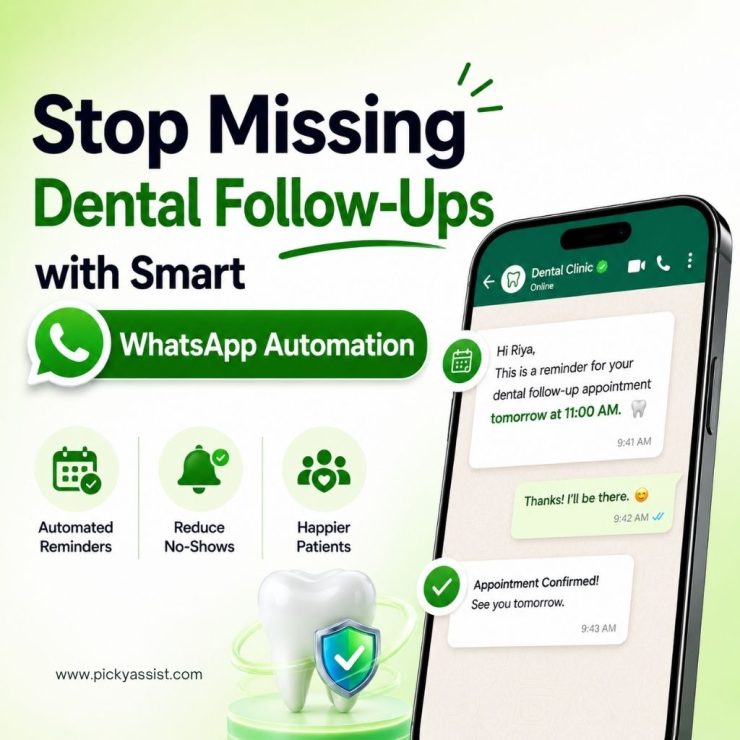
Dental clinics today face increasing pressure to improve patient communication, reduce missed appointments, maintain treatment continuity, and strengthen long-term patient retention. Yet many practices still rely on manual calls, scattered spreadsheets, or inconsistent front-desk workflows for patient communication. This is where a structured dental follow up system becomes critical.
Whether it is a routine cleaning reminder, a follow up dental appointment after treatment, a dental implant follow up, or an orthodontic follow up, timely communication directly impacts patient satisfaction and clinic revenue.
Modern clinics are now using automation platforms like Picky Assist to streamline follow-up communication across channels like WhatsApp, SMS, Instagram, email, and voice workflows from one centralized platform.
This article explains why dental follow-up workflows matter, where most clinics struggle, and how automation improves operational efficiency while creating a better patient experience.
What is a Dental Follow Up?
A dental follow up refers to any communication or appointment scheduled after an initial consultation, treatment, procedure, or patient inquiry. The goal is to:
- Monitor patient recovery
- Maintain treatment continuity
- Improve appointment attendance
- Increase patient engagement
- Reduce treatment drop-offs
- Encourage repeat visits
Dental follow-ups can happen manually or through automated systems depending on the clinic’s operational setup.
Why Dental Follow-Up Matters More Than Ever?
Patient expectations have changed significantly. Most patients now expect:
- Fast communication
- Appointment reminders
- Digital confirmations
- Recovery check-ins
- Easy rescheduling
- Mobile-friendly communication
Dental Clinics that fail to maintain consistent patient communication often experience:
- Missed appointments
- Reduced treatment acceptance
- Lower patient retention
- Negative patient experiences
- Revenue leakage
A well-designed follow-up workflow helps clinics stay connected throughout the patient journey.
Common Types of Dental Follow Up
Different treatments require different communication workflows.
Routine Dental Check-Up Follow-Up
Patients often forget regular oral health visits. Automated reminders help maintain recurring appointments and improve retention.
Follow Up Appointment After Tooth Extraction
Tooth extraction procedures typically require recovery monitoring. Clinics may send:
- Post-treatment instructions
- Medication reminders
- Healing progress check-ins
- Emergency contact guidance
- Review appointment scheduling
Timely communication reassures patients and reduces unnecessary complications.
Dental Implant Follow Up
Dental implants involve longer treatment cycles and multiple patient touchpoints. Follow-up workflows may include:
- Healing stage reminders
- Implant care instructions
- Appointment scheduling
- Progress monitoring
- Consultation reminders
Without structured communication, patients may miss important stages in the treatment journey.
Orthodontic Follow Up
Orthodontic treatments usually require long-term patient engagement. Clinics often need recurring reminders for:
- Adjustment appointments
- Aligner tracking
- Oral hygiene guidance
- Progress reviews
- Retainer follow-ups
Automated communication becomes especially useful for orthodontic workflows because treatment periods can last months or years.
The Operational Challenges Dental Clinics Face
Many clinics understand the importance of follow-up communication but struggle operationally.
Manual Follow-Ups Consume Staff Time
Front-desk teams often spend hours:
- Calling patients
- Sending reminders
- Updating appointment records
- Following up on missed visits
This creates administrative overload.
Missed Appointments Affect Revenue
No-shows directly impact clinic scheduling efficiency and revenue predictability. Without reminders, patients are more likely to miss appointments.
Patient Data Becomes Fragmented
Many clinics manage communication across:
- Phone calls
- SMS
- Emails
- Social media
Without centralized systems, patient history becomes difficult to track.
Inconsistent Communication Impacts Patient Trust
Some patients receive reminders while others do not. This inconsistency affects the overall patient experience.
How Automated Dental Follow Up Improves Clinic Operations?
Automation helps clinics create consistent patient communication workflows without increasing staff workload. Platforms like Picky Assist allow clinics to automate patient engagement while keeping communication centralized.
Why Does WhatsApp Work Well for Dental Clinics?
Higher Message Visibility
WhatsApp messages usually have significantly higher open rates than emails.
Faster Responses
Patients can instantly confirm, reschedule, or ask questions.
Conversational Communication
Clinics can maintain more natural patient interactions.
Media Sharing
Clinics can share:
- Treatment instructions
- Location maps
- Recovery guidance
- Appointment confirmations
- Educational content
How Picky Assist Helps Dental Clinics for Follow Ups?
Picky Assist helps dental clinics automate and manage patient communication workflows across multiple channels. Instead of relying on disconnected systems, clinics can centralize patient engagement and follow-up operations.
Automated Appointment Reminders
Send reminders automatically before appointments to reduce no-shows.
WhatsApp Follow-Up Workflows
Manage patient communication directly through WhatsApp automation.
Multi-Channel Communication
Engage patients through:
- SMS
- Voice workflows
AI Chatbot Support
AI chatbots can answer common patient questions, collect appointment requests, and manage initial patient interactions.
CRM-Based Patient Tracking
Track inquiries, appointments, follow-up stages, and communication history from a centralized system.
Automated Lead Nurturing
Clinics can automatically follow up with:
- New patient inquiries
- Consultation requests
- Treatment discussions
- Missed appointment patients
Example Dental Follow-Up Workflow
Here is a practical example.
Patient Journey Example
1. Patient Books Appointment
The clinic receives a booking inquiry through WhatsApp or website form.
2. Automated Confirmation Sent
Picky Assist sends an automated confirmation message instantly.
3. Appointment Reminder Triggered
The system automatically sends reminders before the appointment date.
4. Post-Treatment Follow-Up
After treatment, the patient receives:
- Care instructions
- Recovery guidance
- Review scheduling options
5. Long-Term Recall Reminder
The system automatically reminds patients for periodic dental check-ups. This creates a structured communication journey without manual effort.
How Follow-Up Workflows Increase Revenue?
Higher Appointment Attendance
Reduced no-shows improve scheduling efficiency.
Better Treatment Acceptance
Consistent communication builds patient trust during long treatment journeys.
Increased Repeat Visits
Patients are more likely to return when clinics maintain engagement.
Improved Referral Potential
Satisfied patients often recommend clinics that provide organized communication experiences.
Common Mistakes Clinics Make With Follow-Up Communication
Sending Too Many Messages
Overcommunication can frustrate patients.
Using Generic Templates
Patients respond better to contextual and personalized communication.
Delayed Follow-Up Responses
Slow communication reduces patient trust.
No Centralized Tracking
Without CRM visibility, clinics struggle to maintain communication consistency.
Best Practices for Dental Follow Up
Personalize Communication
Use patient names, appointment context, and treatment details.
Use Multiple Channels Strategically
Different patients prefer different communication channels.
Automate Routine Processes
Routine reminders should not consume front-desk staff time.
Track Follow-Up Performance
Clinics should monitor:
- Response rates
- Appointment confirmations
- No-show reductions
- Patient retention trends
Why Do Modern Dental Clinics Need Communication Automation?
Dental clinics are increasingly competing on patient experience, not just treatment quality. Patients now evaluate clinics based on:
- Convenience
- Responsiveness
- Communication quality
- Digital accessibility
Automation helps clinics scale patient communication without increasing operational complexity.
Conclusion
A strong dental follow up system is no longer optional for modern clinics. It directly impacts patient retention, appointment attendance, operational efficiency, and long-term revenue growth.
Whether managing a follow up appointment after tooth extraction, a dental implant follow up, or ongoing orthodontic follow up communication, clinics need structured and reliable patient engagement workflows. Manual communication methods are difficult to scale consistently.
Platforms like Picky Assist help dental clinics automate reminders, centralize patient conversations, manage follow-up workflows, and improve the overall patient experience across channels like WhatsApp, SMS, email, and Instagram.
As patient expectations continue evolving, clinics that invest in organized communication systems will be better positioned to improve engagement, reduce no-shows, and strengthen long-term patient relationships.
FAQs on Dental Follow up
1. What is a dental follow up?
A dental follow up is communication or an appointment scheduled after a consultation, treatment, or procedure to monitor recovery, maintain treatment continuity, and improve patient engagement.
2. Why are dental follow-up appointments important?
Follow-up appointments help clinics monitor healing, reduce complications, improve patient satisfaction, and ensure treatment plans continue correctly.
3. How can dental clinics reduce missed appointments?
Clinics can reduce no-shows by using automated reminders through WhatsApp, SMS, email, or voice notifications.
4. What is a follow up appointment after tooth extraction?
It is a post-treatment appointment used to monitor healing, manage complications, and provide recovery guidance after a tooth extraction procedure.
5. Why is dental implant follow up necessary?
Dental implants require multiple treatment stages. Follow-up communication helps patients stay on schedule and improves treatment success rates.
6. How does orthodontic follow up work?
Orthodontic follow-up involves recurring communication for aligner tracking, adjustment appointments, oral care reminders, and treatment progress reviews.
7. Can WhatsApp be used for dental follow-up communication?
Yes. Many clinics use WhatsApp for appointment reminders, patient support, recovery guidance, and conversational communication because patients respond quickly on the platform.
8. How does Picky Assist help dental clinics?
Picky Assist helps clinics automate reminders, manage patient communication across channels, centralize follow-ups, and improve operational efficiency using CRM and automation workflows.

Add comment