
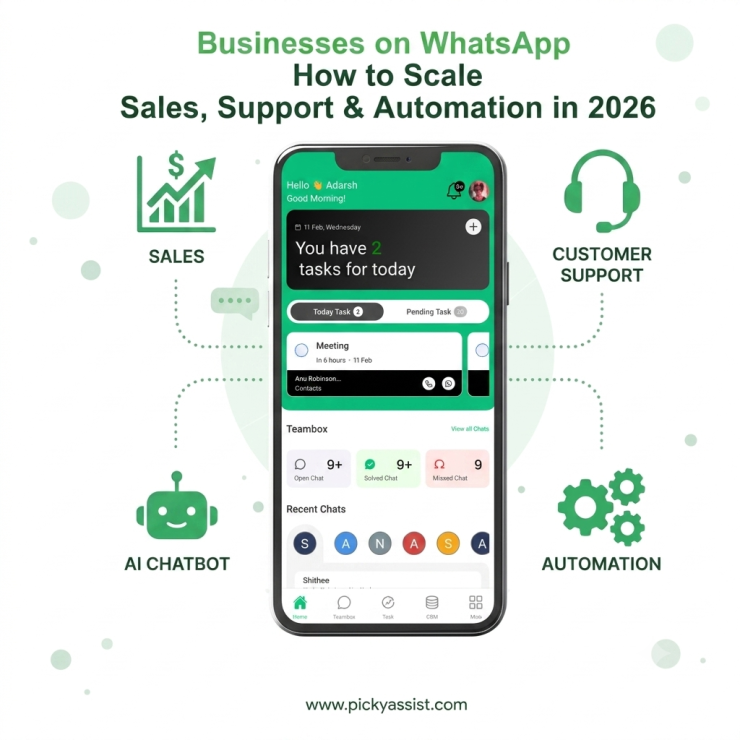
Customers no longer browse websites first, they message. They ask questions, compare options, and expect instant replies inside WhatsApp itself. That shift has quietly created a new operating model: businesses on WhatsApp are no longer “using a channel”, they are building entire revenue systems inside it.
But there’s a problem most companies eventually face. Once conversations increase, manual handling breaks. Leads slip, response times slow down, and follow-ups become inconsistent. This is where structured systems like automation, CRM integration, and conversational workflows become essential and where platforms like Picky Assist help businesses move from reactive messaging to controlled, scalable communication.
Why Are Businesses on WhatsApp Growing Faster Than Traditional Channels?
WhatsApp has become the closest thing to a universal business interface. Unlike email or web forms, it delivers:
- Immediate visibility
- Higher engagement rates
- Two-way conversations instead of static interactions
- Lower friction for customers
This is why businesses on WhatsApp are outperforming traditional acquisition channels in industries like retail, services, education, real estate, and D2C commerce. However, the real advantage is not just presence, it’s automation capability layered on top of conversation.
WhatsApp at Scale Without Structure-The Real Challenge
Most businesses start with manual WhatsApp usage:
- Sales teams replying individually
- Support handling queries from personal numbers
- Broadcasts sent without segmentation
- No tracking of conversation lifecycle
Initially, this works. But as volume grows, problems appear:
- Delayed responses
- Missed leads
- Inconsistent messaging
- No visibility into customer journey
- Poor follow-up discipline
At this stage, businesses don’t fail because WhatsApp doesn’t work, they fail because WhatsApp is not structured.
How Modern Businesses on WhatsApp Actually Operate Today?
The most successful businesses don’t treat WhatsApp as a chat app. They treat it as a full customer engagement system built on multiple layers. Let’s break it down.
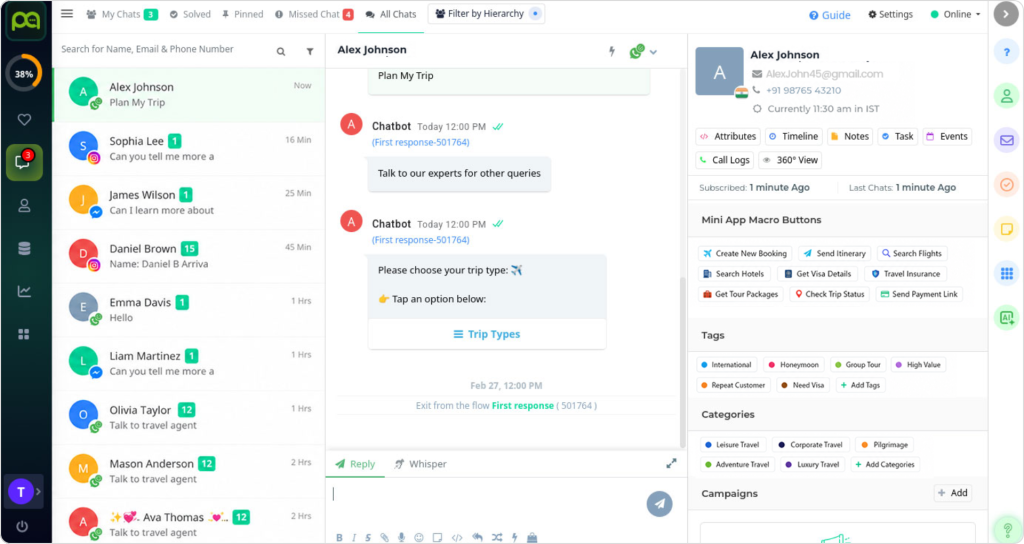
1. WhatsApp CRM: Turning Conversations Into Structured Data
A WhatsApp CRM allows businesses to move beyond scattered chat handling and turn every conversation into structured, actionable customer intelligence. Instead of manually tracking interactions, the system automatically:
- Captures and updates customer data directly from ongoing conversations
- Builds a complete customer profile including history, preferences, and past interactions
- Stores every message contextually, so no conversation detail is lost across teams or devices
- Assigns leads intelligently to the right sales or support teams based on predefined routing rules such as inquiry type, product interest, location, or priority level
- Tracks deal progression in real time, giving visibility into where each customer sits in the pipeline
With this structure in place, businesses gain a single unified customer view, where every interaction contributes to a continuously updated profile.
This eliminates confusion caused by scattered chats and ensures that teams always know who the customer is, what they need, and what stage they are in, making scaling not only possible, but controlled and predictable.
2. WhatsApp AI Chatbot for Instant Engagement
An AI chatbot handles the first layer of communication by acting as the always-available front desk for every incoming customer interaction. Instead of waiting for a human agent, customers receive instant, structured responses that guide them forward in the journey. It manages multiple critical entry-point functions such as:
- Answering FAQs instantly: Resolving common queries like pricing, availability, features, policies, or service details without human intervention, ensuring consistent and accurate responses every time
- Capturing lead details in real time: Collecting essential information such as name, contact number, requirement type, budget range, or product interest directly within the conversation flow
- Qualifying prospects automatically: Asking contextual follow-up questions to identify intent strength, urgency, and purchase readiness, helping separate high-value leads from general inquiries
- Intelligent conversation routing: Directing conversations to the right sales, support, or technical teams based on predefined rules like query category, customer segment, language preference, or deal priority
This structured first layer ensures that no customer message goes unanswered, even outside business hours or during peak traffic periods. At the same time, it significantly improves efficiency by filtering out casual or low-intent inquiries and prioritizing serious buyers who are more likely to convert. This allows sales and support teams to focus only on high-quality conversations, improving response quality and conversion outcomes without increasing workload.
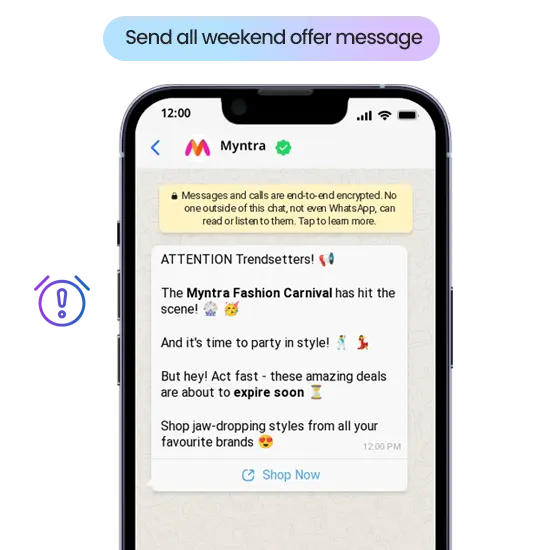
3. WhatsApp Broadcaster for Controlled Communication
A WhatsApp broadcaster replaces risky manual bulk messaging. But the key difference is control:
- Segmented audiences
- Scheduled campaigns
- Engagement-based targeting
- Reduced spam behavior
This is essential for maintaining delivery quality and avoiding account issues.
4. WhatsApp Catalog for Product Discovery
The WhatsApp catalog transforms into a complete digital store inside WhatsApp, allowing customers to browse and purchase products without ever leaving the chat. Customers can:
- Explore product listings like an in-app storefront
- Place orders directly within WhatsApp
- Track and complete purchases seamlessly inside the conversation
At the same time, businesses can manage the entire commerce flow end-to-end:
- Handle and process incoming orders in real time
- Collect payments through integrated workflows
- Coordinate delivery to the customer’s exact location
This turns WhatsApp from a messaging channel into a fully functional commerce system where discovery, ordering, payment, and delivery happen in one continuous experience, removing dependency on external websites and reducing drop-offs significantly.
5. WhatsApp Flows for Guided Automation
Create app-like, guided experiences directly inside WhatsApp without sending users anywhere else. With WhatsApp Flows, businesses can design interactive, step-by-step journeys that feel like a lightweight mobile application embedded within the chat itself. Instead of static messages, users interact with structured UI screens inside WhatsApp, including:
- Buttons for quick actions
- Dropdown selections for choices
- Input fields for capturing data
- Date pickers and form elements
Everything is native, smooth, and designed to keep users engaged inside the conversation, eliminating friction and external redirects.
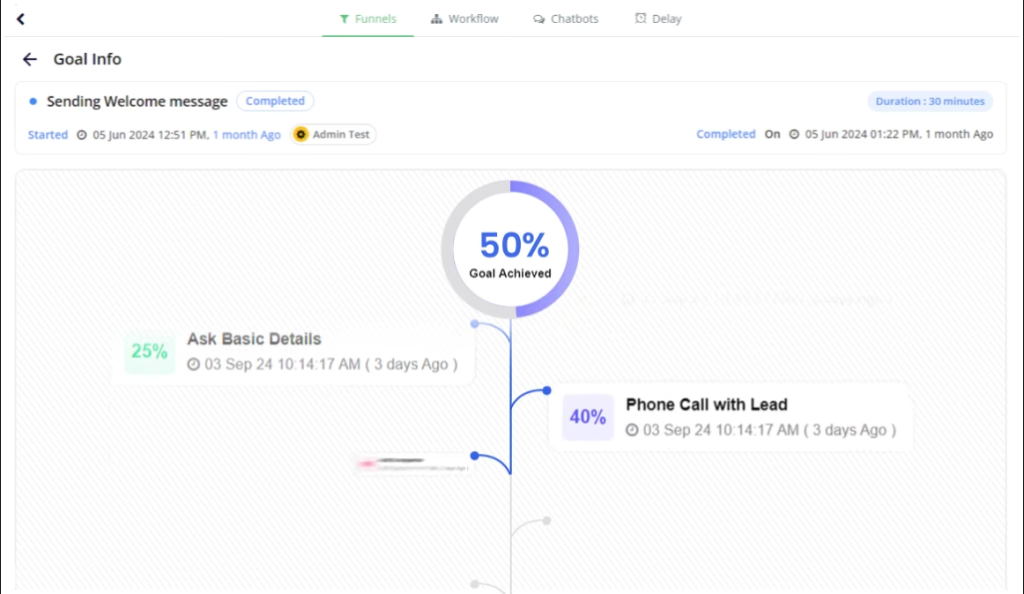
6. Automated Funnels for Predictable Revenue
With automated funnels, businesses can:
- Nurture leads automatically
- Re-engage inactive users
- Guide prospects through decision stages
This replaces manual follow-ups with system-driven engagement.
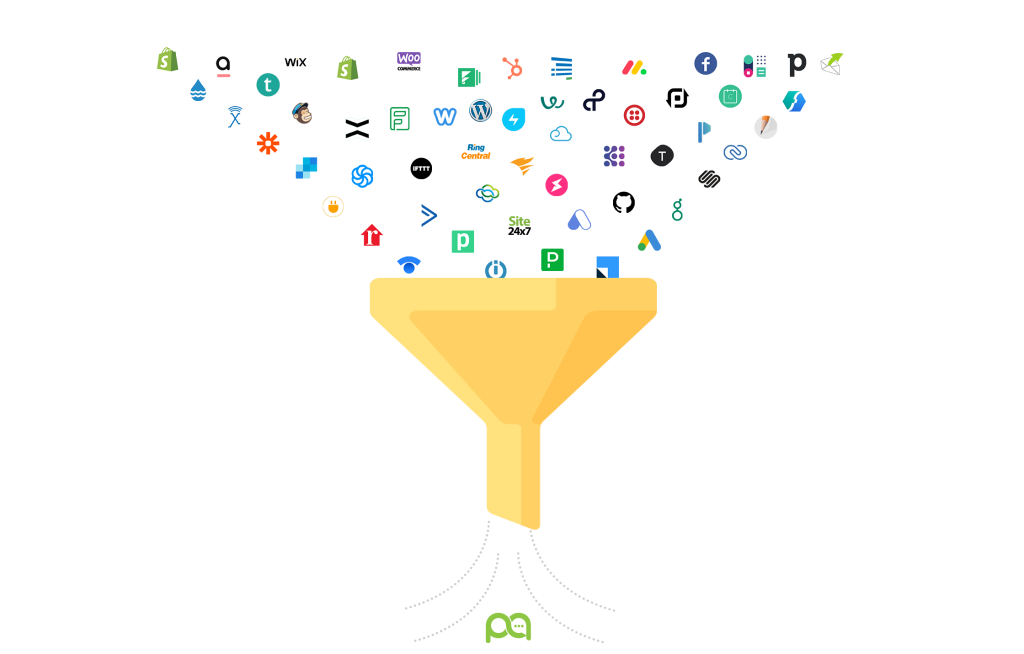
7. Universal Connector for Full Integration
The Universal Connector for integration is what turns WhatsApp into a business operating system. It connects:
- CRM systems
- E-commerce platforms
- Marketing tools
- Internal workflows
This ensures WhatsApp is not isolated, it becomes part of the entire business infrastructure.
Why is WhatsApp Alone Not Enough Anymore?
Many businesses assume WhatsApp is the solution. In reality, WhatsApp is only a channel. The real value comes from how it is structured. Without systems:
- Leads are lost in chats
- Follow-ups depend on memory
- Sales pipelines remain invisible
- Customer data stays fragmented
This is why scaling without automation eventually hits a ceiling.
The New Model: Structured WhatsApp Business Systems
Modern businesses on WhatsApp operate on three layers:
1. Conversation Layer
AI chatbots + live chat handling
2. Intelligence Layer
CRM + analytics + customer segmentation
3. Automation Layer
Funnels + flows + broadcasting systems
When these layers work together, WhatsApp becomes a predictable revenue engine.
Real Business Use Cases
Retail & E-commerce
- Product recommendations
- Abandoned cart recovery
- Order updates
Service Businesses
- Appointment scheduling
- Lead qualification
- Automated reminders
Education & Coaching
- Course inquiries
- Enrollment funnels
- Student engagement
Real Estate
- Property listings
- Buyer filtering
- Automated follow-ups
Where Most Businesses Go Wrong?
Even with WhatsApp tools, many companies fail due to:
- Over-reliance on manual replies
- No segmentation strategy
- Sending generic messages
- Lack of funnel thinking
- No CRM integration
The result is always the same: high activity, low conversion.
How Picky Assist Changes WhatsApp from Chat Tool to Business System?
The real shift happens when WhatsApp stops being a messaging app and becomes an execution layer.
With Picky Assist, businesses can:
- Automate conversations using AI chatbot logic
- Manage customers through a centralized WhatsApp CRM
- Run structured WhatsApp broadcasts without chaos
- Build automated funnels for predictable conversions
- Connect multiple systems through a Universal Connector
Instead of fragmented communication, everything becomes traceable and controlled.
Why Businesses on WhatsApp Scale Faster?
The advantage is not just communication speed. It is system design. Businesses that scale successfully on WhatsApp have:
- Faster lead response cycles
- Higher engagement rates
- Lower acquisition costs
- Better customer retention
- Predictable sales pipelines
Conclusion
The rise of businesses on WhatsApp marks a fundamental shift in how customer relationships are built and scaled. But success does not come from using WhatsApp alone. It comes from building structured systems around it, where conversations are guided, tracked, automated, and converted into measurable outcomes. Without structure, WhatsApp becomes noisy. With systems like Picky Assist, it becomes a controlled, scalable, revenue-generating engine that connects marketing, sales, and support in one place.
FAQs on Businesses on WhatsApp
1. Why are businesses on WhatsApp growing so fast?
Because WhatsApp offers instant communication, high engagement, and direct access to customers without platform friction.
2. What is the role of WhatsApp CRM in modern businesses?
It helps track conversations, manage leads, and maintain a structured customer database across WhatsApp interactions.
3. How does a WhatsApp AI chatbot help businesses?
It automates responses, qualifies leads, and ensures instant engagement without human intervention.
4. What is the difference between WhatsApp broadcaster and normal messaging?
A broadcaster sends structured, segmented campaigns instead of manual, untracked messages.
5. What are WhatsApp flows used for?
They guide customers through structured journeys like onboarding, sales, or support resolution.
6. Can businesses automate WhatsApp completely?
Yes, but best results come from combining automation with human escalation for complex queries.
7. Why do businesses lose leads on WhatsApp?
Because of delayed responses, lack of CRM tracking, and unstructured communication flows.
8. How does Picky Assist help businesses on WhatsApp?
It centralizes CRM, automation, AI chatbots, broadcasting, and integrations into a single system for scalable communication.



Add comment