
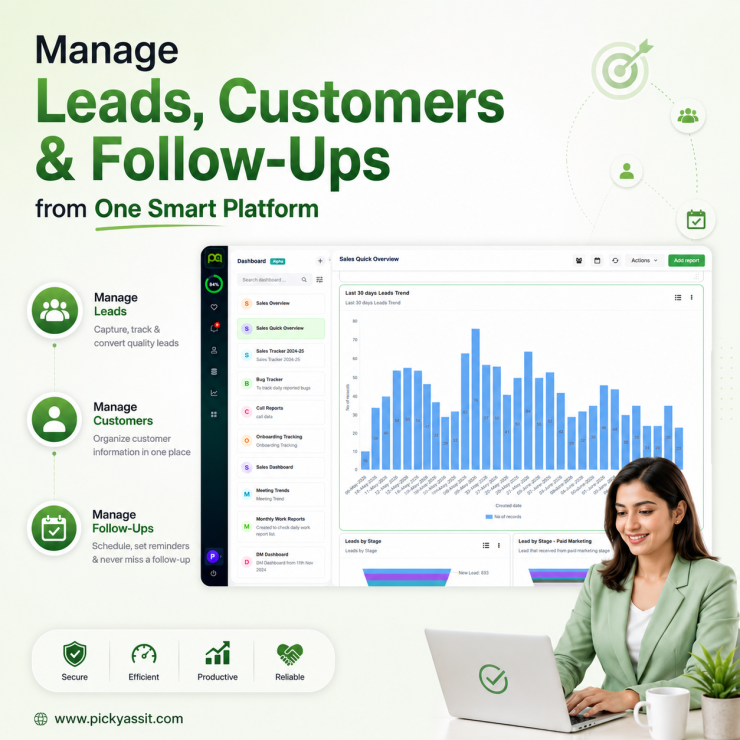
Customers discover businesses through advertisements, websites, social media platforms, referrals, and search engines before eventually reaching out through messaging apps. As a result, customer information often becomes scattered across spreadsheets, inboxes, support tools, and sales systems. This fragmentation creates delays, missed opportunities, inconsistent follow-ups, and poor customer experiences. WhatsApp CRM integration helps solve this challenge by connecting customer conversations directly with customer relationship management processes.
Instead of treating WhatsApp as a standalone communication channel, businesses can centralize conversations, automate workflows, track customer interactions, and maintain complete visibility across the customer journey.
For organizations that rely heavily on WhatsApp for sales, support, lead generation, appointment scheduling, or customer engagement, integrating WhatsApp with a CRM can significantly improve operational efficiency while creating a better customer experience.
In this guide, we’ll explore how WhatsApp CRM integration works, its benefits, common use cases, key features to look for, and how businesses can implement it successfully using solutions like Picky Assist.
What is WhatsApp CRM Integration?
WhatsApp CRM integration refers to the process of connecting WhatsApp Business communication with a CRM system so that customer interactions, contact information, lead status, sales activities, and support conversations can be managed from a centralized environment. Instead of manually transferring information between WhatsApp and separate business tools, integration allows data to flow automatically between both systems.
This means businesses can:
- Capture leads automatically
- Store customer details centrally
- Track conversation history
- Assign conversations to teams
- Automate follow-ups
- Monitor sales pipelines
- Trigger workflows based on customer actions
The result is a more connected and efficient customer management process.
Why are Businesses Prioritizing WhatsApp CRM Integration?
WhatsApp has evolved far beyond a simple messaging application. Today, customers expect businesses to:
- Respond quickly
- Remember previous interactions
- Provide personalized communication
- Offer support through preferred channels
- Deliver seamless experiences across departments
Without CRM connectivity, teams often struggle to maintain consistency.
For example:
A customer sends an inquiry through WhatsApp. The sales team responds manually. The conversation isn’t logged anywhere. The lead follows up two weeks later. A different team member handles the inquiry without context. The customer repeats information, causing frustration and reducing conversion likelihood. With an integrated system, the entire conversation history remains accessible, helping teams provide more informed and efficient service.
How WhatsApp CRM Integration Works?
A typical integration connects WhatsApp messaging with CRM records and workflow automation.
1. Customer Initiates a Conversation
A customer reaches out through:
- WhatsApp ads
- QR codes
- Website chat widgets
- Social media campaigns
- Organic inquiries
2. Contact Information Is Captured
The system automatically creates or updates customer records inside the CRM.
Information may include:
- Name
- Phone number
- Email address
- Lead source
- Conversation history
3. Workflow Automation Begins
Businesses can automate actions such as:
- Lead assignment
- Qualification workflows
- Appointment booking
- Follow-up reminders
- Ticket creation
- Sales notifications
4. Ongoing Relationship Management
Every interaction becomes part of a unified customer profile, allowing teams to track engagement throughout the customer lifecycle.
Key Benefits of WhatsApp CRM Integration
Centralized Customer Data
One of the biggest advantages is having all customer interactions in a single place. Instead of searching through multiple applications, teams gain complete visibility into:
- Previous conversations
- Purchase history
- Support requests
- Sales activities
- Customer preferences
This improves decision-making and customer experience.
Faster Lead Response Times
Research consistently shows that response speed affects conversion rates. When WhatsApp conversations automatically enter CRM workflows, businesses can:
- Route leads instantly
- Notify sales representatives
- Trigger automated responses
- Reduce manual intervention
Faster engagement often translates into better conversion outcomes.
Improved Team Collaboration
Sales, support, and marketing teams frequently work with the same customers. An integrated environment ensures everyone accesses the same information, reducing duplication and communication gaps.
Better Follow-Up Management
Many businesses lose opportunities because leads are forgotten.
CRM automation helps ensure follow-ups occur at the right time through:
- Scheduled reminders
- Automated sequences
- Task creation
- Workflow triggers
Enhanced Customer Experience
Customers appreciate continuity.
When businesses remember previous interactions and respond with context, conversations become more personalized and efficient.
Common Use Cases for WhatsApp CRM
Lead Capture and Qualification
Businesses can automatically collect leads from:
- Facebook and Instagram campaigns
- Website inquiries
- QR code campaigns
- Referral programs
These leads can then enter qualification workflows based on predefined criteria.
Customer Support Management
Support teams can:
- Track tickets
- Manage conversations
- Escalate issues
- Monitor response times
All while maintaining complete customer history.
Appointment Scheduling
Healthcare providers, educational institutions, consultants, and service businesses often use WhatsApp to:
- Confirm appointments
- Send reminders
- Reschedule bookings
- Collect customer information
CRM integration keeps scheduling organized and traceable.
Sales Pipeline Tracking
Sales teams can move opportunities through stages while maintaining communication directly through WhatsApp. This provides greater visibility into:
- Lead status
- Deal progress
- Follow-up activities
- Conversion performance
Customer Retention Campaigns
Businesses can use customer data stored in the CRM to send relevant messages, updates, reminders, and engagement campaigns through WhatsApp.
WhatsApp CRM Integration vs Standalone WhatsApp Usage
Many businesses start with basic WhatsApp communication. However, as inquiry volume grows, limitations become obvious.
| Ordinary WhatsApp Business Account | Integrated CRM WhatsApp Business Account |
|---|---|
| Manual tracking | Automated record management |
| Limited visibility | Centralized customer data |
| Individual communication | Team collaboration |
| Difficult reporting | Performance analytics |
| Manual follow-ups | Automated workflows |
| Scattered information | Unified customer journey |
For growing businesses, the difference becomes increasingly significant.
Features integrated within a WhatsApp Business CRM Platform
Not every solution delivers the same capabilities. When evaluating a WhatsApp business CRM, businesses should look for features that support scalability and operational efficiency.
Shared Team Inbox
A centralized inbox allows multiple team members to manage customer conversations without losing visibility.
Contact Management
Customer profiles should automatically update based on interactions and activities.
Automation Workflows
Automation helps reduce repetitive tasks while improving response consistency.
Lead Management
A strong CRM for WhatsApp should support:
- Lead capture
- Qualification
- Assignment
- Nurturing
- Conversion tracking
Broadcast Messaging
Businesses should be able to send targeted campaigns while maintaining personalization.
Reporting and Analytics
Performance metrics help businesses understand:
- Response times
- Conversion rates
- Agent productivity
- Campaign effectiveness
Multi-Channel Support
As customer communication expands, businesses benefit from solutions that connect WhatsApp with other channels and business systems.
How Picky Assist Supports WhatsApp CRM Integration?
Picky Assist combines WhatsApp communication, CRM capabilities, automation, and customer engagement tools within a unified platform. Businesses can use Picky Assist to:
- Capture and manage leads from WhatsApp
- Automate customer journeys
- Build chatbot-driven workflows
- Route conversations to teams
- Manage customer data centrally
- Send personalized broadcasts
- Track interactions across the customer lifecycle
- Connect with external applications through integrations
Rather than treating WhatsApp as an isolated communication tool, Picky Assist enables businesses to build structured customer engagement processes around their messaging channels. This helps reduce manual effort while improving visibility across sales, marketing, and support operations.
Is a Free Customer Relationship Management Tool Enough?
Many businesses initially search for a Free Customer Relationship Management solution. While free tools may work for small teams with limited requirements, businesses often encounter challenges such as:
- Limited automation
- Restricted integrations
- Basic reporting
- Scalability constraints
- Minimal workflow customization
As customer communication volume increases, organizations typically require more advanced functionality to maintain operational efficiency. The right solution should support growth rather than create future limitations.
Choosing the Best CRM With WhatsApp Integration
Selecting the best CRM with WhatsApp integration depends on business requirements. Important evaluation criteria include:
Ease of Deployment
Implementation should be straightforward without requiring extensive technical resources.
Automation Flexibility
Workflows should adapt to unique business processes.
Scalability
The platform should accommodate increasing customer conversations and team growth.
Analytics Capabilities
Decision-makers need actionable insights, not just message logs.
Integration Ecosystem
The ability to connect with marketing, sales, support, and operational tools is essential for long-term success.
Customer Journey Support
The solution should support the full lifecycle, from lead acquisition to customer retention.
Conclusion
WhatsApp has become one of the most important business communication channels, but managing customer relationships effectively requires more than messaging alone.
A well-executed WhatsApp CRM integration allows businesses to connect conversations with customer data, automate workflows, improve team collaboration, and create more consistent customer experiences.
As customer expectations continue rising, organizations that integrate communication and relationship management into a single workflow gain a significant operational advantage.
For businesses looking to centralize customer engagement, automate repetitive processes, and manage leads more efficiently, platforms like Picky Assist provide a practical way to combine WhatsApp communication with CRM-driven customer management.
FAQs on WhatsApp CRM Integration
1. What is WhatsApp CRM integration?
WhatsApp CRM integration connects WhatsApp conversations with a customer relationship management system, allowing businesses to manage customer interactions, leads, support requests, and sales activities from a centralized platform.
2. Why is WhatsApp CRM integration important for businesses?
It helps businesses organize customer communication, automate workflows, improve response times, maintain conversation history, and create a more consistent customer experience.
3. Can small businesses benefit from a WhatsApp CRM?
Yes. Small businesses can use a WhatsApp CRM to manage inquiries more efficiently, automate repetitive tasks, improve follow-ups, and maintain customer records without relying on manual processes.
4. What features should a WhatsApp CRM software include?
Important features include shared inboxes, contact management, workflow automation, lead tracking, reporting, chatbot capabilities, campaign management, and integration support.
5. How does WhatsApp CRM help sales teams?
Sales teams can track leads, manage pipelines, schedule follow-ups, automate engagement, and maintain visibility into customer conversations throughout the buying journey.
6. What is the difference between WhatsApp Business and a WhatsApp CRM?
WhatsApp Business provides communication tools, while a WhatsApp CRM adds customer management, automation, lead tracking, reporting, workflow management, and collaboration capabilities.
7. Can WhatsApp CRM integration automate customer communication?
Yes. Businesses can automate welcome messages, lead qualification, appointment reminders, follow-up sequences, support workflows, and customer engagement campaigns.
8. How does Picky Assist support WhatsApp CRM integration?
Picky Assist combines WhatsApp messaging, CRM functionality, chatbot automation, lead management, customer engagement tools, team collaboration features, broadcasting capabilities, and third-party integrations within a single platform.



Add comment