
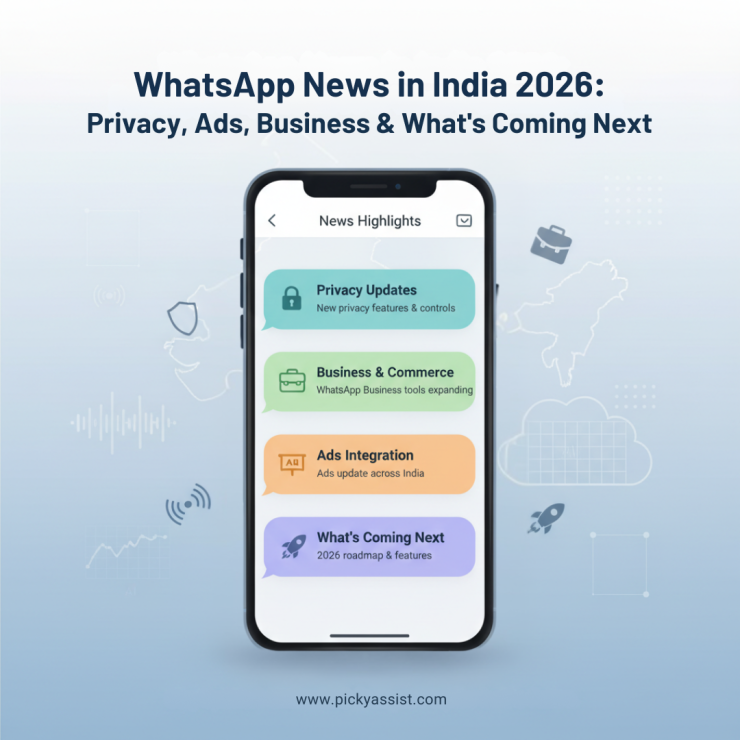
WhatsApp is no longer just a messaging app in India. It has evolved into a digital backbone that powers personal communication, business conversations, customer support, payments, and even government services. With over hundreds of millions of active users across the country, any update, regulation, or feature change on WhatsApp directly impacts India’s digital ecosystem. In 2026, WhatsApp is at the centre of some of the most important conversations around privacy, regulation, advertising, artificial intelligence, and platform control. From Supreme Court scrutiny to new features inspired by Instagram, and from business monetisation to user safety, this year marks a critical phase in WhatsApp’s journey in India. This detailed guide brings together the latest news on WhatsApp in India, explains what it means for users and businesses, and looks at what lies ahead.
Why Does WhatsApp News Matters So Much in India?
India is WhatsApp’s largest market globally. The app is deeply embedded into everyday life:
- Families use it as their primary communication channel
- Small businesses depend on it for sales and customer support
- Enterprises run large-scale WhatsApp automation
- Government bodies use it for citizen outreach
- Educational institutions use it for coordination and alerts
Because of this scale, even small policy or feature changes create nationwide ripple effects. That is why WhatsApp updates in India often attract attention from regulators, courts, businesses, and users alike.
Supreme Court and WhatsApp: Privacy Takes Centre Stage
One of the biggest WhatsApp developments in India recently has been the renewed scrutiny of its privacy policy by the Supreme Court.
What Triggered the Legal Focus?
The issue revolves around data sharing between WhatsApp and its parent company, Meta. While WhatsApp continues to claim that personal messages remain end-to-end encrypted, regulators and the judiciary have questioned:
- Whether user consent is truly informed
- Whether privacy policy language is easy to understand
- Whether Indian users are being fairly protected compared to users in other regions
The Supreme Court has made it clear that digital platforms cannot dilute citizens’ fundamental right to privacy, especially in a country where WhatsApp is almost unavoidable.
Why Does This Matters for Users?
For everyday users, this debate may not immediately change how WhatsApp looks or feels. But long term, it could result in:
- Stronger data protection obligations
- Clearer opt-in or opt-out mechanisms
- Limits on how WhatsApp integrates user data with Meta’s ecosystem
India’s stance here may also influence how global platforms handle privacy in other large markets.
WhatsApp Advertising in India: A Big Shift Is Coming!
For years, WhatsApp positioned itself as an ad-free platform. That positioning is now gradually changing.
Ads on WhatsApp: What’s New?
WhatsApp has begun experimenting with advertising placements inside the app, particularly around:
- Status updates
- Discovery-based sections
- Business discovery surfaces
While personal chats remain ad-free, these experiments signal a shift in WhatsApp’s monetisation strategy.
What Indian Users Are Concerned About?
Indian users are especially sensitive to changes that affect:
- App simplicity
- Privacy and data usage
- Intrusive user experiences
Any aggressive advertising rollout could face resistance if not implemented carefully.
What Does This Means for Businesses?
For businesses, this could unlock:
- New visibility opportunities inside WhatsApp
- More direct customer acquisition
- Integration between WhatsApp conversations and paid discovery
However, it also raises questions around cost, targeting, and compliance under Indian data protection norms.
New WhatsApp Features Rolling Out for Indian Users
Apart from regulation and monetisation, WhatsApp continues to release new features to stay competitive and relevant.
Enhanced Status Privacy Controls
One of the most anticipated updates is more granular control over Status visibility. Similar to features seen on Instagram, users may soon be able to:
- Share updates with select contacts
- Create custom visibility lists
- Maintain better separation between personal and professional contacts
This is particularly relevant in India, where users often mix family, colleagues, customers, and vendors in a single WhatsApp account.
Smarter Messaging and AI Enhancements
WhatsApp is gradually integrating AI-powered assistance, especially on the business side. These enhancements aim to:
- Improve automated replies
- Help businesses respond faster
- Provide better conversation flow for users
For Indian businesses handling large chat volumes, these updates could significantly improve efficiency.
Multi-Device and Cross-Platform Improvements
WhatsApp’s multi-device experience continues to improve, allowing users to:
- Access chats across devices more reliably
- Reduce dependency on a single primary phone
- Improve continuity for professionals and remote workers
In a mobile-first country like India, these improvements matter more than they might elsewhere.
WhatsApp Business in India: Key Developments
WhatsApp Business is no longer just a small-business tool. It has become a core communication channel for enterprises, startups, and D2C brands.
Growing Adoption of WhatsApp Business API
More Indian companies are moving from the free WhatsApp Business App to the WhatsApp Business API, driven by:
- Automation requirements
- CRM integration
- Lead qualification workflows
- Scalable customer support
This shift reflects how WhatsApp is evolving into a serious business infrastructure rather than a casual messaging platform.
Pricing and Conversation-Based Billing
WhatsApp’s conversation-based pricing model continues to influence how Indian businesses plan their communication strategies.
Brands are now more focused on:
- Reducing unnecessary messages
- Improving response quality
- Designing better user journeys
This has led to a rise in intent-based messaging strategies, where relevance matters more than volume.
WhatsApp Payments in India: Slow but Strategic Progress
WhatsApp Payments was expected to revolutionise digital payments in India overnight. While adoption has been slower than expected, it remains strategically important.
Current Status of WhatsApp Payments
WhatsApp Payments operates within India’s UPI ecosystem, offering:
- Peer-to-peer transfers
- In-chat payment experiences
- Integration with business messaging
Although competition from established UPI apps is intense, WhatsApp’s reach gives it long-term potential.
What’s Holding It Back?
Key challenges include:
- Strong competition from mature payment platforms
- User habit inertia
- Regulatory caution
Despite this, WhatsApp Payments continues to be refined, and future integrations with commerce and business messaging could increase adoption.
Rising Safety Concerns and Scam Awareness
With scale comes misuse. WhatsApp in India remains a major channel for scams, misinformation, and impersonation attempts.
Common WhatsApp Scams in India
Some recurring patterns include:
- Impersonation of officials or companies
- Fake job offers
- OTP and payment fraud
- Loan and investment scams
WhatsApp has been strengthening its detection systems, but user awareness remains critical.
Steps WhatsApp Is Taking
To counter misuse, WhatsApp has introduced:
- Message forwarding limits
- Account reporting tools
- Stronger spam detection
These measures aim to balance user safety with privacy.
Government Communication and WhatsApp
WhatsApp continues to be used by Indian government bodies for:
- Public awareness campaigns
- Emergency alerts
- Health and civic communication
This official usage further reinforces WhatsApp’s role as a national communication layer, increasing the importance of regulatory oversight and platform accountability.
How WhatsApp’s India Strategy is Evolving?
Looking at recent developments together, a clear pattern emerges.
WhatsApp in India is moving towards:
- Tighter regulatory compliance
- Controlled monetisation
- Business-first innovation
- Improved privacy narratives
India is not just a user base for WhatsApp anymore. It is a policy-defining market that influences global platform decisions.
What Indian Users Should Expect Next
Based on current trends, users can expect:
- Clearer privacy communication
- More transparency around data usage
- Additional controls over visibility and interactions
- Gradual introduction of ads outside personal chats
These changes will likely roll out incrementally rather than all at once.
What Businesses Should Prepare For?
Indian businesses using WhatsApp should focus on:
- Compliance-friendly messaging practices
- Consent-driven communication
- High-intent conversation design
- Reduced dependency on broadcast-style messaging
The future of WhatsApp marketing in India will favour quality over quantity.
Final Thoughts: WhatsApp’s Most Important Phase in India
The latest news about WhatsApp in India shows that the platform is entering its most defining phase yet. It is no longer just about features. It is about trust, regulation, monetisation, and long-term sustainability. For users, WhatsApp remains indispensable. In businesses, it is becoming unavoidable. For regulators, it is impossible to ignore.
How WhatsApp navigates India in 2026 will likely shape the future of digital communication not just in the country, but globally.
FAQs on WhatsApp in India in 2026
1. What is the latest news on WhatsApp in India in 2026?
The latest news about WhatsApp in India includes increased scrutiny from the Supreme Court over privacy and data sharing, experiments with advertisements inside the app, new privacy controls for Status updates, and growing adoption of WhatsApp Business and automation by Indian companies.
2. Is WhatsApp still private and safe to use in India?
WhatsApp messages remain end-to-end encrypted, meaning personal chats cannot be read by third parties. However, concerns in India focus on metadata usage, policy transparency, and data sharing with Meta, which is why regulators and courts are closely monitoring WhatsApp’s practices.
3. Will WhatsApp show ads to Indian users?
WhatsApp has started testing ads in areas like Status and discovery sections, while keeping personal chats ad-free. Any wider rollout in India is expected to be gradual and regulated, considering user sensitivity around privacy and app experience.
4. How is WhatsApp Business changing in India?
WhatsApp Business in India is moving beyond small businesses. Enterprises are increasingly using the WhatsApp Business API for automation, CRM integration, lead qualification, and scalable customer support, making WhatsApp a core business communication platform.
5. What should businesses and users expect next from WhatsApp in India?
Users can expect clearer privacy communication, better control over interactions, and incremental feature updates. Businesses should prepare for compliance-focused messaging, intent-driven conversations, and smarter use of WhatsApp for customer engagement rather than mass broadcasting.




Add comment