
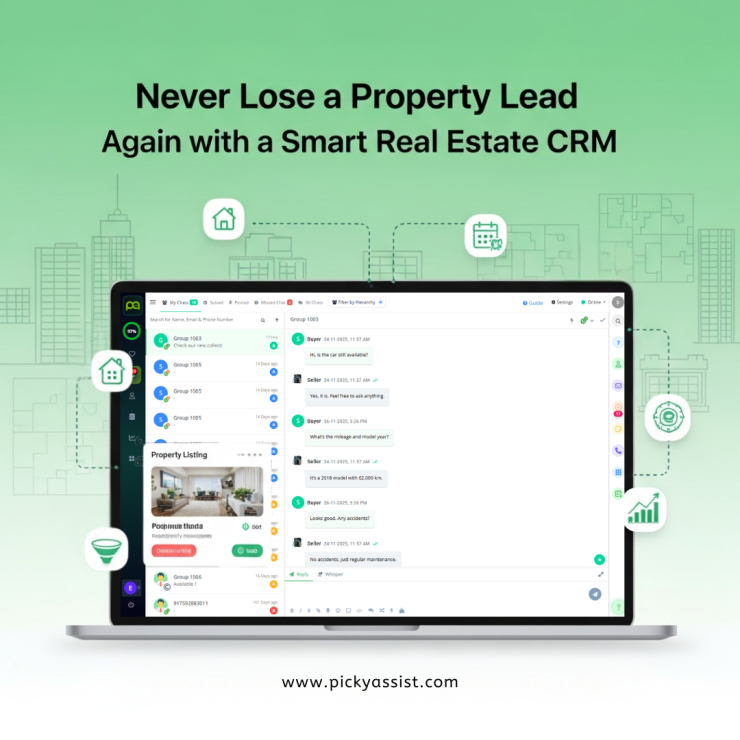
Real estate has evolved into a fast-moving, highly competitive industry where speed, personalization, and follow-up determine whether a deal closes or disappears. Agents who still manage contacts in spreadsheets or scattered messaging apps often lose valuable leads. This is where a CRM system for real estate agents becomes essential.
A modern CRM for real estate agents helps professionals manage leads, nurture prospects, track property interactions, automate communication, and close deals faster. From independent agents to large brokerage firms, adopting the best CRM for realtors can dramatically improve productivity and revenue.
In this in-depth guide, you’ll learn how a CRM system for realtors works, the features to look for, benefits for agents and brokers, and how to select the top CRM software for real estate agents that fits your workflow.
Why Do Real Estate Agents Need a CRM System?
Real estate deals rarely happen instantly. A buyer might inquire today but purchase months later. Sellers often speak with multiple agents before listing their property. Without structured follow-up, opportunities easily slip away.
A CRM system for real estate agents centralizes every client interaction and ensures that agents never miss an opportunity.
Key Challenges Without a CRM
- Leads getting lost in email or messaging apps
- No structured follow-up process
- Difficulty tracking client conversations
- Inefficient manual data entry
- Limited visibility into sales pipeline
- Poor team collaboration within brokerages
A real estate agent management software solves these problems by organizing contacts, automating tasks, and tracking every stage of the property sales journey.
For both individual agents and brokerages, a reliable estate agent CRM system acts as the operational backbone of real estate sales.
What is a CRM System for Real Estate Agents?
A CRM system for real estate agents is a specialized software platform designed to manage property leads, client relationships, and sales pipelines within the real estate industry.
Unlike generic CRM tools, realtor CRM software includes features tailored for property professionals such as property listings, buyer preferences, property alerts, and transaction tracking.
Core Functions of a Real Estate CRM
A typical CRM software for real estate agents includes:
- Lead capture and management
- Contact management systems for realtors
- Property listing integration
- Automated follow-ups
- Sales pipeline tracking
- Appointment scheduling
- Marketing automation
- Reporting and analytics
These capabilities transform scattered conversations into structured workflows, making it easier for agents to nurture relationships and convert prospects.
Key Features of the Best CRM for Realtors
Choosing the best CRM for real estate agents requires understanding which features directly impact productivity and client engagement.
1. Lead Management
A strong real estate agent lead management software automatically captures inquiries from multiple channels such as websites, ads, social media, and property portals. This ensures quick responses and better conversion.
Agents can then categorize leads based on:
- Buying intent
- Budget
- Property preferences
- Location interest
2. Contact Management for Realtors
A powerful realtor contact management system organizes all contacts, conversations, and interactions in one place. With realtor contact management software, agents maintain strong relationships and deliver personalized communication.
This includes:
- Buyer and seller profiles
- Communication history
- Property interests
- Follow-up reminders
3. Sales Pipeline Management
A professional agent CRM allows real estate agents to visualize the entire sales pipeline. Using a top CRM for realtors, agents always know where each lead stands in the buying journey.
Typical stages include:
- New inquiry
- Property viewing scheduled
- Negotiation stage
- Offer submitted
- Deal closed
4. Automated Follow-Ups
Timely communication is critical in real estate. A modern estate agency CRM automates reminders, messages, and nurturing sequences.
Automation ensures that:
- Leads receive instant responses
- Follow-ups happen on time
- No prospects are forgotten
This feature makes a top rated CRM for realtors extremely valuable for busy professionals managing multiple leads simultaneously.
5. Property Matching and Recommendations
Advanced real estate agent software allows agents to match property listings with client preferences automatically.
For example:
- Budget range
- Preferred location
- Property type
- Number of bedrooms
An efficient estate agent CRM software alerts agents when suitable properties become available.
6. Communication Integration
A modern CRM system for realtors integrates with multiple communication channels such as email, messaging platforms, and calling tools.
This allows agents to manage conversations without switching between multiple apps.
With centralized communication tracking, realtor client management software improves response times and client satisfaction.
7. Analytics and Reporting
Data-driven decisions are essential in real estate. Using this data, brokers can optimize marketing campaigns and improve sales strategies.
A top CRM software for real estate agents provides insights into:
- Lead sources
- Conversion rates
- Agent performance
- Sales forecasts
Benefits of Using a CRM for Real Estate Agents
Adopting a CRM for realtors provides significant operational and financial advantages.
Improved Lead Conversion
A structured real estate CRM for brokers ensures every lead receives timely follow-ups, dramatically increasing conversion rates.
Better Client Relationships
With realtor client management software, agents maintain a detailed history of every interaction. This allows for personalized communication and stronger trust.
Increased Productivity
Manual tasks like data entry, reminders, and follow-ups consume valuable time. Automation within CRM programs for realtors frees agents to focus on selling properties.
Organized Sales Pipeline
A top agent CRM provides clear visibility into ongoing deals, helping agents prioritize high-value opportunities.
Scalable Operations for Brokerages
Large agencies benefit from CRM software for real estate brokers, which enables team collaboration, centralized data management, and performance monitoring.
Best CRM Software for New Real Estate Agents
New professionals entering the industry often struggle with managing contacts and leads. A CRM software for new real estate agents simplifies the process by providing structured workflows and automation.
Features Beginners Should Look For
- Simple interface
- Automated lead capture
- Easy contact management
- Mobile accessibility
- Affordable pricing
An easy CRM for realtors helps new agents focus on building relationships rather than managing complex software.
How Brokers Benefit from Real Estate CRM Systems?
Brokerages operate at a larger scale and require tools that support team collaboration.
A powerful CRM software for real estate brokers helps manage multiple agents, track deal progress, and ensure consistent client communication.
Broker-Level Advantages
- Agent performance tracking
- Centralized property database
- Team lead distribution
- Reporting dashboards
- Financial forecasting
With real estate software for brokers, leadership teams gain full visibility into operational performance.
Essential Tools Included in Real Estate Agent Management Software
Modern online agent real estate software combines several operational tools into one platform.
Typical Modules
- Lead management
- Client communication tracking
- Property listing management
- Marketing automation
- Task management
- Appointment scheduling
- Reporting and analytics
This all-in-one approach makes real estate agent client management software a critical tool for modern agencies.
How to Choose the Best CRM for Real Estate Agents?
Selecting the best CRM for realtors requires evaluating several key factors.
Ease of Use
An easiest CRM for realtors reduces training time and improves adoption across teams.
Automation Capabilities
Choose a platform that automates follow-ups, lead assignments, and reminders.
Integration Options
Your CRM system for real estate agents should integrate with marketing platforms, property portals, and communication tools.
Customization
Every agency operates differently. A flexible estate agent CRM system should allow custom workflows and pipelines.
Mobile Accessibility
Agents often work outside the office. A mobile-friendly realtor CRM software ensures productivity anywhere.
Common Mistakes Real Estate Agents Make Without a CRM
Agents who avoid CRM systems often face operational inefficiencies.
Common Issues
- Losing leads due to poor tracking
- Forgetting follow-ups
- Disorganized client data
- Inconsistent communication
- Limited insight into sales performance
A professional CRM system for realtors eliminates these risks by creating structured workflows.
Future Trends in Real Estate CRM Software
The next generation of CRM software for real estate agents is becoming more intelligent and automated.
Emerging Innovations
- AI-Powered Lead Scoring: AI identifies high-value prospects.
- Predictive Analytics: Agents receive recommendations on which leads are likely to convert.
- Conversational Automation: Chatbots and messaging automation improve response speed.
- Advanced Client Insights: Future realtor contact management systems will provide deeper customer behavior analytics.
These innovations will redefine how agents interact with clients and manage property sales.
Conclusion
In today’s competitive property market, success depends on efficiency, responsiveness, and strong client relationships. A powerful CRM system for real estate agents enables professionals to manage leads, automate communication, and track every deal with precision.
From independent agents to large brokerages, the right CRM software for real estate agents transforms daily operations by centralizing contacts, organizing pipelines, and improving client engagement.
Whether you are searching for the best CRM for realtors, exploring CRM programs for realtors, or implementing real estate agent lead management software, investing in the right platform will directly impact your productivity and revenue growth.
A well-implemented estate agency CRM does more than manage contacts, it becomes the strategic engine behind sustainable real estate success.
FAQs on CRM system for real estate agents
1. What is the best CRM system for real estate agents?
The best CRM for real estate agents is one that provides lead management, automated follow-ups, contact management, and sales pipeline tracking. It should also integrate with communication tools and property platforms.
2. Why do realtors need CRM software?
A CRM for realtors helps agents manage client relationships, track property interactions, automate follow-ups, and increase lead conversion rates.
3. Is CRM software useful for new real estate agents?
Yes. A CRM software for new real estate agents helps beginners organize contacts, manage leads efficiently, and build stronger relationships with clients.
4. What features should realtor CRM software include?
The most important features in realtor CRM software include:
- Lead management
- Contact management
- Automated communication
- Property tracking
- Sales pipeline management
- Reporting and analytics
5. Can real estate brokers use CRM systems?
Absolutely. A CRM software for real estate brokers allows brokerage firms to manage teams, distribute leads, monitor agent performance, and track deals across the organization.
6. How does CRM improve real estate sales?
A real estate agent management software improves sales by organizing leads, ensuring timely follow-ups, providing pipeline visibility, and helping agents build stronger client relationships.



Add comment