
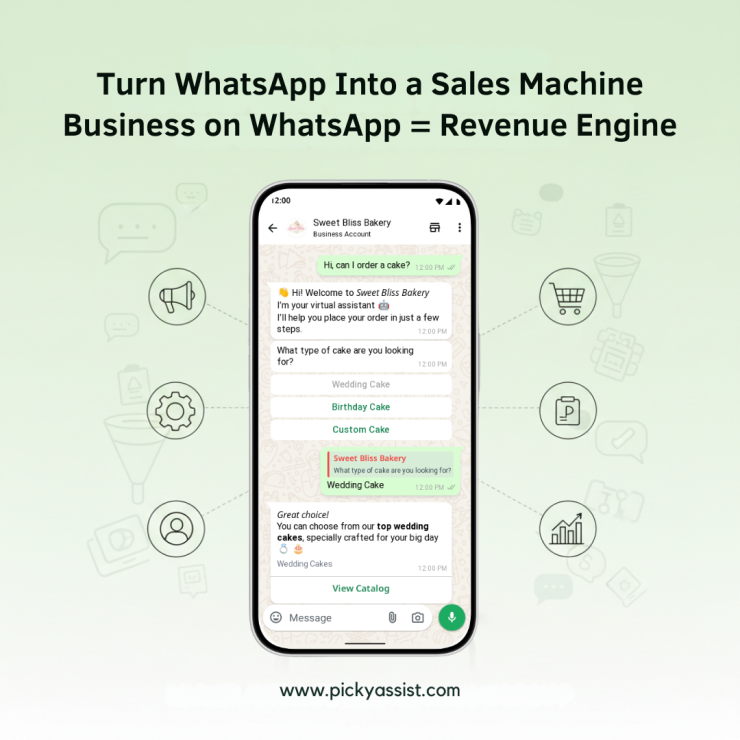
Commerce has shifted from websites-first to conversations-first. Today, business on WhatsApp is not simply a communication channel, it is a complete revenue infrastructure. Brands are no longer asking whether they should use WhatsApp. They are asking how to structure WhatsApp marketing, automation, and WhatsApp ecommerce for maximum conversion efficiency.
With billions of active users worldwide, WhatsApp has become a dominant platform for customer engagement. Businesses that implement structured systems for WhatsApp business ecommerce are outperforming competitors relying solely on websites, emails, or social media redirects.
This guide explains how to build, optimize, and scale a business account on WhatsApp using automation, commerce tools, and enterprise integrations, while positioning your brand for long-term growth.
What Does “Business on WhatsApp” Really Mean?
Business on WhatsApp refers to structured commercial operations conducted through a WhatsApp business account. It goes far beyond basic messaging.
A properly configured business account in WhatsApp enables:
- Branded business profiles
- Automated WhatsApp business chat flows
- WhatsApp autoresponder systems
- WhatsApp store and product catalogs
- WhatsApp ecommerce integration
- Payment-enabled WhatsApp E-commerce
- Multi-agent collaboration
- CRM system connectivity
Setting Up a WhatsApp Business Account the Right Way
There are two primary models for business account on WhatsApp deployment:
WhatsApp Business App
Designed for small and local businesses. It allows you to:
- Create a WhatsApp store
- Access WhatsApp business web
- Set up greeting and away messages
- Manage a basic WhatsApp account for customer interaction
This is ideal for early-stage businesses exploring WhatsApp marketing.
WhatsApp Business Platform (API)
This model supports scalable WhatsApp enterprise use cases. It enables:
- Advanced WhatsApp ecommerce integration
- Multi-agent access (WhatsApp business on multiple devices)
- CRM synchronization
- Automation architecture
- Payment integrations
- WhatsApp commerce platform connectivity
WhatsApp for Business Pricing: What to Expect
Understanding WhatsApp for business pricing is critical for planning ROI.
The standard app is free. However, the API follows conversation-based billing. Pricing depends on:
- Customer-initiated conversations
- Business-initiated marketing conversations
- Utility notifications
- Authentication messages
For enterprises implementing WhatsApp commerce at scale, pricing remains cost-efficient compared to traditional paid acquisition channels.
WhatsApp Marketing: Broadcast Messaging for a Wider Reach
WhatsApp marketing is often misunderstood as bulk messaging. In reality, modern WhatsApp marketing focuses on structured engagement.
Effective WhatsApp marketing strategies include:
- Click-to-WhatsApp advertisements
- Lead qualification via WhatsApp autoresponder
- Abandoned cart recovery campaigns
- Personalized product recommendations
- Re-engagement workflows
- Post-purchase follow-ups
WhatsApp Commerce: Building a Revenue Engine Inside Chat
WhatsApp commerce enables businesses to sell products directly within conversations. Instead of redirecting customers to external websites, transactions occur inside the chat interface.
There are three levels of WhatsApp E-commerce maturity:
1. WhatsApp Store (Catalog-Based Model)
A WhatsApp ecommerce store displays products within chat. Customers browse, inquire, and place orders.
2. Automated Checkout Workflows
Customers select items, share delivery details, and complete payment inside WhatsApp. This model supports true ecommerce on WhatsApp.
3. WhatsApp Conversational Commerce
Conversational commerce on WhatsApp replaces browsing with guided interaction. Customers describe needs. The system suggests products. Checkout happens instantly.
Brands implementing WhatsApp ecommerce at this level experience faster conversions and reduced drop-offs.
WhatsApp Ecommerce Integration: Connecting Systems for Scale
For sustainable growth, WhatsApp ecommerce integration is essential. A robust WhatsApp commerce platform should connect:
- CRM systems
- ERP software
- Inventory management tools
- Payment gateways
- Shipping providers
This ensures E-commerce through WhatsApp is synchronized with backend operations. Without integration, manual processes create bottlenecks and errors.
Business Account on Multiple Devices: Managing Teams Efficiently
As businesses scale, shared access becomes critical. WhatsApp business on multiple devices allows sales teams, support teams, and marketing teams to collaborate within one WhatsApp account.
With multi-agent access:
- Conversations can be routed automatically
- Teams avoid duplicated responses
- Performance can be monitored
- SLAs can be maintained
This is particularly important for brands or any WhatsApp marketing agency managing client campaigns.
WhatsApp Enterprise: Advanced Infrastructure for Large Brands
WhatsApp enterprise solutions are built for high-volume businesses. They include:
- AI-powered automation chatbot
- Advanced analytics
- Workflow orchestration
- Compliance frameworks
- High message throughput
Enterprises leveraging WhatsApp enterprise infrastructure use conversational commerce on WhatsApp not only for sales but also for onboarding, customer retention, and account management.
WhatsApp Autoresponder: Automation That Converts
A WhatsApp autoresponder is more than a greeting message. It can:
- Qualify leads automatically
- Segment customers by interest
- Trigger ecommerce workflows
- Send payment reminders
- Confirm orders
- Provide instant FAQs
In WhatsApp ecommerce, automation ensures 24/7 operational capability without increasing staffing costs.
WhatsApp Ecommerce vs Traditional Ecommerce
Traditional ecommerce requires multiple steps:
Ad → Website → Product Page → Cart → Checkout → Payment.
In contrast, ecommerce on WhatsApp compresses the journey:
Ad → WhatsApp Chat → Automated Checkout → Confirmation.
The reduction in friction explains why WhatsApp E-commerce conversion rates often outperform traditional funnels.
Why Businesses Are Shifting to WhatsApp Business for Ecommerce
The strategic advantages of WhatsApp commerce include:
- Direct customer access without algorithm dependency
- Higher open and response rates
- Reduced acquisition costs
- Immediate customer feedback loops
- Seamless conversational upselling
- Simplified E-commerce through WhatsApp flows
Brands adopting WhatsApp commerce early establish competitive moats in customer engagement.
Choosing Between In-House Setup and WhatsApp Marketing Agency Support
Some businesses build internal teams for WhatsApp automated marketing. Others partner with a WhatsApp marketing agency specializing in. But a BSP provider like Picky Assist can help you with all the set-up you may require to run WhatsApp commerce automatically without a developer’s help. The no-code chatflow builder lets you set up chatsbots on your own, lets you broadcast without getting your number blocked, collect payments with reminders and use catalogues for product display. Picky Assist can help you with:
- API setup
- Compliance approvals
- WhatsApp ecommerce integration
- Automation architecture
The right choice depends on internal technical capabilities and growth velocity goals.
Compliance and Best Practices When Using WhatsApp for Business
To ensure sustainable growth:
- Obtain customer opt-in before marketing
- Avoid spam-like bulk messaging
- Use segmentation for personalization
- Maintain response time standards
- Monitor analytics continuously
A professional business account on WhatsApp must balance automation with customer-centric communication.
The Strategic Power of Business on WhatsApp
Business on WhatsApp represents the evolution of digital commerce. It combines messaging, automation, and transactional capability inside one ecosystem. Companies investing in WhatsApp ecommerce are not just adding another channel. They are building a direct revenue engine powered by conversation. Brands that master WhatsApp commerce today will define the next generation of ecommerce on WhatsApp.
FAQ on Business on WhatsApp
1. What is the difference between a personal WhatsApp account and a business account in WhatsApp?
A personal WhatsApp account is designed for individual communication. A WhatsApp account includes commercial features such as catalogs, automation tools, analytics, and integration capabilities.
2. Is WhatsApp for business pricing expensive?
The basic app is free. API pricing depends on conversation categories and usage volume. For most businesses, it remains cost-effective compared to paid advertising channels.
3. Can I run a WhatsApp ecommerce store without a website?
Yes. With WhatsApp ecommerce integration and payment gateways enabled, you can operate a complete WhatsApp ecommerce store directly within chat.
4. What is WhatsApp conversational commerce?
WhatsApp conversational commerce is a sales model where buying decisions occur through guided messaging interactions rather than traditional website browsing.
5. Can multiple team members access the same WhatsApp business account?
Yes. WhatsApp business on multiple devices enables team collaboration, routing, and shared inbox management.
6. Do I need WhatsApp enterprise to sell products?
Not necessarily. Small businesses can begin with the standard app. However, large-scale WhatsApp ecommerce operations typically require enterprise-level infrastructure.
7. How does WhatsApp ecommerce integration improve operations?
It connects your WhatsApp commerce platform to CRM, inventory, payments, and logistics systems, ensuring seamless E-commerce through WhatsApp without manual data entry.


Add comment