

Customer behaviour in ecommerce has shifted dramatically over the last few years. Shoppers no longer want long checkout flows, delayed responses, or fragmented support across channels. They want instant answers, personalised assistance, and the ability to complete purchases where conversations already happen. This shift is exactly where WhatsApp Business Ecommerce becomes a strategic advantage rather than just another messaging tool.
With over 2.7 billion active users globally and message open rates exceeding 95%, WhatsApp has evolved from a simple chat application into a powerful commerce channel. For online retail brands, this evolution is needed to be competitive in a conversation-driven digital economy.
What is WhatsApp Business Ecommerce?
WhatsApp Business Ecommerce refers to the use of WhatsApp’s business-grade infrastructure to support discovery, engagement, transactions, and post-purchase communication within a single conversational interface. Unlike traditional ecommerce models that push users through websites and apps, this approach brings the storefront to the customer.
Retail brands are increasingly building a WhatsApp ecommerce store that allows customers to browse products, ask questions, receive recommendations, and place orders without leaving the chat window. This reduces friction, improves response time, and significantly increases conversion probability.
Industry data shows that conversational channels can lift conversion rates by 20–30% compared to static web journeys, especially for high-consideration purchases.
Why Are Online Retail Brands Moving Toward Conversational Commerce?
Modern ecommerce success depends on relevance and speed. Customers expect brands to remember preferences, respond instantly, and guide them contextually. This is where conversational commerce WhatsApp plays a defining role.
Through structured messaging, product catalogs, quick replies, and automation, brands can recreate an assisted shopping experience digitally. When combined with WhatsApp ecommerce integration across CRM system, inventory, and payment systems, conversations turn into measurable revenue channels rather than support-only touchpoints.
WhatsApp Business API providers like Picky Assist enable brands to operationalize this model by orchestrating conversations at scale while retaining personalization.
The Role of APIs in Scaling Ecommerce on WhatsApp
For growing brands, manual messaging is not sustainable. This is why the WhatsApp API for ecommerce is critical. APIs allow businesses to automate notifications, order updates, abandoned cart reminders, and customer support flows without losing compliance or message quality.
A WhatsApp ecommerce API also enables seamless system-level communication between ecommerce platforms and WhatsApp. This becomes especially valuable for brands managing thousands of SKUs or high daily order volumes.
When implemented correctly, automation reduces support costs by up to 40% while improving customer satisfaction scores.
WhatsApp + Ecommerce Platforms: WooCommerce and Beyond
Many mid-market and enterprise brands rely on WooCommerce for flexibility. Integrating WhatsApp business API woocommerce allows these brands to sync product catalogs, order statuses, and customer data directly into WhatsApp conversations.
With WhatsApp business woocommerce setups, customers can receive order confirmations, shipping alerts, and personalized recommendations automatically. This creates a unified post-purchase experience that reduces return rates and increases repeat purchases.
An increasingly common model is the WhatsApp integrated ecommerce store, where WhatsApp becomes a parallel storefront rather than a secondary support channel.
Enabling End-to-End Ecommerce on WhatsApp
The idea of ecommerce on WhatsApp is no longer experimental. Brands are actively running campaigns, flash sales, and product launches entirely through chat-based flows. This includes browsing, cart creation, payment links, and order confirmation.
By enabling e-commerce through WhatsApp, brands reduce dependency on paid ads and external traffic sources. First-party conversations become owned channels, improving lifetime value and retention.
In this model, an ecommerce store on WhatsApp functions as both a sales and engagement engine, especially effective for D2C, fashion, electronics, and subscription-based businesses.
Compliance, Trust, and Customer Experience
Trust is a critical ranking and conversion factor. Using WhatsApp business for ecommerce ensures that all communication follows Meta’s compliance guidelines, including opt-ins, template approvals, and quality scoring.
Unlike unofficial tools, API-based communication protects brand reputation while enabling scale. A WhatsApp e commerce website may drive discovery, but trust is built when conversations continue securely on verified business accounts.
WhatsApp business platforms like Picky Assist add another layer of reliability by offering analytics, quality monitoring, and fallback mechanisms that prevent message failures or customer frustration.
Why Does WhatsApp Business Ecommerce Matters for Long-Term Growth?
The long-term value of WhatsApp Business Ecommerce lies in ownership. Brands own conversations, data, and customer relationships without relying entirely on algorithms or third-party marketplaces.
Businesses using this approach see:
- 3x faster response times
- 25–35% higher repeat purchase rates
- Lower cart abandonment due to real-time assistance
When powered by WhatsApp business platforms like Picky Assist, brands gain centralized visibility across sales, support, and marketing conversations, turning WhatsApp into a revenue-driving asset rather than a cost center.
How Picky Assist Helps Brands Succeed with WhatsApp Commerce?
Picky Assist is designed specifically for businesses serious about conversational commerce. It enables structured automation, human-agent collaboration, CRM syncing, and analytics, all within a compliant WhatsApp framework. Picky Assist offers automation tools like Teambox for team collaboration, Broadcaster for sending mass WhatsApp messages without blocks and AI Chatbots to engage customers even after your business hours.
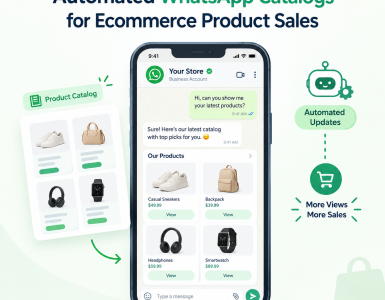
Other solutions like funnels, lets you know the actual status of your leads and automated catalogs lets you open a digital store to showcase products and improve sales.
For brands building scalable WhatsApp Business Ecommerce strategies, Picky Assist provides the operational backbone required to manage volume without sacrificing personalization.
FAQs on WhatsApp Business Ecommerce
What is WhatsApp Ecommerce and how does it work?
WhatsApp ecommerce allows businesses to sell products directly through WhatsApp conversations using catalogs, automation, and payment links. Customers can browse, ask questions, and place orders within chat.
Is WhatsApp suitable for large ecommerce businesses?
Yes. With official APIs and platforms like Picky Assist, WhatsApp can support high-volume order processing, automated notifications, and multi-agent support workflows.
Can WhatsApp replace an ecommerce website?
WhatsApp does not replace websites entirely but complements them. Many brands use WhatsApp as a high-conversion channel alongside their primary ecommerce site.
Is WhatsApp business ecommerce secure?
Yes. Official WhatsApp Business APIs follow Meta’s security, opt-in, and data protection standards, making them suitable for transactional communication.
Final Thoughts
The shift toward conversational-first shopping is irreversible. Brands that adopt WhatsApp Business Ecommerce early gain a competitive advantage in customer experience, operational efficiency, and revenue growth. For online retailers looking to reduce friction, increase engagement, and build durable customer relationships, WhatsApp, when implemented with automation platforms like Picky Assist, opens chances for ecommerce conversations that close sales.

Add comment