
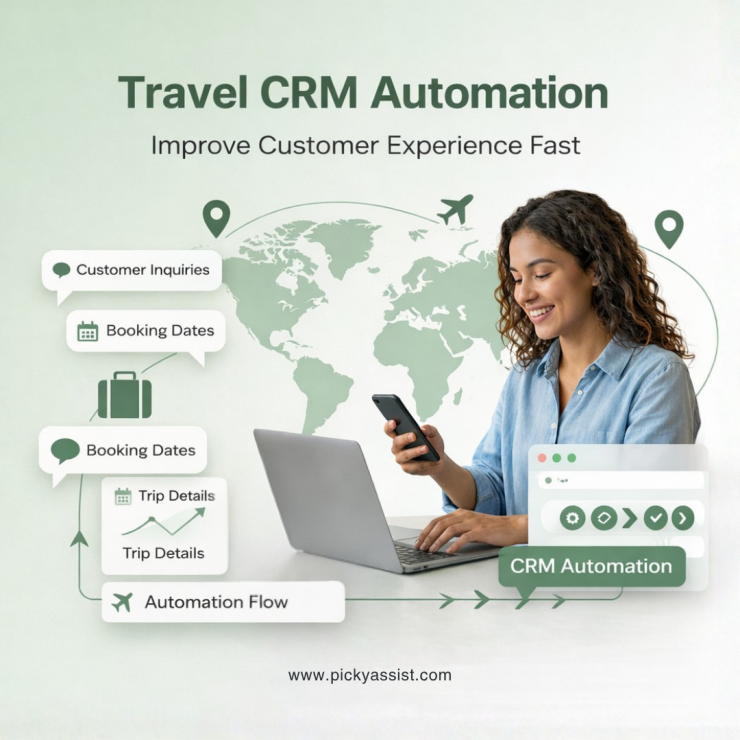
The travel industry has always been dynamic, but over the past decade, customer expectations have changed faster than most businesses can adapt. Travelers no longer wait for responses. They expect instant replies, real-time availability, personalized recommendations, and seamless communication across channels. At the same time, travel businesses are dealing with high inquiry volumes, seasonal spikes, fragmented communication, and long decision cycles. Managing all of this manually is not just inefficient, it directly impacts revenue. This is where automation in the travel industry becomes a strategic advantage.
Automation is not about replacing human interaction. It is about ensuring speed, consistency, and continuity across the entire customer journey, from the first inquiry to post-trip engagement. When implemented correctly, it allows travel businesses to handle more leads, respond faster, and convert better without increasing operational complexity. In this guide, we will break down how automation actually works in real travel workflows, where it delivers measurable impact, and how a communication-first software solution, Picky Assist fits into Travel industry.
What is Automation in the Travel Industry?
Most discussions around automation remain surface-level, focusing on tools rather than outcomes. Travel industry automation is about streamlining customer interactions intelligently. Travel businesses operate across multiple touchpoints:
- Website inquiries
- WhatsApp messages
- Calls
- Social media
- Walk-ins
Each of these touchpoints represents an opportunity or a risk if not handled properly. Travel CRM ensures that every interaction is:
- Captured without delay
- Responded instantly and automatically
- Followed up consistently
- Managed with context
This is especially critical because travel decisions are rarely immediate. A traveler might inquire today, compare options tomorrow, and finalize weeks later. Without structured engagement, these leads often go cold.
Why Travel Businesses Struggle Without Automation?
Even well-established agencies face recurring operational challenges. These are not always visible but have a direct impact on growth.
Delayed Responses During Peak Inquiry Windows
Travel inquiries often happen outside standard business hours, late evenings, weekends, or during holidays. Without automation, these leads remain unattended for hours, sometimes days. By the time a response is sent, the customer may have already booked elsewhere.
Fragmented Communication Across Channels
A customer might start a conversation on Instagram, continue on WhatsApp, and later call for clarification. Without a unified system, these interactions remain disconnected. This leads to repeated conversations, inconsistent messaging, and reduced trust.
Inconsistent Follow-Ups
Travel planning involves multiple decision points, budget, dates, destinations, visas, and more. Customers often need reminders and nudges. Without a structured system, follow-ups depend on manual effort, which is rarely consistent.
Lead Leakage During High Demand
During peak seasons, inquiry volume increases significantly. Without automation, businesses struggle to respond to every lead, resulting in missed opportunities.
The Core Layers of Travel Automation
To understand how automation improves performance, it is useful to break it into functional layers.
Lead Capture and Qualification
Every inquiry should enter a centralized system automatically. This ensures no lead is lost due to human error. More importantly, automation can categorize leads based on:
- Destination interest
- Travel dates
- Budget range
This allows businesses to prioritize high-intent inquiries.
Instant Engagement
Speed is a critical differentiator. Automated responses ensure that every inquiry receives immediate acknowledgment, even outside working hours. This is where Picky Assist plays a crucial role by enabling real-time communication through platforms like WhatsApp.
Workflow Automation
Travel businesses handle repetitive processes such as:
- Sending itineraries
- Sharing pricing details
- Confirming bookings
- Sending reminders
Automation streamlines these workflows, reducing manual workload while maintaining consistency.
Follow-Up and Nurturing
A significant portion of travel leads do not convert immediately. Automated follow-ups ensure that these leads remain engaged over time. This is particularly valuable for international travel, where decision cycles are longer.
How Automation Transforms the Travel Customer Journey
Inquiry Stage: Capturing Interest at the Right Moment
When a potential traveler reaches out, they are at peak interest. Delayed responses at this stage significantly reduce conversion probability. Automation ensures immediate engagement, which keeps the conversation alive.
Research and Comparison Stage
Travelers often compare multiple options before deciding. During this phase, consistent communication becomes a competitive advantage.
Automated workflows can share:
- Destination details
- Package comparisons
- Travel tips
This positions your business as helpful and responsive.
Decision Stage
Even after shortlisting options, customers hesitate. Timely follow-ups, reminders, and personalized messages can influence final decisions. Automation ensures these touchpoints happen without manual intervention.
Post-Booking Engagement
Automation does not stop at booking. It can enhance customer experience by:
- Sending trip reminders
- Sharing checklists
- Providing support during travel
This improves customer satisfaction and increases repeat business.
Practical Use Cases of Automation in Tourism Industry
Scenario: Handling High Inquiry Volume
A travel agency receives hundreds of inquiries during a holiday season.
Without automation:
- Response delays increase
- Leads are missed
- Customer experience suffers
With automation in tourism industry workflows:
- Every inquiry receives an instant reply
- Leads are categorized automatically
- Sales teams focus on high-priority conversations
Scenario: Managing Multi-Destination Packages
A customer explores multiple destinations before deciding. Automation helps by sending structured information for each option, reducing the effort required from sales teams while improving clarity for the customer.
Scenario: Re-Engaging Past Customers
Travel businesses often have a large database of past customers. Through travel marketing automation, businesses can:
- Send seasonal offers
- Share personalized travel suggestions
- Re-engage inactive customers
This creates a steady pipeline without relying solely on new leads.
The Role of Communication in Travel Automation
Automation is often misunderstood as a backend process. In reality, its biggest impact lies in communication. Travel is an emotional purchase. Customers want reassurance, clarity, and quick responses. Delays or inconsistent communication can break trust. This is why communication-driven automation is more effective than purely data-driven systems.
Picky Assist focuses on this layer by enabling:
- Instant messaging automation
- Structured conversation flows
- Timely follow-ups
Instead of just organizing data, it ensures that conversations happen at the right time.
Where Picky Assist Fits in Travel Business Automation
Most traditional systems focus on booking management or CRM functions. While these are important, they often overlook the communication gap that exists between inquiry and conversion. Picky Assist addresses this gap directly.
Real-Time Engagement Through Messaging Platforms
Travel businesses increasingly rely on platforms like WhatsApp for customer interaction. Picky Assist enables instant responses, ensuring that no inquiry goes unanswered.
Automated Yet Personalized Communication
Automation does not mean generic replies. With the right setup, businesses can deliver context-aware responses that feel personalized.
Simplifying Complex Workflows
Instead of overwhelming teams with complex dashboards, Picky Assist streamlines processes into actionable workflows. This improves adoption and ensures consistent usage.
Supporting Scalable Growth
As inquiry volume grows, manual processes become unsustainable. Picky Assist allows businesses to scale operations without proportionally increasing team size.
Choosing the Right Automation Strategy for Travel Businesses
Automation is not a one-size-fits-all solution. Its effectiveness depends on how well it aligns with your business model.
Start With Bottleneck Identification
Before implementing automation, identify where delays occur:
- Lead response time
- Follow-up consistency
- Communication gaps
Focus on High-Impact Areas First
Instead of automating everything at once, prioritize areas that directly impact conversions, such as lead engagement and follow-ups.
Maintain a Balance Between Automation and Human Interaction
Automation should support, not replace, human communication. Complex queries and negotiations still require personal interaction.
Ensure Ease of Use
Adoption is critical. A system that is difficult to use will not deliver results, regardless of its capabilities.
Common Mistakes to Avoid
Over-Automation Without Strategy
Automating every process without understanding customer behavior can lead to impersonal interactions.
Ignoring Customer Experience
Automation should enhance the customer journey, not make it feel robotic.
Lack of Continuous Optimization
Automation workflows should evolve based on performance data and customer feedback.
The Future of Automation in Travel Industry
The future will not just be about automation, it will be about intelligent automation.
We are moving towards systems that:
- Predict customer intent
- Personalize communication dynamically
- Integrate multiple channels seamlessly
Travel businesses that adopt these systems early will have a significant competitive advantage.
Conclusion
The shift towards digital-first travel planning has made speed, consistency, and personalization essential. Automation in the travel industry is no longer optional. It is a foundational capability that directly influences how effectively businesses capture, engage, and convert leads. However, the real value of automation lies not in managing data, but in improving communication.
Picky Assist aligns with this need by focusing on real-time engagement, structured workflows, and scalable communication systems. For travel businesses looking to increase conversions without adding operational complexity, this approach offers a practical and effective solution.
FAQs on Automation in Travel Industry
1. What is automation in the travel industry?
It refers to using technology to streamline processes such as lead management, communication, booking workflows, and customer engagement.
2. How does automation improve travel business performance?
It reduces response time, improves follow-up consistency, and enhances customer experience, leading to higher conversion rates.
3. What is the difference between travel marketing automation and general automation?
Travel marketing automation focuses on customer acquisition and engagement, while general automation includes operational processes like booking and support.
4. Is automation suitable for small travel agencies?
Yes. Small agencies benefit significantly because automation helps them handle more inquiries without increasing staff.
5. How does WhatsApp automation help travel businesses?
It enables instant communication, faster responses, and better engagement, which are critical for converting inquiries into bookings.
6. Can automation replace human interaction in travel sales?
No. It supports human interaction by handling repetitive tasks and ensuring timely communication, but personal interaction remains essential.
7. How long does it take to implement automation?
Basic automation can be implemented quickly, but optimizing workflows may take a few weeks depending on business complexity.
8. What should businesses prioritize when adopting automation?
They should focus on response time, follow-up consistency, and customer experience rather than trying to automate everything at once.
Add comment