
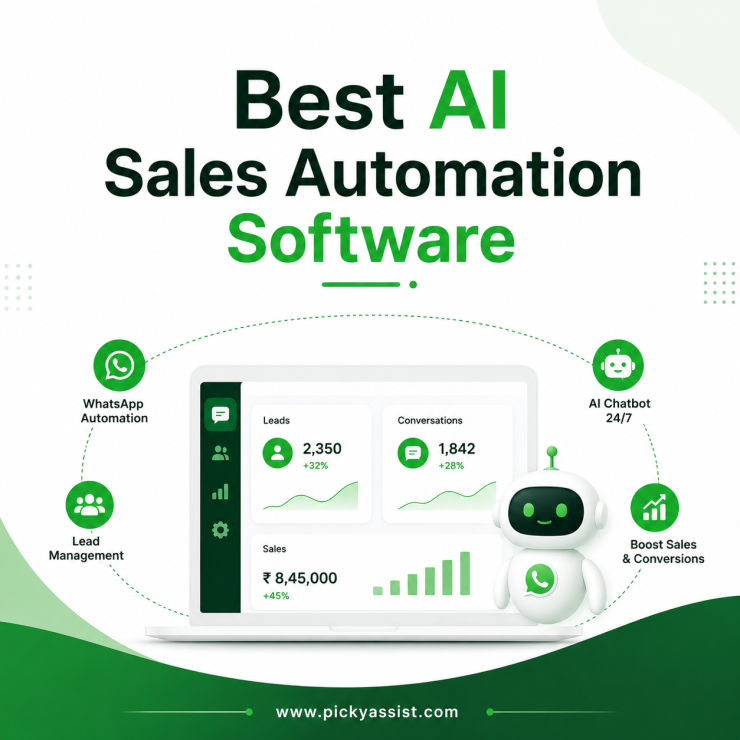
Choosing a sales automation AI solution is rarely only about the software price. For most businesses, the bigger question is whether the investment actually improves the way teams attract leads, respond to customers, follow up, and close opportunities.
Many companies compare tools based on features, but the real difference comes from how well a platform fits into existing sales processes. A solution that only sends messages may not create much impact. Businesses need systems that understand conversations, organize customer information, support teams, and help them take action at the right time. This is where sales automation AI is changing how modern businesses approach customer interactions.
Instead of replacing sales teams, it helps them handle repetitive tasks, manage conversations efficiently, and create more personalized customer journeys. Let it be automated lead responses or smart follow-ups and customer engagement workflows, businesses are moving towards conversational experiences where technology supports every stage of the buying process.
What is Sales Automation AI?
Sales automation AI refers to using artificial intelligence and automation technologies to improve sales activities such as lead qualification, customer communication, follow-ups, and relationship management.
Traditional sales processes often require teams to manually:
- Reply to repeated customer questions
- Track conversations across different channels
- Remember follow-up schedules
- Update customer records
- Share product information repeatedly
Automation helps reduce these manual steps by creating workflows that respond faster and keep customer interactions organized. A modern approach combines automation with customer context. Instead of sending generic messages, businesses can build conversation flows based on customer needs, previous interactions, and buying intent.
The goal is not to remove human involvement. The goal is to allow sales teams to spend more time on meaningful conversations.
Why Are Businesses Investing in AI-Powered Sales Automation?
Customer expectations have changed. People want quick responses, easy communication, and relevant information before making purchase decisions. A customer who sends a message about a product, service, or pricing question expects a timely response. If the business takes too long, the customer may move to another option.
Automation helps businesses create a smoother experience by supporting:
Faster Lead Response
A website visitor or social media user may show interest at any time. Automated workflows can help acknowledge inquiries immediately and guide prospects toward the next step.
For example:
A customer visits an online store and asks about product availability through WhatsApp. An automated conversation can share product details, answer common questions, collect requirements, and transfer the conversation to a sales representative when needed.
This keeps the customer engaged while the team prepares for a meaningful discussion.
Consistent Follow-Ups
Many potential sales opportunities are lost because follow-ups are delayed or forgotten.
Automation allows businesses to create structured follow-up journeys such as:
- Reminder messages
- Product updates
- Appointment confirmations
- Payment follow-ups
- Post-purchase communication
This creates a consistent customer experience without requiring sales teams to manually manage every interaction.
Better Customer Understanding
Sales teams often handle conversations across multiple platforms. Without proper organization, important customer details can get missed.
An integrated approach helps businesses keep customer conversations, notes, and activities connected so teams can make better decisions.
How Sales Automation AI Supports Different Business Processes?
The value of automation depends on how businesses apply it. The strongest results usually come from connecting automation with real customer workflows.
1. Lead Capture and Qualification
A potential customer may arrive from:
- Website visitors
- Social media campaigns
- Online advertisements
- Existing customer referrals
Instead of sending every inquiry directly to a sales team, businesses can use automated conversations to understand customer requirements.
A chatbot workflow can ask questions like:
- What product are you interested in?
- What service do you need?
- What is your preferred timeline?
- Which option fits your requirement?
Based on responses, the lead can be categorized and routed appropriately.
2. Customer Conversations Through WhatsApp
For many businesses, messaging has become a preferred communication channel because customers can ask questions quickly without making phone calls.
A WhatsApp automation platform helps businesses manage conversations at scale by combining automated responses with human support.
Businesses can use it for:
- Product inquiries
- Order updates
- Appointment scheduling
- Customer support
- Sales assistance
The advantage comes from creating conversations that feel natural while maintaining business efficiency.
3. Sales Team Productivity
Sales representatives often spend significant time on repetitive activities instead of selling.
Automation can support teams by handling:
- Initial customer interactions
- Data collection
- Follow-up reminders
- Conversation management in CRM
This gives sales professionals more time to focus on negotiations, customer relationships, and closing opportunities.
What Should Businesses Look for in an AI Sales Automation Platform?
Not every automation tool provides the same value. Businesses should evaluate solutions based on their actual sales requirements.
Conversation Management
A good platform should help teams manage customer interactions from a central place.
Look for features such as:
- Shared team inbox
- Customer conversation history
- Assignment options
- Internal collaboration tools
This prevents customer messages from getting lost between different team members.
Flexible Automation Workflows
Businesses have different sales processes. A useful system should allow workflows that match how the business operates.
Examples include:
- New lead journeys
- Customer onboarding sequences
- Reminder flows
- Feedback collection
- Re-engagement campaigns
CRM Capabilities
Customer relationship management plays an important role in sales automation.
A connected CRM helps businesses:
- Store customer details
- Track conversations
- Organize leads
- Monitor customer journeys
This creates better visibility for sales and support teams.
Integration Options
Businesses rarely use only one tool. They may already have websites, payment systems, ecommerce platforms, or internal applications. Integrations help connect these systems so businesses can automate actions based on real events.
For example:
A customer completes an order → the system triggers confirmation → sends updates → starts a support workflow.
How Picky Assist Fits as the best AI sales automation software?
Businesses today need more than isolated messaging tools. They need connected systems that help manage conversations, automate routine actions, and support teams throughout the customer journey.
Picky Assist helps businesses bring customer communication, automation, and relationship management together through a unified platform.
With capabilities around WhatsApp automation, conversational CRM, chatbot workflows, and business messaging automation, businesses can design customer journeys that support both sales and service operations.
For example, a business can create a workflow where:
- A customer starts a conversation through WhatsApp
- A chatbot collects basic requirements
- The customer is guided with relevant information
- A sales team member takes over when needed
- Follow-ups continue through automated campaigns
Examples of Sales Automation AI in Action
Different industries use automation in different ways depending on their customer journey.
Ecommerce Businesses
An online store receives hundreds of product-related questions every day. Instead of manually answering each inquiry, businesses can automate:
- Product recommendations
- Availability checks
- Order updates
- Customer questions
A customer exploring a product can receive quick assistance and continue their buying journey without leaving the conversation.
Service-Based Businesses
Consultants, agencies, healthcare providers, education companies, and other service businesses often receive similar questions from prospects. Automation can help collect information, schedule appointments, and route conversations to the right team member.
This creates a smoother experience from the first inquiry.
Retail and Hypermarkets
Large retail businesses manage high volumes of customer requests daily. Automation can support:
- Product availability questions
- Store-related information
- Customer feedback collection
- Promotional communication
Teams can focus on complex requests while routine conversations are handled efficiently.
Restaurants and Food Businesses
Restaurants can simplify ordering and customer communication by automating:
- Menu sharing
- Order collection
- Reservation requests
- Customer updates
This reduces repetitive communication while improving customer convenience.
Travel and Tourism Businesses
Travel businesses manage a large number of customer inquiries related to destinations, packages, bookings, availability, and travel requirements. Instead of handling every question manually, businesses can use automation to support:
- Destination information sharing
- Travel package recommendations
- Booking inquiries
- Customer requirement collection
- Reminder messages and updates
For example, a customer interested in a holiday package can start a conversation through WhatsApp. An automated workflow can collect details such as preferred destination, travel dates, number of travelers, and budget range before connecting them with a travel consultant.
This helps travel teams understand customer intent faster while giving customers a smoother planning experience.
Real Estate Businesses
Real estate sales often involve multiple follow-ups before a customer makes a decision. Prospects may ask about property details, pricing, availability, location, and site visits.
Automation can help real estate businesses manage these conversations by supporting:
- Property inquiries
- Lead qualification
- Project details sharing
- Site visit scheduling
- Follow-up communication
For example, when a potential buyer asks about a property, an automated conversation can share available options, collect preferences, and route qualified leads to the sales team.
With organized customer conversations and timely follow-ups, real estate teams can improve how they manage opportunities and maintain relationships with potential buyers.
Conclusion
The future of selling is moving toward faster, more connected, and more personalized customer experiences.
A strong sales automation strategy helps businesses respond quickly, organize customer conversations, improve follow-ups, and allow teams to focus on high-value interactions.
The right platform is not only about automation features. It is about creating a system where technology supports customer relationships.
Picky Assist helps businesses build these connected experiences through WhatsApp automation, chatbot workflows, CRM capabilities, team collaboration, integrations, and campaign automation.
For businesses exploring smarter ways to manage conversations and sales operations, exploring a platform like Picky Assist can be a practical next step.
FAQs on Sales Automation AI
1. What is AI sales automation?
Sales automation AI is used to improve sales activities by automating repetitive tasks such as customer responses, lead qualification, follow-ups, and communication workflows. It helps businesses manage customer interactions more efficiently while allowing sales teams to focus on important conversations.
2. Will sales be automated by AI fully?
No. Automation is designed to support sales teams rather than replace them. It handles repetitive processes, organizes customer information, and helps representatives spend more time on relationship-building and closing opportunities.
3. How does AI sales automation improve customer engagement?
AI sales automation can improve engagement by helping businesses respond faster, provide relevant information, maintain follow-up schedules, and create personalized customer journeys based on customer interactions.
4. Is WhatsApp suitable for sales automation?
Yes, WhatsApp is widely used by businesses for customer communication because customers can quickly ask questions and receive updates. A WhatsApp business solution can help companies automate conversations while keeping customer interactions organized.
5. What features should I look for in a sales automation platform?
Important features include chatbot workflows, CRM capabilities, conversation management, integrations, campaign automation, analytics, and team collaboration tools.
6. Can small businesses use sales automation tools?
Yes. Small businesses can use automation to manage customer inquiries, reduce manual work, and create consistent communication processes without requiring large sales teams.
7. How does Picky Assist help businesses automate sales conversations?
Picky Assist helps businesses manage customer interactions through WhatsApp automation, chatbot creation, CRM features, team inbox management, integrations, and automated campaigns that support sales and customer engagement workflows.
Add comment