
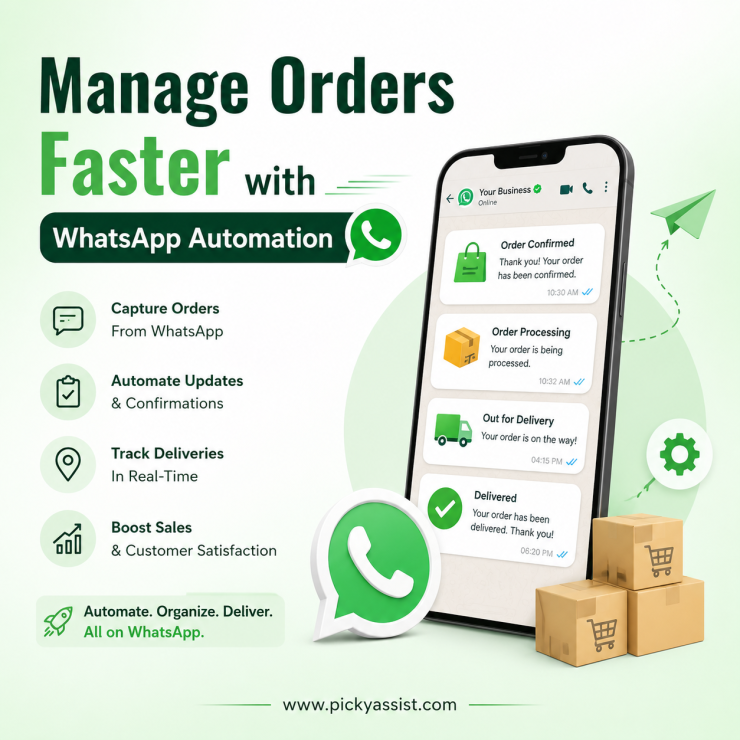
Your next sale could start with a simple “Hi” on WhatsApp. But when hundreds of conversations happen every day, manual tracking can slow businesses down. A structured WhatsApp order management with workflow keeps every customer, order, and update moving smoothly.
Businesses need more than just receiving messages; they need a structured system that helps capture customer information, order details, address, organize conversations, and automate repetitive tasks. A well-designed WhatsApp workflow can help businesses turn conversations into smoother buying journeys, from the first customer question to order confirmation and post-sale support.
What is WhatsApp Order Management?
WhatsApp order management is the process of handling customer orders, inquiries, confirmations, updates, and support conversations through WhatsApp in an organized way.
Picky Assist helps businesses bring complete visibility to their order by managing every customer order from one unified dashboard. The entire processes are managed from the moment an order is placed to final delivery, each stage. Track every stage effortlessly and easily. This structured workflow helps teams stay organized, automate updates, and deliver a faster, more reliable customer experience.
A complete approach may include:
- Capturing customer requirements through chat
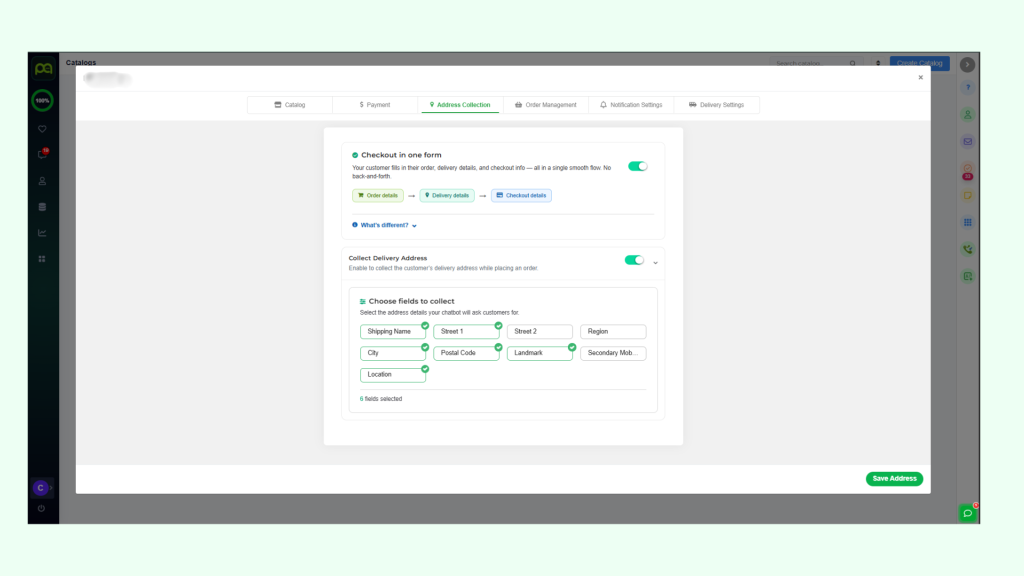
- Get Address, order details and payment collection
- Sending automated confirmation messages
- Share delivery updates and manage follow-ups
- Maintaining customer history
For growing businesses, a structured WhatsApp order management system helps create consistency across every customer interaction.
Use WhatsApp Automation to manage your Order Deliveries on time every time without Additional Platform fees and fully automating

Why are Businesses Moving Order Management to WhatsApp?
The buying journey has changed. Customers prefer platforms they already use daily, and WhatsApp provides a familiar environment for communication. A customer may start with a simple question:
“Is this product available?”
That conversation can naturally move toward:
- Product recommendations
- Pricing discussions
- Order confirmation
- Address collection
- Delivery updates
- And offering support till product delivery
The challenge is not starting conversations, it is managing them effectively at scale. Businesses need a process that allows teams to respond faster while keeping every customer interaction organized.
How to Take Orders on WhatsApp More Efficiently?
Many businesses begin by using WhatsApp manually. This works at a smaller scale, but growing brands need better organization. A smarter approach combines customer conversations with automation. A practical order journey can look like this:
Customer Starts a Conversation
A visitor sends a message asking about a product or service.
Example:
“Can I order this today?”
Automated Replies Provide Immediate Assistance
A chatbot workflow can answer common questions, share product information, or guide customers toward the next step.
Customer Details Are Collected
The business can request important information such as:
- Product Selection
- Quantity and other Order Details
- Delivery Address Details
- Contact information
Payment Collection
Once the customer confirms the order, businesses can collect payments directly and move the order forward without additional manual steps. Customers have options to choose cash on delivery. Everything gets updated in the CRM directly without the involvement of manual updating.
Order Updates are send Automatically
Customers receive updates at every stage of the order journey from confirmation and processing to shipping and final delivery. Automated notifications keep customers informed without requiring constant follow-ups.
Challenges Without an Organized WhatsApp Order Process
1. Missed Customer Messages
When multiple customers contact a business at the same time, important conversations can get buried. A delayed response may result in customers choosing another seller or losing interest.
2. Manual Order Collection Takes Time
Teams often spend hours asking the same questions:
- Customer name
- Product choice
- Quantity
- Address
- Payment preferences
Repeating these steps manually slows down the sales cycle.
3. Lack of Customer History
Without proper tracking, businesses may struggle to understand:
- Previous purchases
- Customer preferences
- Earlier conversations
- Pending requests
This makes personalized service difficult.
4. Coordination Problems Between Teams
When multiple employees handle customer messages, businesses need visibility into who is responding and what action has been taken. A centralized system helps teams collaborate without confusion.
Features to Look for in a WhatsApp Order Management Solution
Not every business needs the same setup. The right solution depends on order volume, team size, and customer journey complexity. Here are important capabilities to evaluate:
Chatbot Workflows
Automation helps businesses handle repetitive conversations without requiring human involvement for every request.
A chatbot can:
- Answer frequently asked questions
- Guide customers through buying steps
- Collect information
- Route conversations
CRM Integration
Customer conversations become more valuable when connected with customer records. A CRM-based approach helps teams understand customer interactions and maintain better relationships.
Team Inbox Management
Multiple sales and support members can work together when conversations are organized in one place. This reduces duplicate replies and improves accountability.
Automated Business Messaging
Businesses can create automated communication for:
- Order confirmations
- Customer reminders
- Follow-ups
- Offers, Discounts and other updates
Real Business Examples of WhatsApp Order Management
Online Stores
An online store can use WhatsApp to answer product questions, share recommendations, collect order details and payment securely then provide updates till it reaches customers, with automated tracking. Businesses can also make use of reselling and retargeting options that the platform offers.
Instead of sending customers through multiple steps, businesses can create a conversation-based buying experience that boost sales naturally.
Restaurants and Food Businesses
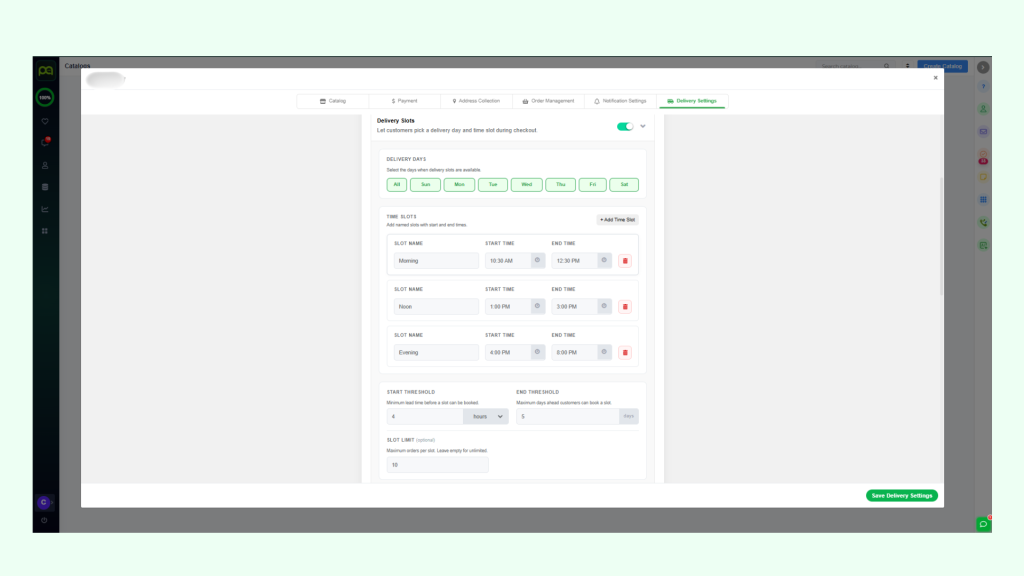
Restaurants can use automated flows to collect order details, quantity required and address details also, share updates in real-time on individual chat windows automatically for many customers instantly. Here you can set the preparatory time, set available slots where customers can place orders so that the pressure on staff during busy hours can be avoided.
Customised T-shirts and Cups Businesses
Custom merchandise businesses can use WhatsApp to collect design requirements, sizes, quantities, personalization details, and delivery information. Customers can share references or ideas directly in chat, while businesses can confirm designs, send payment details, and provide production and delivery updates automatically.
Gift Item Businesses
Gift businesses can create a smoother buying experience by helping customers discover products, recommend suitable gifts based on occasions, collect customization preferences, and manage orders through WhatsApp. Automated messages can keep customers updated from order confirmation to final delivery.
Hypermarkets
Hypermarkets can use WhatsApp to help customers check product availability, get recommendations, place orders, deliver orders and send updates without visiting the store. Businesses can automate product inquiries, share offers, collect delivery details, and provide order status updates from confirmation to doorstep delivery.
With WhatsApp automation, hypermarkets can also send personalized promotions, remind customers about frequently purchased items, and improve repeat purchases through targeted customer engagement.
Distributors and Retailers
Businesses with repeat customers can simplify ordering by allowing customers to request products directly through WhatsApp.
WhatsApp Order Management vs Manual Ordering: Which Is Better?
Manual ordering may work for small businesses with limited customer conversations.
However, as customer volume grows, businesses usually need better visibility and automation.
| Manual Ordering | Automated WhatsApp Approach |
|---|---|
| Messages handled individually | Structured customer journeys |
| Higher chance of missed chats | Organized conversations |
| More repetitive work | Automated workflows |
| Limited customer tracking | CRM-based customer history |
| Difficult team coordination | Shared team management |
The right approach depends on business goals, but automation becomes increasingly valuable as customer interactions increase.
Conclusion
Managing orders through WhatsApp is no longer only about replying to customer messages. Modern businesses need a reliable way to capture inquiries, organize conversations, automate repetitive tasks, and deliver a smoother buying experience. A strong WhatsApp order management strategy helps businesses reduce manual work, improve response times, and create better customer relationships.
When evaluating solutions, focus on capabilities such as automation workflows, chatbot flexibility, CRM connectivity, team collaboration, and integration options. Picky Assist helps businesses build structured WhatsApp communication journeys by combining automation, customer engagement tools, and conversational workflows.
If your business is looking to transform WhatsApp conversations into organized customer experiences, explore how Picky Assist can help you automate your sales and support processes.
FAQs on WhatsApp Order Management
1. What is WhatsApp order management?
WhatsApp order management is the process of organizing, tracking, and handling customer orders through WhatsApp conversations. It helps businesses manage product inquiries, order confirmations, customer details, updates, and follow-ups in a structured way instead of handling every message manually.
A proper system helps teams improve response time, maintain customer history, and create a smoother buying experience.
2. How can businesses take orders on WhatsApp?
Businesses can take orders on WhatsApp by allowing customers to message their requirements, choose products, confirm details, and receive updates directly through chat.
Using automation tools, businesses can simplify the process by collecting customer information, guiding buyers through conversations, and assigning chats to the right team members.
3. Why do businesses need a WhatsApp order management system?
A WhatsApp order management system helps businesses handle increasing customer conversations without losing track of orders.
It allows teams to:
- Organize customer chats
- Track order progress
- Automate repetitive replies
- Improve team coordination
- Maintain customer records
This becomes especially useful for businesses receiving a high volume of daily inquiries.
4. Can WhatsApp order management be automated?
Yes, businesses can automate many parts of the ordering process using chatbots and workflow automation.
Automation can help with:
- Answering common questions
- Collecting order details
- Sending confirmations
- Sharing updates
- Triggering follow-ups
A WhatsApp automation platform allows businesses to create customer journeys that require less manual effort.
5. How does WhatsApp inventory management work with customer orders?
WhatsApp inventory management connects customer conversations with product availability processes.
Businesses can use automated workflows to guide customers based on available products, collect requirements, and help teams respond with accurate information.
This creates a more organized ordering experience.
6. Can WhatsApp be used for sales and customer support together?
Yes. Many businesses use WhatsApp as both a sales and support channel.
A unified communication system allows teams to answer product questions, assist customers, manage requests, and continue conversations after purchase.
Solutions like Picky Assist help businesses combine customer engagement, CRM capabilities, automation workflows, and team collaboration in one environment.
7. How does Picky Assist help with WhatsApp business order management?
Picky Assist helps businesses structure their WhatsApp conversations using automation, chatbot workflows, CRM features, and team-based communication.
Businesses can create automated customer journeys, manage conversations, run campaigns, connect integrations, and support sales and service operations from a centralized platform.
8. What should businesses look for in a WhatsApp order management solution?
Before choosing a solution, businesses should evaluate:
- Automation capabilities
- CRM functionality
- Team inbox features
- Integration options
- Customer tracking
- Workflow customization
The best solution should support both current needs and future business growth.



Add comment