
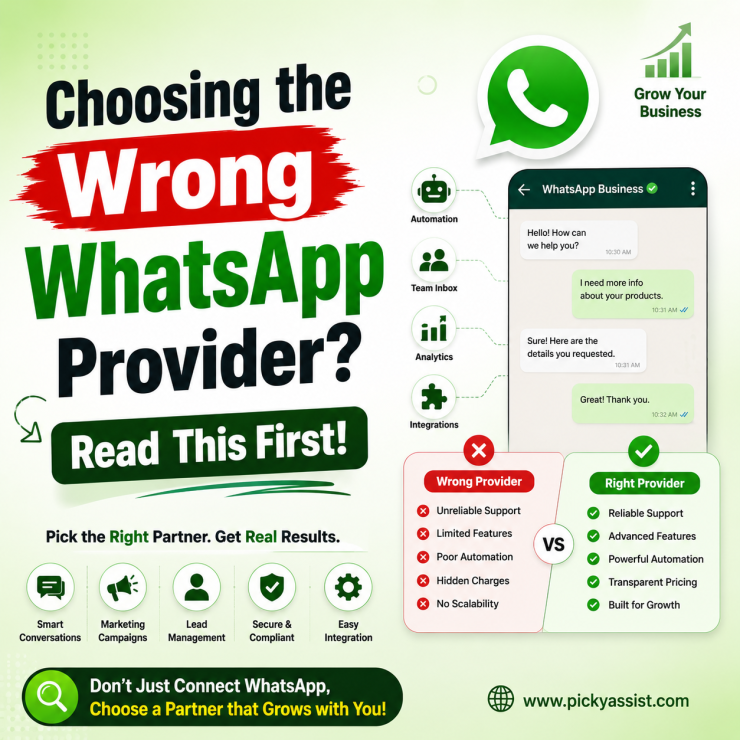
WhatsApp has become one of the most important communication channels for businesses that want to connect with customers quickly and effectively. From small businesses handling customer inquiries to enterprises managing thousands of conversations, WhatsApp has transformed how brands communicate. However, using WhatsApp for business goes beyond simply replying to messages. Companies today need structured communication systems that support sales, customer service, marketing, and daily operations. This is where choosing the right WhatsApp business solution provider becomes important.
A reliable solution helps businesses manage conversations, automate repetitive tasks, organize customer data, and create better customer experiences. Instead of handling every interaction manually, businesses can use automation workflows, chatbots, CRM tools, and integrations to improve efficiency.
But with many platforms available, selecting the right solution requires careful evaluation. Businesses need to understand what features matter, how pricing works, and whether the platform can support long-term growth.
This guide explains what businesses should consider when choosing a WhatsApp communication platform and how solutions like Picky Assist help companies create scalable customer engagement systems.
What is a WhatsApp Business Solution Provider?
A WhatsApp business solution provider helps businesses connect WhatsApp communication with tools that improve customer interaction, automation, and workflow management. Unlike basic messaging apps, business-focused platforms provide additional capabilities such as:
- Customer conversation management
- Automated responses
- Chatbot workflows
- Team collaboration
- CRM integration
- Marketing campaigns
- Customer analytics
For a growing company, WhatsApp becomes more than a messaging channel. It becomes part of the customer journey.
A customer may discover a product, ask questions, receive support, and complete a purchase through WhatsApp. A business communication platform helps manage that entire process.
Why Do Businesses Need More Than WhatsApp Messaging?
Many businesses start with manual WhatsApp communication. Initially, this may work well. A small team can answer customer questions, share updates, and follow up with leads. However, as customer volume increases, challenges appear:
- Messages get missed
- Response times increase
- Customer history becomes difficult to track
- Multiple team members cannot coordinate properly
- Follow-ups become inconsistent
A customer communication platform solves these challenges by bringing conversations into an organized system. Businesses can create workflows where:
Customer message → Automated response → Customer qualification → Team follow-up → Conversion
This improves both customer experience and internal efficiency.
Features to Evaluate Before Choosing a WhatsApp Platform
1. WhatsApp API Access and Management
A professional WhatsApp communication setup usually requires API connectivity to enable automation and integrations. Businesses evaluating a WhatsApp API provider should look beyond basic access.
Important considerations include:
- Reliability
- Integration flexibility
- Message management
- Automation support
- Developer-friendly options
API connectivity allows businesses to connect WhatsApp with their existing systems and create automated communication flows.
2. Chatbot and Automation Capabilities
Automation is one of the biggest advantages of using a business messaging platform. A chatbot automation tool can handle repetitive customer interactions such as:
- Frequently asked questions
- Product information requests
- Lead collection
- Appointment scheduling
- Basic support queries
This allows teams to focus on conversations that require human involvement. For example, a travel company can automate destination inquiries while sales representatives handle customized travel planning.
3. CRM Integration and Customer Management
Customer conversations become more valuable when businesses can organize customer information. A conversational CRM helps teams understand:
- Previous interactions
- Customer preferences
- Sales opportunities
- Support history
Instead of viewing WhatsApp messages as separate chats, businesses can manage them as part of a complete customer relationship. This improves personalization and follow-up quality.
WhatsApp Business Solution Providers
Companies researching WhatsApp business solution providers often compare platforms based on features, scalability, and operational value. The right platform should support business objectives, not only messaging. Businesses should evaluate:
- How many users need access?
- How many conversations happen daily?
- What processes should be automated?
- Which tools require integration?
- How will customer communication scale?
A platform that fits today’s needs but cannot support future growth may create limitations later.
Benefits of Using a WhatsApp Business Communication Platform
Faster Customer Response
Customers expect quick answers. Automation helps businesses provide immediate responses for common questions while routing complex issues to the right team members.
Better Sales Follow-Up
Many potential customers need multiple interactions before making a decision. A structured system helps sales teams:
- Track inquiries
- Schedule follow-ups
- Maintain conversation history
- Improve lead management
Improved Customer Support
Support teams can organize conversations and create automated assistance for common problems. Customers receive faster responses while agents spend time on more valuable tasks.
More Effective Marketing Campaigns
Businesses can create targeted communication campaigns based on customer needs. Instead of sending the same message to everyone, companies can personalize interactions using customer information.
WhatsApp Business API Solution Provider: What Businesses Should Check?
When selecting a WhatsApp business API solution provider, businesses should consider both technical capability and business usability. A good solution should offer:
Easy Workflow Creation
Teams should be able to create automation without depending entirely on developers.
Integration Options
The platform should connect with existing business tools.
Examples:
- CRM systems
- E-commerce platforms
- Lead management tools
- Internal applications
Team Collaboration
Multiple employees may need to handle customer communication. Features such as shared inboxes and conversation assignments help teams work efficiently.
How Picky Assist Helps Businesses Manage WhatsApp Conversations?
Picky Assist provides businesses with tools to organize customer communication, automate workflows, and improve engagement. Instead of using WhatsApp only for individual conversations, businesses can build structured customer journeys. With Picky Assist, businesses can use:
Multi-Channel Conversations
Businesses can manage customer interactions across different communication channels while maintaining a consistent experience.
Automation Workflows
Teams can create automated journeys for:
- Customer inquiries
- Follow-ups
- Notifications
- Sales processes
- Support requests
Chatbot Creation
Businesses can design chatbot flows that answer questions, collect information, and guide customers. This helps reduce repetitive manual work.
CRM Capabilities
Customer information and conversations can be organized to help sales and support teams provide better service.
Campaign Automation
Businesses can plan and manage customer communication campaigns with better organization and consistency.
How to Compare WhatsApp Solution Providers Before Making a Decision?
Choosing a communication platform is a long-term business decision. The right choice depends on how well the platform fits your workflow, customer expectations, and growth plans. Before selecting a WhatsApp solution provider, businesses should evaluate these areas:
Scalability
A platform should support business growth. A company handling a few conversations today may need to manage thousands of customer interactions in the future. Important questions include:
- Can more team members be added easily?
- Can automation workflows expand?
- Can customer data be managed efficiently?
- Can integrations grow with business needs?
Ease of Use
Advanced features are useful only when teams can actually use them. Businesses should look for platforms that offer:
- Simple dashboards
- Easy campaign management
- Visual workflow builders
- Clear customer management tools
A platform should help teams work faster, not create additional complexity.
Automation Depth
Basic automated replies are helpful, but growing businesses often need more advanced workflows. A strong platform should support:
- Customer journeys
- Lead qualification
- Automated follow-ups
- Notifications
- Customer segmentation
Automation should support business processes, not just answer messages.
Analytics and Reporting
Businesses need visibility into communication performance. Useful insights include:
- Customer response patterns
- Campaign performance
- Team productivity
- Conversation trends
Data helps businesses improve their communication strategy over time.
The Role of Automation in Modern Customer Communication
Customer expectations continue to increase. People want quick answers, personalized experiences, and convenient communication. Automation helps businesses meet these expectations by combining:
- Technology
- Customer data
- Human support
For example:
A customer asks about a product → chatbot provides details → CRM stores interaction → sales team follows up.
This creates a smoother customer journey. Modern business messaging software is no longer only about sending messages. It is about creating meaningful customer experiences.
Why Are Businesses Moving Toward Integrated WhatsApp Platforms?
Businesses are moving away from disconnected tools because customer communication requires coordination. An integrated platform helps connect:
- Marketing teams
- Sales teams
- Customer support teams
- Operations teams
Everyone works with the same customer information. This improves:
- Response quality
- Internal collaboration
- Customer satisfaction
Choosing a Long-Term WhatsApp Communication Partner
The best platform is not always the one with the most features. It is the one that solves the right business problems.
Before deciding, businesses should ask:
- Does this platform match our communication goals?
- Can our team use it effectively?
- Does it support automation?
- Can it connect with existing systems?
- Will it scale with our business?
A thoughtful evaluation helps companies choose a solution that supports sustainable growth.
Conclusion
Selecting the right WhatsApp business solution provider is an important step for businesses that want to improve customer communication and operational efficiency.
A modern WhatsApp solution should help businesses do more than send messages. It should support automated workflows, customer engagement, sales conversations, support processes, and long-term relationship building. The right platform combines communication, automation, and customer intelligence into one organized system.
Picky Assist helps businesses create structured customer communication experiences through chatbot workflows, CRM capabilities, integrations, automation tools, and multi-channel engagement. By choosing a platform based on business needs rather than only short-term requirements, companies can build stronger customer relationships and create more efficient communication processes.
FAQs on WhatsApp Business Solution Provider
1. What does a WhatsApp business solution provider do?
A WhatsApp business solution provider helps businesses use WhatsApp with advanced tools such as automation, customer management, integrations, and team collaboration features. It allows businesses to manage customer conversations more efficiently.
2. What is the difference between regular WhatsApp and WhatsApp business solutions?
Regular WhatsApp is mainly designed for personal communication, while business solutions provide features for managing customer conversations at scale. Business platforms typically support automation, multiple users, CRM connections, and structured workflows.
3. Why do businesses use a WhatsApp API provider?
Businesses use an API provider to connect WhatsApp with their software systems and enable automated communication. This allows companies to build workflows, manage conversations, and integrate WhatsApp into daily operations.
4. How can WhatsApp automation improve customer service?
Automation helps businesses respond faster by handling common questions and repetitive tasks. It allows support teams to focus on complex customer issues while maintaining quick responses.
5. What should businesses look for in business solution providers on WhatsApp?
Businesses should evaluate:
- Automation features
- CRM capabilities
- Integration options
- Team collaboration tools
- Scalability
- Reporting features
The platform should match business communication goals.
6. Can small businesses use WhatsApp automation?
Yes. Small businesses can use automation to manage inquiries, follow-ups, customer updates, and basic support. Automation helps small teams provide better customer experiences without increasing workload.
7. How does Picky Assist support WhatsApp-based business communication?
Picky Assist helps businesses manage customer conversations through automation workflows, chatbot creation, CRM features, integrations, campaign tools, and multi-channel communication. It helps businesses organize customer engagement processes more efficiently.
8. Is WhatsApp suitable for sales and marketing automation?
Yes. WhatsApp can support sales and marketing activities when businesses use structured workflows and customer-focused communication. It can help with lead capture, follow-ups, product information, and customer engagement.

Add comment