
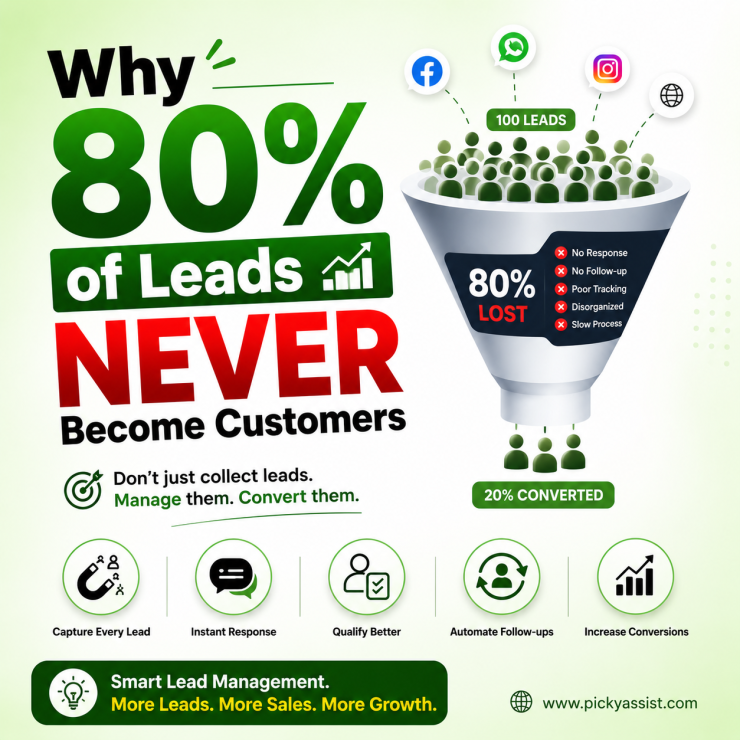
Many businesses lose opportunities not because they lack leads, but because their lead handling process is disconnected. Teams often manage enquiries through spreadsheets, separate messaging apps, emails, and personal notes. As the number of conversations grows, it becomes harder to identify high-intent prospects and maintain consistent follow-ups. This is why companies are investing in lead management solutions that help them organize customer information, automate repetitive tasks, and create a smoother path from first interaction to conversion.
However, choosing the right solution is not only about comparing prices or features. Businesses need a system that fits their sales process, communication style, and customer journey.
What are Lead Management Solutions?
Lead management software solutions are tools that help businesses capture, organize, track, and nurture potential customers throughout the sales process. They bring different lead activities into one structured workflow. Instead of manually tracking every enquiry, businesses can manage:
- Lead capture
- Customer conversations
- Qualification
- Follow-ups
- Sales assignment
- Conversion tracking
For example:
A customer discovers a business through an online advertisement and sends an enquiry. A connected system can:
- Capture the customer details
- Start an automated conversation
- Collect important information
- Assign the enquiry to the right salesperson
- Schedule follow-ups
- Maintain customer history
This allows sales teams to focus on building relationships instead of managing scattered information.
Why do Businesses Need Better Lead Management Systems?
Generating leads is only the first step. A lead becomes valuable when businesses understand the customer’s needs and respond at the right moment. Without a structured process, companies often face challenges like:
- Slow responses to new enquiries
- Missed follow-ups
- Duplicate communication
- Poor visibility into customer interest
- Leads getting lost between teams
A strong lead management process creates consistency. It helps businesses know:
- Which leads need attention?
- Where is each prospect in the journey?
- What communication has already happened?
- What action should happen next?
Difference Between Collecting Leads and Managing Leads
Many businesses collect customer information but struggle to use it effectively. A simple form submission or contact list is not enough. Lead management focuses on what happens after information is collected.
Lead Collection
This includes:
- Website forms
- Campaign responses
- Social media enquiries
- Customer messages
Lead Management
This includes:
- Organizing customer data
- Understanding intent
- Sending relevant communication
- Assigning ownership
- Tracking progress
The goal is to create a connected customer journey.
Benefits of Using Lead Management Software
1. Faster Response to New Opportunities
Timing matters in sales. A potential customer who receives a quick response is more likely to continue the conversation. Automation helps businesses acknowledge enquiries immediately and guide prospects toward the next step.
For example, a WhatsApp automation platform can help businesses respond instantly when customers start conversations.
This ensures prospects receive timely engagement while sales teams prepare personalized responses.
2. Better Lead Qualification
Not every enquiry has the same value. A person asking a general question may have different needs from someone ready to purchase. A structured system helps businesses collect useful information such as:
- Product interest
- Budget range
- Requirements
- Purchase timeline
This allows sales teams to prioritize conversations effectively.
3. Consistent Follow-Ups
Many opportunities disappear because follow-ups depend on manual reminders. Sales teams handle multiple conversations every day, making it difficult to remember every customer interaction. An organized workflow helps businesses maintain communication without relying only on memory. This is where automated lead management becomes useful. Businesses can create follow-up sequences based on customer actions and responses.
4. Improved Sales Team Collaboration
As companies grow, multiple people may interact with the same customer. Marketing may generate the lead. Sales may handle conversion. Support may assist later. A connected system gives teams visibility into previous interactions. This reduces confusion and creates a smoother customer experience.
Lead Management Tools vs Traditional Lead Tracking
Traditional lead tracking often depends on spreadsheets, manual updates, and individual employee processes. While this may work for small volumes, it becomes difficult to manage as customer interactions increase.
| Traditional Lead Tracking | Modern Lead Management |
|---|---|
| Manual data updates | Automated information capture |
| Follow-ups depend on memory | Structured workflows |
| Customer details scattered | Centralized customer records |
| Limited conversation history | Complete interaction visibility |
| Teams work separately | Better collaboration |
The difference is not just technology. It is the ability to create a repeatable sales process.
How Messaging Channels Improve Lead Management?
Modern buyers prefer convenient communication. Many prospects do not want to wait for emails or phone calls. They prefer instant conversations. Messaging channels allow businesses to engage customers where they already spend time. A WhatsApp business solution can support lead journeys by helping businesses:
- Start conversations instantly
- Answer common questions
- Collect customer details
- Share information
- Continue sales discussions
When combined with automation, messaging becomes a powerful part of the sales process.
The Role of Chatbots in Lead Management
Chatbots help businesses handle early-stage customer interactions. A chatbot automation tool can:
- Welcome new visitors
- Ask qualifying questions
- Provide basic information
- Capture lead details
- Route conversations
For example:
A customer interested in a service can answer a few questions before connecting with a sales representative. The salesperson receives better context and can continue the conversation more effectively.
How Picky Assist Supports Lead Management?
Businesses looking for a practical lead management approach often need more than a database. They need communication, automation, and customer information working together. Picky Assist helps businesses organize customer interactions through:
- WhatsApp automation workflows
- Chatbot creation
- Conversational CRM capabilities
- Multi-channel conversations
- Sales and support automation
- Campaign automation
- Team collaboration
- Integrations
With Picky Assist, businesses can create structured customer journeys while keeping sales teams connected with prospects. The platform helps businesses capture enquiries, manage conversations, and create better engagement experiences.
How to Choose the Right Lead Management Platform?
Choosing the right platform requires more than looking at a feature list.
A useful solution should support your actual sales process and help your team handle leads more effectively. Before selecting a platform, businesses should evaluate these important areas.
1. Lead Capture Capabilities
The first step in managing leads is collecting them properly.
A good system should help capture leads from different sources, including:
- Website enquiries
- Social media campaigns
- Messaging channels
- Online advertisements
- Customer referrals
The easier it is to capture information, the faster teams can begin meaningful conversations.
2. Workflow Automation
A modern lead management platform should help businesses create workflows that match their sales journey.
Examples include:
- New enquiry workflows
- Follow-up sequences
- Customer qualification steps
- Reminder notifications
- Lead assignment rules
This reduces manual work and helps sales teams stay consistent.
3. Customer Conversation History
A lead is more than a name and phone number. Every interaction provides useful information. A connected system should help teams understand:
- Previous conversations
- Customer questions
- Sales discussions
- Response history
This helps representatives continue conversations naturally.
4. Integration With Existing Tools
Businesses already use different platforms for marketing, sales, and operations.
A strong lead management system should connect with existing tools to avoid disconnected workflows.
Integrations allow businesses to create smoother processes across departments.
Examples of Lead Management
Understanding practical applications makes the value clearer.
Example 1: Real Estate Businesses
A real estate company receives enquiries from advertisements, websites, and social media. Without a proper process:
- Leads wait for replies
- Agents manually collect information
- Follow-ups become inconsistent
With a structured workflow:
- Customers receive instant responses
- Requirements are collected automatically
- Leads are assigned to agents
- Follow-ups are organized
The sales team spends more time helping buyers and less time organizing enquiries.
Example 2: Education Companies
Educational institutions receive questions about:
- Courses
- Fees
- Admissions
- Schedules
A lead management system workflow can guide students through initial questions and help counsellors focus on serious enquiries.
Example 3: Service-Based Businesses
Consulting, agencies, and professional service providers often manage many enquiries. Automation helps them:
- Capture customer needs
- Organize prospects
- Send relevant updates
- Maintain communication
This creates a more predictable sales process.
Common Mistakes Businesses Make With Lead Management
Treating All Leads the Same
Not every prospect has the same intent. A better approach is to understand customer needs and personalize communication.
Relying Only on Manual Follow-Ups
Manual follow-ups can work at a small scale but become difficult as lead volume grows. Automation helps businesses maintain consistency.
Using Tools Without a Clear Process
Technology works best when combined with a clear sales strategy. Before implementing a solution, businesses should define:
- How leads enter the system
- Who handles each stage
- What communication happens next
A Smarter Lead Management Process
A successful sales process depends on how well businesses handle opportunities after the first interaction. The right lead management solutions help companies organize customer information, improve communication, automate repetitive tasks, and create stronger sales workflows.
Before choosing a solution, businesses should consider:
- Ease of lead capture
- Workflow flexibility
- Customer communication capabilities
- Team collaboration
- Integration options
Picky Assist helps businesses bring lead conversations, automation workflows, CRM capabilities, chatbot journeys, and communication tools together. For companies looking to improve customer engagement and create a more organized sales process, adopting the right lead management approach can make everyday operations more efficient.
FAQs About Lead Management Solutions
1. What are lead management solutions?
Lead management solutions are tools that help businesses capture, organize, track, and nurture potential customers throughout the sales journey.
2. Why do businesses need lead management software?
Businesses use lead management software to improve response times, organize customer information, automate follow-ups, and help sales teams manage opportunities effectively.
3. Can small businesses use lead management software for small business needs?
Yes. Small businesses can use lead management software to organize enquiries, track customer conversations, and automate repetitive sales activities without requiring complex systems.
4. What features should businesses look for in lead management tools?
Important features include lead capture, automation workflows, customer history, team collaboration, reporting, CRM capabilities, and integrations.
5. How does automated lead management work?
Automated lead management uses predefined workflows to handle repetitive actions such as sending responses, assigning leads, scheduling follow-ups, and updating customer information.
6. How does WhatsApp help with lead management?
WhatsApp helps businesses communicate instantly with prospects, answer questions, collect information, and guide leads through conversations using automation.
7. What is the difference between CRM and lead management?
A CRM stores and manages customer relationships, while lead management focuses on tracking and nurturing potential customers before conversion. Many platforms combine both.
8. How can Picky Assist help manage leads?
Picky Assist helps businesses manage leads through WhatsApp automation, chatbot workflows, CRM features, campaign automation, integrations, and team collaboration.

Add comment