
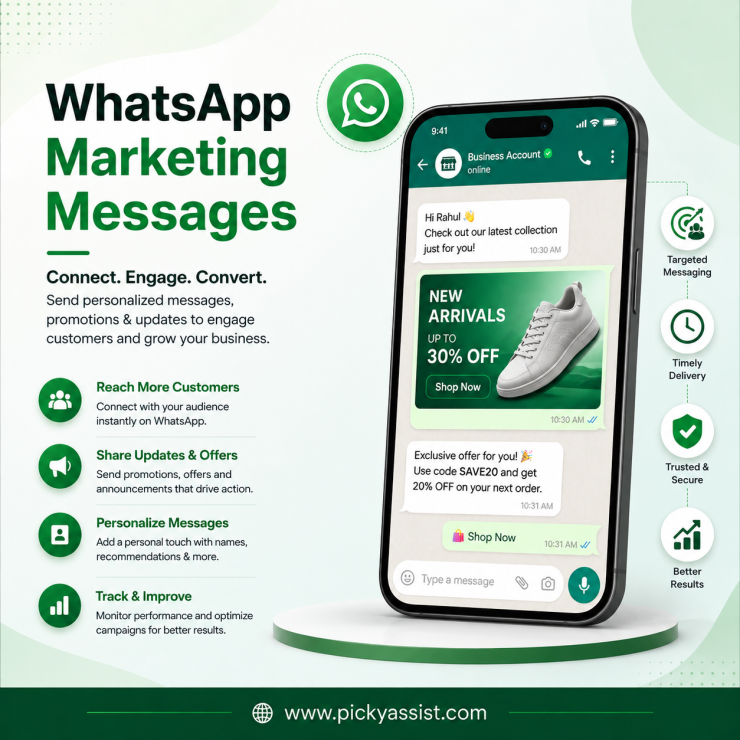
Customer attention is harder to capture than ever. Businesses are constantly competing with emails, social media updates, advertisements, and countless digital distractions. In this environment, WhatsApp has become a powerful communication channel because customers already use it daily. A well-crafted WhatsApp marketing message can help businesses reach customers directly, share valuable updates, and create conversations that lead to action.
However, successful WhatsApp marketing is not about sending random offers to large contact lists. Modern customers expect relevant communication, personalized recommendations, and timely interactions. Businesses need a structured approach that combines messaging, automation, customer data, and follow-up strategies. With Picky Assist, businesses can create automated WhatsApp campaigns, segment audiences, manage customer conversations, and connect marketing communication with their sales process.
This guide explains how businesses can use WhatsApp messages effectively, what makes a campaign successful, and how automation can improve customer engagement.
What is a WhatsApp Marketing Message?
A WhatsApp marketing message is a business communication sent through WhatsApp to inform, engage, or encourage customers to take a specific action. Unlike traditional advertisements, WhatsApp messages appear in a personal communication environment. This makes them more direct and conversational. Businesses use these messages for:
- Product announcements
- Special offers
- Event invitations
- Customer reminders
- New launches
- Seasonal campaigns
- Re-engagement
A successful message focuses on customer value rather than simply promoting a product. For example:
Instead of:
“Buy our new collection today!”
A stronger message could be:
“Your preferred styles are back in stock! Explore our latest collection”
The difference is relevance.
Why Has WhatsApp Become Important for Business Marketing?
Customers prefer communication channels that are convenient and familiar. WhatsApp allows businesses to communicate where customers already spend time.
Faster Customer Reach
Many digital channels depend on customers checking notifications or visiting platforms. WhatsApp creates a more direct communication path. Businesses can share important updates quickly while maintaining a conversational experience.
Higher Engagement Through Personal Communication
A message feels more valuable when it is relevant to the customer. Using customer preferences and previous interactions, businesses can create more meaningful conversations. For example:
A travel company can share destination recommendations based on previous enquiries. A retail brand can notify customers about products related to their interests.
Better Customer Relationships
Marketing is no longer only about reaching customers once. It is about creating continuous engagement. Regular, useful communication helps brands stay connected throughout the customer journey.
Types of WhatsApp Marketing Messages Businesses Can Send
Different business goals require different messaging strategies.
Promotional Messages
Businesses often use promotional communication to announce:
- Discounts
- Limited-time offers
- New products
- Seasonal campaigns
Effective WhatsApp promotional messages should create interest without overwhelming customers. The focus should be on clarity, timing, and customer relevance.
Product Update Messages
Product-related updates help customers discover new opportunities. Examples:
- New arrivals
- Feature updates
- Service improvements
- Availability alerts
These messages work best when they solve a customer need.
Reminder Messages
Reminders help businesses improve customer experience.Common examples include:
- Appointment reminders
- Payment notifications
- Booking confirmations
- Renewal alerts
Educational Messages
Not every message should directly sell. Businesses can also share:
- Tips
- Guides
- Industry insights
- Helpful information
This builds trust and keeps customers engaged.
How Businesses Can Create Better WhatsApp Marketing Campaigns?
Sending messages is easy. Creating campaigns that generate results requires strategy.
1. Understand Your Audience
Before creating a campaign, businesses should know:
- Who they are messaging
- What customers need
- What action they want customers to take
A customer who recently purchased should receive different communication than a new enquiry.
2. Segment Customers
Sending the same message to everyone reduces effectiveness. Customer segmentation allows businesses to group audiences based on:
- Previous purchases
- Interests
- Location
- Customer stage
- Engagement level
This creates more personalized experiences.
3. Write Clear and Action-Oriented Messages
A good message should quickly communicate:
- The benefit
- The reason to act
- The next step
Avoid unnecessary details. Customers should immediately understand what they need to do.
4. Use Automation for Consistency
Managing customer communication manually becomes difficult as businesses grow. Automation helps businesses schedule campaigns, manage responses, and maintain consistent follow-ups.
Picky Assist enables businesses to automate customer journeys while keeping conversations organized.
WhatsApp Marketing Services: What Businesses Should Look For?
Businesses exploring WhatsApp marketing services should evaluate more than message-sending capabilities.
A complete solution should support:
Campaign Management
Businesses need tools that allow them to:
- Create targeted campaigns
- Schedule messages
- Monitor engagement
- Track customer responses
Customer Data Management
Every interaction provides customer insights.
A strong platform helps organize:
- Customer details
- Conversation history
- Lead information
- Follow-up requirements
Automated Conversations
Customers often respond after receiving a campaign. Without automation, businesses may struggle to handle replies. Automated workflows help customers receive instant assistance while sales teams focus on important conversations.
Bulk WhatsApp Marketing vs Smart Customer Engagement
Many businesses look for ways to reach large audiences quickly. However, effective communication requires more than sending messages at scale. Bulk WhatsApp marketing works best when combined with:
- Audience segmentation
- Personalized content
- Customer preferences
- Follow-up automation
The goal is not simply to send more messages. The goal is to create more valuable conversations. A campaign sent to the right audience at the right time usually performs better than a larger campaign with no personalization.
How Picky Assist Helps Businesses Improve WhatsApp Marketing?
Picky Assist helps businesses manage customer communication through automation, CRM, and conversational workflows. Instead of treating WhatsApp as only a promotional channel, businesses can use it as a complete customer engagement platform. With Picky Assist, businesses can:
- Build automated campaigns
- Manage customer conversations
- Create chatbot workflows
- Organize leads
- Automate follow-ups
- Track customer interactions
This allows marketing teams and sales teams to work with better customer visibility.
WhatsApp Marketing Examples Across Industries
Retail and Fashion
Retail brands can use WhatsApp campaigns for:
- New collection launches
- Product recommendations
- Special offers
- Customer retention
Example:
A customer who viewed a product category can receive updates related to similar products.
Restaurants and Cafes
Food businesses can promote:
- New menus
- Weekend offers
- Loyalty rewards
- Special events
Automation helps restaurants maintain regular customer engagement.
Education Businesses
Educational institutions can share:
- Course updates
- Admission information
- Event announcements
They can also answer common questions through automated conversations.
Travel Businesses
Travel brands can send:
- Package updates
- Travel inspiration
- Booking reminders
This helps nurture customers from interest to booking.
Common Mistakes Businesses Make With WhatsApp Marketing
Sending Too Many Messages
Frequent irrelevant messages can reduce customer trust. Quality matters more than quantity.
Ignoring Replies
Marketing messages often start conversations. Businesses should have a process to handle customer responses quickly.
Using Generic Content
Customers respond better when messages feel relevant. Personalized communication improves engagement.
No Follow-Up Strategy
Many customers need time before making a decision. A structured follow-up journey helps businesses stay connected.
Conclusion
WhatsApp has become more than a messaging platform. For businesses, it is a direct channel to build relationships, support customers, and create meaningful sales opportunities. A successful WhatsApp marketing message combines relevance, timing, personalization, and automation.
Businesses that focus only on sending promotions may miss the bigger opportunity: creating conversations that move customers through the buying journey.
With Picky Assist, businesses can manage WhatsApp campaigns, automate responses, organize customer data, and build stronger customer experiences.
The future of marketing is not only about reaching customers. It is about creating conversations that customers value.
FAQs on WhatsApp marketing message
1. What is the best way to write a WhatsApp marketing message?
A good WhatsApp marketing message should be clear, relevant, and focused on customer value. Businesses should include:
- A clear purpose
- A useful offer or update
- Simple language
- A direct call-to-action
Instead of sending generic promotions, businesses should personalize messages based on customer interests, previous interactions, or buying stage.
2. How can businesses use WhatsApp for marketing?
Businesses can use WhatsApp marketing to connect with customers through:
- Product announcements
- Offers and campaigns
- Customer reminders
- Lead nurturing
- Support conversations
- Re-engagement campaigns
With automation platforms like Picky Assist, businesses can create structured customer journeys instead of managing every conversation manually.
3. Is WhatsApp marketing effective for small businesses?
Yes. WhatsApp marketing can help small businesses communicate directly with customers without depending only on traditional advertising channels. Small businesses can use it to:
- Promote products
- Share updates
- Answer customer questions
- Build repeat relationships
- Follow up with interested buyers
Automation makes it easier for smaller teams to manage communication as customer interactions increase.
4. What are the benefits of using WhatsApp marketing services?
WhatsApp marketing services help businesses organize and automate customer communication. Key benefits include:
- Faster customer engagement
- Better campaign management
- Improved lead follow-up
- Personalized messaging
- Easier customer tracking
A complete solution should combine messaging with customer data and automation tools.
5. How is bulk WhatsApp marketing different from regular messaging?
Bulk WhatsApp marketing involves sending business communication to multiple customers at scale. However, effective campaigns depend on more than reaching a large audience. Businesses should focus on:
- Sending relevant messages
- Targeting the right customers
- Managing responses
- Maintaining customer relationships
The best results come from combining scale with personalization.
6. Can businesses automate WhatsApp promotional messages?
Yes. Businesses can automate WhatsApp promotional messages using a communication automation platform. Automation can help with:
- Campaign scheduling
- Customer segmentation
- Follow-up messages
- Response handling
- Lead tracking
This allows businesses to maintain consistent engagement without manually managing every interaction.
7. How does Picky Assist help with WhatsApp marketing campaigns?
Picky Assist helps businesses manage WhatsApp communication by combining campaign tools, automation workflows, chatbot features, and CRM capabilities. Businesses can use the platform to:
- Create targeted campaigns
- Organize customer information
- Automate conversations
- Track customer engagement
- Improve follow-up processes
This helps marketing and sales teams create more connected customer experiences.
8. How often should businesses send WhatsApp marketing messages?
The ideal frequency depends on the audience, industry, and type of communication. Businesses should focus on sending messages when they provide genuine value, such as:
- Relevant offers
- Important updates
- Helpful information
- Timely reminders
Consistent but meaningful communication usually performs better than frequent, irrelevant messages.
Add comment