
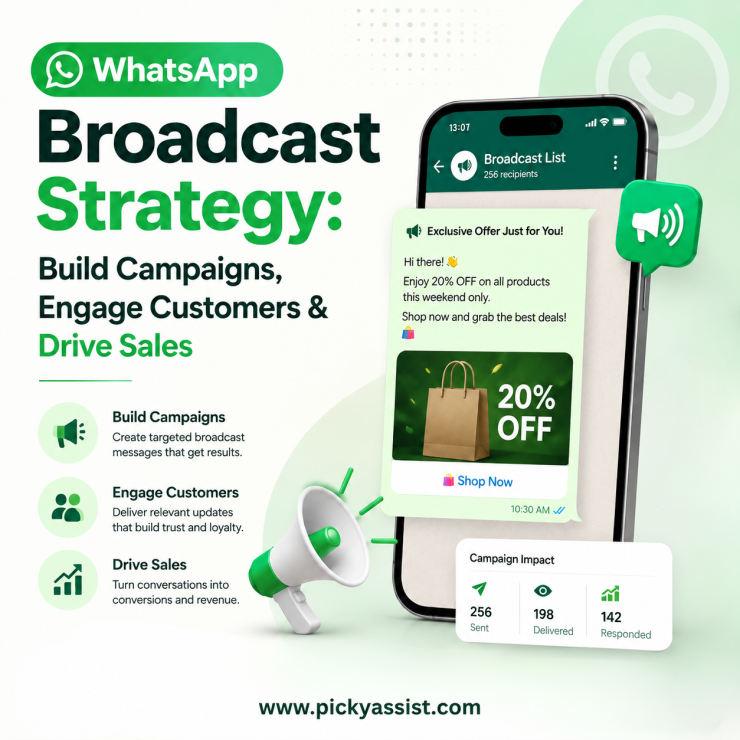
People want businesses to respond faster, share relevant updates, and communicate through channels they already use every day. For many companies, WhatsApp has become one of the most effective ways to stay connected with customers. A WhatsApp broadcast list helps businesses send updates, promotions, reminders, and important information to multiple customers without creating a group conversation. It provides a direct communication method where each recipient receives the message privately.
However, successful broadcasting is not just about sending messages to a large audience. Businesses need a clear strategy, proper customer segmentation, and meaningful communication to achieve better engagement. Whether you run a retail store, service business, education institute, travel company, or online brand, the right WhatsApp communication approach can help you improve customer relationships and create more opportunities for growth.
With platforms like Picky Assist, businesses can move beyond basic messaging and build organized customer communication workflows using automation, CRM capabilities, and conversational tools.
What is a WhatsApp Broadcast List?
A broadcast list is a feature that allows businesses to send the same message to multiple contacts individually. Unlike a group chat, recipients do not see other customers included in the list, which makes the communication more private and professional. For example, a business can send:
- New product announcements
- Discount updates
- Appointment reminders
- Event invitations
- Order notifications
- Customer follow-ups
A well-planned WhatsApp broadcast message focuses on customer value instead of simply promoting products. The main purpose is to deliver useful information while maintaining a personalized experience.
How Does WhatsApp Broadcast Work?
The basic idea behind broadcasting messages are simple:
- A business creates a contact list.
- Customers receive messages individually.
- Customers can reply directly to the business.
- The business continues the conversation privately.
This makes broadcasting different from traditional advertising because customers can immediately interact with the brand. However, businesses should remember that customer communication works best when people have opted in to receive updates. Relevant messaging helps maintain trust and improves engagement.
WhatsApp Broadcast List vs WhatsApp Group
Many businesses confuse broadcast lists with groups. While both allow communication with multiple people, they serve different purposes.
WhatsApp Broadcast List
Best for:
- Promotions
- Customer updates
- Announcements
- Personalized communication
Benefits:
- Private delivery
- Individual conversations
- Better customer experience
WhatsApp Group
Best for:
- Communities
- Team discussions
- Shared conversations
- Member interactions
For businesses focused on customer communication, broadcasting is often more suitable because customers do not need to participate in a shared chat.
Why Do Businesses Use WhatsApp Broadcast Lists?
A strong messaging strategy can support different stages of the customer journey.
1. Increase Customer Engagement
Customers are more likely to notice messages delivered through channels they regularly use. WhatsApp allows businesses to communicate directly without depending only on social media algorithms or email visibility.
For example, a fashion store can notify previous customers about a new collection, while a restaurant can share weekend offers with regular visitors.
2. Improve Customer Retention
Customer relationships do not end after a purchase. Businesses can use broadcasts to stay connected through:
- Product care tips
- Service updates
- Loyalty offers
- Helpful reminders
Consistent communication helps brands remain memorable.
3. Support Faster Sales Follow-Ups
Many potential customers need reminders before making a decision. A relevant follow-up can bring attention back to an unfinished conversation. A simple example of WhatsApp broadcast message could be:
“Hi David, we wanted to check if you need any help with your recent inquiry. Our team is available to answer your questions.”
The goal is not pressure. The goal is to make it easier for customers to continue the conversation.
How to Create an Effective WhatsApp Broadcast Strategy?
Sending messages randomly can reduce customer interest. A better approach focuses on planning and relevance.
Segment Your Audience
Not every customer needs the same message. Businesses can organize contacts based on:
- Previous purchases
- Customer interests
- Location
- Service requirements
- Buying stage
For example, a travel company can send family holiday packages to one audience and business travel updates to another. Segmentation makes communication more meaningful.
Personalization Makes Broadcasts More Effective
Customers respond better when messages feel relevant.
Instead of sending:
“New offers available. Visit our store.”
A more personalized approach could be:
“Hi Anna, we have new arrivals similar to your previous purchases. Would you like to explore them?”
Personalization can include:
- Customer name
- Product preferences
- Previous interactions
- Specific offers
A personalized communication style helps businesses create stronger relationships.
WhatsApp Broadcast Message Examples for Businesses
Different industries use broadcasts in different ways. Here are some practical examples.
Retail Store
“Hi Maria, our latest collection has arrived. Visit us this week and discover new styles created for you.”
Purpose:
- Increase store visits
- Promote new arrivals
- Encourage repeat purchases
Restaurant
“Weekend special is here! Enjoy our chef’s recommended dishes this Saturday and Sunday. Reserve your table today.”
Purpose:
- Increase bookings
- Promote seasonal offers
Fitness Center
“Your membership renewal date is approaching. Reply to continue your fitness journey with us.”
Purpose:
- Improve retention
- Reduce missed renewals
Service Business
“Your scheduled service reminder is confirmed for tomorrow. Contact us if you need any changes.”
Purpose:
- Improve customer experience
- Reduce missed appointments
These WhatsApp broadcast message examples show how businesses can adapt communication based on customer needs.
Common Mistakes Businesses Make With Broadcast Messaging
A broadcast campaign can lose effectiveness if businesses focus only on sending messages.
Sending Too Many Promotions
Customers do not want constant sales messages. Balance promotional content with helpful updates.
A good communication mix includes:
- Offers
- Useful information
- Customer support
- Educational content
Writing Messages Without Clear Purpose
Every message should answer:
“Why should the customer care?”
A strong message provides a reason to read and respond.
Ignoring Customer Responses
Broadcasting starts a conversation. Businesses need a system to handle replies quickly. Without proper follow-up, potential opportunities can be missed.
How Picky Assist Helps Businesses Improve WhatsApp Communication?
Businesses need more than a messaging channel. They need a complete system to manage customer relationships. Picky Assist helps businesses:
Manage Customer Conversations
Teams can handle customer interactions from a centralized workspace instead of managing scattered chats.
Automate Repetitive Tasks
Businesses can automate common workflows such as:
- Lead responses
- Customer reminders
- Follow-ups
- Notifications
Organize Customer Data
A structured customer database helps businesses create more relevant campaigns.
Build Smarter Customer Journeys
With automation and CRM capabilities, businesses can guide customers from first interaction to long-term loyalty.
Choosing the Right WhatsApp Broadcast Software
As customer communication grows, businesses often need dedicated tools instead of relying only on manual processes. A reliable WhatsApp broadcast software solution should support:
- Contact management
- Customer segmentation
- Automated workflows
- Team inbox features
- Campaign insights
The right platform helps businesses maintain communication quality while reaching a larger audience.
Using WhatsApp Broadcast API for Advanced Business Communication
As businesses grow, customer communication becomes more complex. Managing thousands of conversations manually can slow down response times and make it difficult to maintain consistency. A WhatsApp broadcast API helps businesses connect WhatsApp communication with their existing systems, such as CRM platforms, customer databases, and automation workflows.
With API-based communication, businesses can create structured experiences such as:
- Automated customer updates
- Order notifications
- Lead nurturing sequences
- Appointment reminders
- Customer support workflows
For example, an online store can automatically notify customers about order status, while a service company can send timely reminders without requiring manual effort from the team. The focus is not only on sending messages but also on creating a connected customer experience.
How to Build a High-Performing Broadcast Campaign?
A successful broadcast campaign depends on preparation, timing, and customer understanding.
Define the Purpose
Before sending any message, decide what outcome you want. Your goal could be:
- Generate sales
- Increase repeat purchases
- Collect feedback
- Inform customers
- Drive website visits
- Confirm bookings
A message without a clear purpose often gets ignored.
Create Relevant Customer Segments
Sending the same message to everyone may not deliver the best results. Businesses can create segments such as:
New Customers
Send welcome messages, product education, or onboarding information.
Existing Customers
Share loyalty rewards, updates, and exclusive offers.
Interested Leads
Send follow-ups based on previous interactions.
This approach makes communication more natural and customer-focused.
Write Messages That Encourage Action
Good broadcast messages are:
- Clear
- Short
- Relevant
- Helpful
A strong message usually includes:
- A personalized opening
- A useful benefit
- A simple action
Example:
“Hi Rahul, our new service package is now available. Based on your requirements, it could help simplify your daily operations. Would you like more details?”
The message creates an opportunity for conversation instead of forcing a sale.
How Different Industries Can Use Broadcast WhatsApp Business Strategies?
Businesses across industries can use broadcasts to improve customer engagement.
E-commerce Brands
Use cases of E-commerce businesses:
- Product launches
- Restock notifications
- Abandoned cart reminders
- Special offers
Example:
“Your favorite product is available again. Check the latest stock before it sells out.”
Travel Companies
Use cases of Travel Businesses:
- Travel deals
- Booking updates
- Destination recommendations
- Customer follow-ups
Example:
“Planning your next holiday? Explore our curated travel packages designed around your preferences.”
Education Businesses
Use cases of Educational Institutions:
- Admission announcements
- Course reminders
- Student updates
Example:
“New batches are starting soon. Contact us to learn more about available programs.”
Healthcare Services
Use cases of Healthcare services and dental clinics:
- Appointment reminders
- Service notifications
- Customer education
Example:
“Your consultation reminder is scheduled for tomorrow. Please confirm your availability.”
Improving Customer Experience Through Broadcast Automation
Customers expect fast and relevant communication. Businesses that combine automation with personalization can create smoother experiences. A modern communication workflow may include:
- Customer enquiry arrives
- Automated response provides initial information
- Sales team receives the conversation
- Follow-up messages are triggered when needed
- Customer receives relevant updates
This creates a consistent journey instead of disconnected messages. Picky Assist supports businesses by helping them connect conversations, automation, and customer management into a single workflow.
Conclusion
A WhatsApp broadcast list gives businesses a practical way to communicate with customers directly while maintaining privacy and convenience. It helps brands share updates, promote offers, provide reminders, and build stronger relationships.
However, effective broadcasting requires more than creating a contact list. Businesses need the right strategy, customer segmentation, and tools to manage conversations efficiently.
From small businesses sending customer updates to growing companies managing automated communication journeys, WhatsApp has become an important part of modern customer engagement.
With Picky Assist, businesses can organize customer interactions, automate repetitive communication, and create structured workflows that improve the overall customer experience.
The future of business communication is not about sending more messages. It is about creating meaningful conversations that help customers and businesses grow together.
FAQs on WhatsApp broadcast list
1. What is a WhatsApp broadcast list used for?
A broadcast list allows businesses to send messages to multiple customers individually. It is commonly used for promotions, announcements, reminders, product updates, and customer communication. Unlike groups, recipients do not see other contacts included in the broadcast.
2. How is a WhatsApp broadcast different from a group?
A broadcast sends messages privately to each recipient, while a group creates a shared conversation where members can interact with each other. Businesses usually choose broadcasts when they want direct customer communication without exposing customer details.
3. Do customers need to save a business number to receive broadcast messages?
Yes, in many WhatsApp broadcast scenarios, recipients need to have the business contact saved to receive messages through standard broadcast features.
For larger-scale business communication, companies often use approved business messaging solutions with proper customer opt-in processes.
4. Can businesses automate WhatsApp broadcast messages?
Yes, businesses can automate customer communication using platforms that support workflows, integrations, and customer management.
Automation can help with:
- Follow-ups
- Reminders
- Notifications
- Lead nurturing
5. What makes a WhatsApp broadcast message effective?
An effective message should be:
- Relevant to the audience
- Easy to understand
- Personalized
- Focused on one action
Customers respond better when messages provide value rather than only promotional content.
6. Is WhatsApp broadcast suitable for small businesses?
Yes. Small businesses can use broadcasts for customer updates, promotions, appointment reminders, and relationship building. As customer numbers increase, automation tools help businesses manage communication more efficiently.
7. What features should businesses look for in WhatsApp broadcast software?
Businesses should consider features such as:
- Customer segmentation
- Contact management
- Automated workflows
- Shared team inbox
- CRM connectivity
- Reporting capabilities
These features help businesses move from simple messaging to organized customer engagement.
8. Can broadcast WhatsApp business communication improve sales?
Yes, when used strategically. Relevant broadcasts can remind customers about products, support buying decisions, and encourage repeat purchases. The strongest results come from combining messaging with personalization, timely follow-ups, and customer insights.
Add comment