
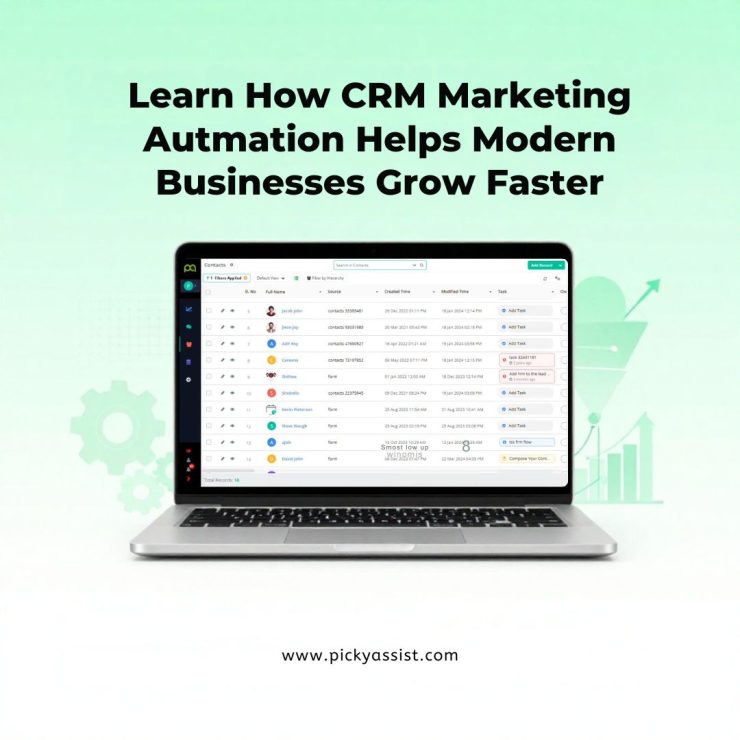
CRM marketing automation has become a core requirement for businesses that want to scale efficiently in today’s competitive market. Companies no longer manage leads, customers, and campaigns manually. Instead, they rely on CRM marketing automation to connect customer data with automated workflows that drive consistent growth.
In simple terms, it combines a Customer Relationship Management system with automated marketing tools. This integration helps businesses nurture leads, personalize communication, and manage customer journeys without constant manual effort. As a result, teams save time, reduce errors, and improve customer experience.
In this blog you will understand what CRM marketing is, how it works, its key benefits, common use cases, top solutions available in India, and why it plays a critical role in modern marketing and sales strategies.
What is CRM Marketing Automation?
CRM marketing automation refers to the process of using automation tools integrated with a CRM system to manage marketing activities automatically. These activities include lead nurturing, email campaigns, customer segmentation, follow-ups, and behavior-based messaging.
Instead of sending the same message to every contact, marketing automation uses customer data stored in the CRM. It tracks actions such as website visits, form submissions, email clicks, and purchases. Based on these actions, the system triggers personalized messages at the right time. As a result, businesses communicate more effectively while reducing manual work.
How does CRM Marketing Automation Work?
CRM marketing automation works by connecting customer data with predefined workflows. First, the CRM collects data from multiple touchpoints, including websites, ads, emails, WhatsApp, and social media. Then, automation rules analyze this data and trigger specific actions.
For example, when a lead downloads a brochure, the system automatically sends a follow-up message. If the lead clicks a pricing link, the system assigns a higher lead score. When a lead reaches a certain score, the CRM alerts the sales team. Because of this process, teams respond faster and close deals more efficiently.
Why CRM Marketing Automation Matters Today?
Customer expectations have changed significantly. People now expect quick responses, relevant messages, and seamless experiences across channels. Manual marketing methods cannot meet these expectations at scale.
Marketing automation solves this challenge by ensuring timely and personalized communication. It also aligns sales and marketing teams around the same data and goals. As a result, businesses improve conversions, retain customers longer, and increase lifetime value.
Moreover, automation helps teams focus on strategy instead of repetitive tasks.
Key Capabilities of CRM Marketing Automation
1. Lead Nurturing Through Automated Workflows
Lead nurturing remains one of the most important benefits of CRM automation. Automated workflows track prospect behavior such as downloads, email clicks, and website visits. Based on these actions, the system sends tailored follow-up messages.
For example, conversational funnels guide leads step by step through the buying journey. Instead of pushing sales messages immediately, the system educates prospects gradually. This approach builds trust and increases conversion rates.
2. Data-Driven Customer Segmentation
CRM marketing automation enables advanced customer segmentation. Businesses categorize contacts based on demographics, purchase history, engagement level, or behavior.
For instance, a WhatsApp integrated CRM can separate high-intent leads from casual visitors. The system then sends targeted messages to each segment. As a result, campaigns feel more relevant and perform better. Segmentation also reduces message fatigue and improves engagement.
3. Omnichannel Campaign Execution
Modern CRM automation supports omnichannel communication. Businesses run consistent campaigns across email, WhatsApp, SMS, social media, and mobile apps.
Shared inboxes allow teams to manage all conversations from one place. Therefore, customers receive a seamless experience regardless of the channel they choose. This consistency strengthens brand trust and improves response rates.
4. Improved Operational Efficiency
CRM automation eliminates repetitive manual tasks. The system handles data entry, follow-ups, and campaign scheduling automatically.
Because of automation, teams reduce human errors and manage large databases efficiently. Marketers spend less time on execution and more time on planning and optimization.
5. Better Sales and Marketing Alignment
CRM automation aligns sales and marketing teams using shared data and workflows. Marketing teams generate and nurture leads, while sales teams focus on high-quality prospects.
The CRM records every interaction, ensuring full visibility for both teams. As a result, handoffs become smoother, and customer experience improves from lead capture to conversion.
Common Use Cases of CRM Marketing Automation
Autoresponders for Instant Follow-Ups
Autoresponders remain one of the most common use cases. When a customer submits an inquiry, the system sends an instant acknowledgment. This quick response increases trust and reduces drop-offs.
Customer Win-Back Campaigns
CRM automation helps businesses re-engage dormant customers. The system identifies inactive users and triggers win-back campaigns with special offers or reminders. Because these campaigns use historical data, they feel more personal and effective.
Lead Scoring and Qualification
Lead scoring ranks prospects based on engagement level and behavior. The CRM assigns points for actions like email opens, link clicks, or pricing page visits. When a lead reaches a predefined score, the system alerts the sales team. This process ensures that sales teams focus on leads with higher conversion potential.
Behavioral Trigger Campaigns
Behavioral triggers send messages based on specific actions. For example, when a user visits a pricing page, the system sends a follow-up email or WhatsApp message. These timely interactions increase relevance and drive faster decisions.
CRM Marketing Automation and WhatsApp Integration
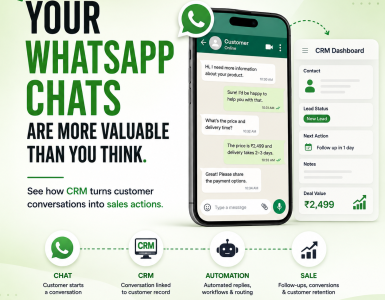
WhatsApp integrated CRM systems have gained massive popularity in India. Businesses use WhatsApp conversational funnels for automating follow-ups, and managing customer conversations.
CRM automation combined with WhatsApp enables real-time engagement. Customers respond faster, and businesses close deals quicker. This integration works especially well for education, real estate, ecommerce, healthcare, and service industries.
Top CRM Marketing Automation Solutions Available in India
1. Picky Assist CRM
Picky Assist conversational CRM is a powerful marketing automation platform focused on conversational engagement and sale closure. It includes AI chatbots, conversational funnels, dynamic CRM, automated catalogs, broadcasters, and no-code workflow builders.
The platform also provides connectors for integrations and an AI Mate for intelligent assistance. Businesses use Picky Assist to automate WhatsApp, manage leads, and track conversions in one place.
2. HubSpot
HubSpot provides an all-in-one CRM and marketing automation solution. It offers email marketing, lead nurturing, analytics, and CRM integration in a user-friendly interface. Many businesses choose HubSpot for its scalability and robust ecosystem.
3. Zoho CRM
Zoho CRM works well for hybrid teams and ROI-focused marketing. It integrates with tools like Google Ads and supports multi-channel campaigns. Zoho also offers strong reporting and customization options.
4. Monday.com
Monday.com includes AI-powered agents for campaign management and reporting. Teams use it to manage workflows, automate tasks, and track performance visually.
5. Pipedrive
Pipedrive focuses on pipeline-centric sales management. It offers visual deal tracking and integrates with marketing automation tools for lead nurturing.
Benefits of CRM Marketing Automation for Businesses
CRM marketing automation improves efficiency, accuracy, and scalability. Businesses respond faster to leads and deliver personalized experiences consistently. Automation also reduces operational costs and improves conversion rates. Additionally, it provides measurable insights that guide better decision-making.
Challenges and How to Overcome Them?
Some businesses struggle with adoption due to poor data quality or lack of strategy. However, proper onboarding and clear workflows solve these issues. Choosing the right platform also matters. So that, businesses should select solutions that align with their communication channels, especially WhatsApp and email.
Best Practices for Implementing CRM Automation
Start with clear goals and defined customer journeys. Clean and organize your CRM data before automation. Use segmentation to personalize communication. Monitor performance regularly and optimize workflows based on insights. Most importantly, balance automation with human interaction.
Why CRM Automation is the Future?
In conclusion, CRM automation is no longer just a productivity tool; it has become a strategic foundation for how modern businesses grow and compete. By unifying customer data, communication channels, and automated workflows into a single system, marketing automation eliminates fragmentation across marketing and sales efforts. So that, integration allows businesses to move faster, respond smarter, and operate with greater precision.
As digital touchpoints continue to increase, managing customer journeys manually is neither scalable nor reliable. CRM automation ensures that every lead receives timely, relevant, and personalized communication based on real behavior and intent. This consistency builds trust, shortens sales cycles, and significantly improves conversion rates.
Moreover, CRM automation enables better decision-making through real-time insights, performance tracking, and measurable ROI. Teams can identify what works, optimize campaigns continuously, and allocate resources more effectively. However, at the same time, automation reduces operational costs by minimizing repetitive tasks and human errors.
Most importantly, CRM marketing automation creates alignment between marketing, sales, and customer success teams. Everyone works from the same data, the same timelines, and the same goals.
As customer expectations for speed, personalization, and seamless experiences continue to rise, businesses that adopt CRM marketing automation will be better positioned to scale sustainably, retain customers longer, and drive predictable growth in the long term.
FAQs on CRM Marketing Automation
1. What is CRM marketing automation?
CRM marketing automation uses CRM data to automate marketing tasks like lead nurturing, segmentation, and personalized messaging.
2. How does CRM marketing automation help sales?
It qualifies leads, tracks behavior, and alerts sales teams when prospects show buying intent.
3. Is CRM marketing automation suitable for small businesses?
Yes, small businesses benefit by saving time and improving follow-ups without increasing staff.
4. Can CRM marketing automation integrate with WhatsApp?
Yes, many platforms offer WhatsApp integrated CRM automation for real-time engagement.
5. What industries use marketing automation?
Industries include ecommerce, education, real estate, healthcare, SaaS, and financial services.

Add comment