
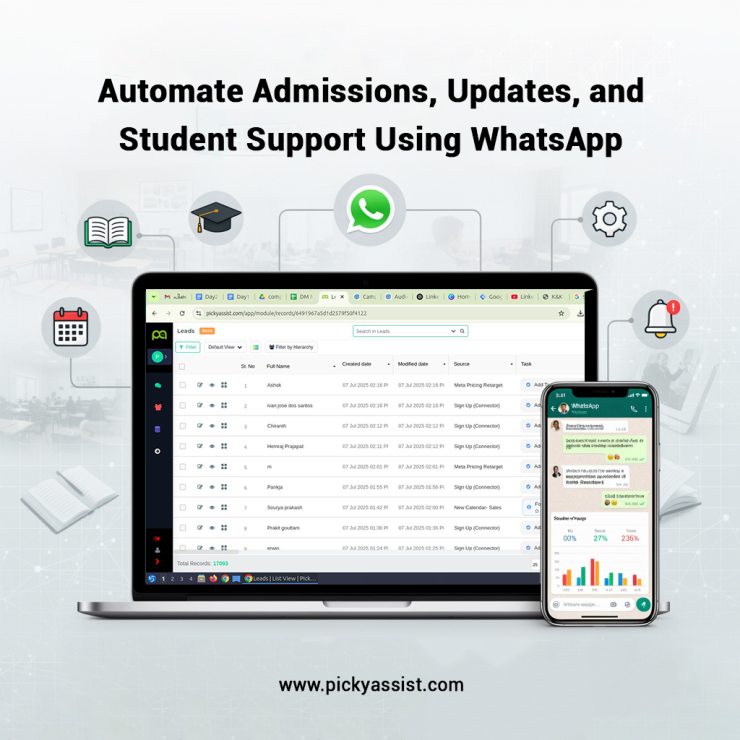
Education is rapidly evolving in the digital era. Traditional communication methods like emails, notice boards, or phone calls are increasingly being replaced by instant messaging platforms that students and parents already use daily. One platform that has dramatically transformed communication in the educational sector is WhatsApp. Educational organizations from schools and universities to coaching institutes and EdTech platforms are adopting WhatsApp for education to improve communication, streamline administrative processes, and create more engaging learning environments.
With billions of users worldwide and widespread adoption among students and parents, WhatsApp has become one of the most accessible communication tools for education. Its ability to deliver instant messages, share multimedia learning resources, and enable real-time discussions makes it a powerful platform for modern learning ecosystems.
This article explores how WhatsApp for the educational sector works, the benefits of WhatsApp Business for education, and how institutions can leverage WhatsApp bots for education to automate communication and enhance student engagement.
Why is WhatsApp becoming essential for the educational sector?
Modern learners prefer instant communication channels rather than traditional systems. Messaging platforms allow them to interact with teachers, peers, and institutions quickly and conveniently.
Research shows that WhatsApp messages achieve an open rate of around 98%, far higher than email communication, which averages about 20%.
Additionally:
- Over 600 million users in India alone use WhatsApp, making it one of the most accessible communication platforms.
- Students increasingly prefer messaging apps for communication rather than phone calls or emails.
- Digital tools like WhatsApp increase student engagement and collaboration in learning environments.
These trends explain why WhatsApp for educational sector communication is rapidly growing worldwide.
What is WhatsApp for education?
WhatsApp for education refers to the use of WhatsApp messaging tools, automation systems, and chatbots by schools, colleges, universities, and training institutes to communicate with students, parents, and staff.
Educational institutions use WhatsApp for multiple purposes, including:
- Sharing course materials
- Sending assignment reminders
- Managing admission inquiries
- Communicating with parents
- Conducting group discussions
- Sending exam schedules and results
- Automating student support
WhatsApp effectively acts as a digital classroom communication hub, helping institutions deliver updates instantly and maintain continuous engagement with learners.
Key benefits of WhatsApp for education
1. Instant communication between teachers, students, and parents
One of the biggest advantages of WhatsApp in education is real-time communication. Teachers can instantly notify students about schedule changes, assignments, or announcements.
For example:
- A teacher can send homework instructions instantly.
- A school can notify parents about upcoming meetings.
- Universities can update students about exam dates.
This instant messaging capability improves responsiveness and reduces communication delays.
2. Improved student engagement
Students are far more likely to interact on platforms they already use daily.
WhatsApp enables:
- Group discussions
- Peer-to-peer collaboration
- Instant doubt clearing
- Multimedia learning experiences
Studies show that collaborative communication through WhatsApp helps students stay engaged and improve academic performance.
3. Easy sharing of learning resources
Teachers can share educational materials directly within WhatsApp conversations.
Examples include:
- PDFs
- Video lectures
- Infographics
- Study guides
- Recorded audio lessons
Multimedia learning content enhances knowledge retention and creates more interactive learning experiences for students.
4. Cost-effective communication solution
WhatsApp is free and requires only an internet connection, making it a cost-effective communication solution for educational institutions.
Instead of paying for:
- SMS campaigns
- Phone calls
- Printed notices
Schools can distribute digital updates instantly through WhatsApp without additional costs. This is especially valuable for institutions in developing regions where budgets may be limited.
5. Collaborative learning through group chats
Group chats enable collaborative learning among students.
Teachers can create groups for:
- Different classes
- Subject-specific discussions
- Study groups
- Project collaborations
Students can share ideas, solve problems together, and learn collaboratively outside the classroom environment.
WhatsApp business for education
Many institutions go beyond regular messaging and adopt WhatsApp Business for education.
The WhatsApp Business platform provides advanced features such as:
- Automated replies
- Message templates
- Business profiles
- Broadcast messaging
- Chat labels and organization tools
These features allow educational institutions to manage large volumes of student communication efficiently.
For example, a university can use WhatsApp Business to:
- Send admission updates
- Broadcast exam reminders
- Provide automated responses to inquiries
This reduces manual work while improving response speed.
WhatsApp bot for education: Automating student support
A WhatsApp bot for education is an automated chatbot that can answer student questions, provide course information, and handle routine tasks without human intervention.
Chatbots are increasingly used in the education sector to automate processes such as:
Admission Assistance
Students can ask questions about:
- Courses
- Eligibility
- Application deadlines
- Required documents
The chatbot responds instantly.
Assignment Notifications
Bots can automatically send reminders about:
- Homework deadlines
- Project submissions
- Exam schedules
Fee Payment Reminders
Institutions can automate fee reminders to parents and students.
Student Support
Students can ask questions about:
- Course materials
- Timetables
- Faculty contacts
Chatbots significantly reduce administrative workload while improving response times.
Real-world use cases of WhatsApp for the educational sector
Schools
Schools use WhatsApp for:
- Parent-teacher communication
- Homework notifications
- Event announcements
- Attendance updates
This improves transparency and keeps parents informed about their child’s progress.
Universities
Universities use WhatsApp to manage:
- Admission inquiries
- Student support
- Course announcements
- Webinar invitations
WhatsApp automation also helps universities manage thousands of student queries efficiently.
Coaching Institutes
Coaching centers use WhatsApp for:
- Class reminders
- Study material sharing
- Mock test notifications
- Exam preparation guidance
EdTech Platforms
EdTech companies use WhatsApp to deliver:
- Course updates
- Learning resources
- Progress reports
- Interactive quizzes
Some EdTech platforms even run entire microlearning courses directly through WhatsApp messaging.
Best practices for using WhatsApp for education
To maximize effectiveness, educational institutions should follow certain best practices.
Obtain student consent
Always ensure students and parents opt-in before sending messages.
Avoid spam messaging
Send only relevant and valuable updates.
Organize groups properly
Separate groups by classes or subjects to avoid confusion.
Use automation
Chatbots and automation tools help manage large communication volumes.
Challenges of WhatsApp in education
While WhatsApp offers many benefits, institutions should also consider potential challenges.
Privacy concerns
Sharing personal contact numbers may raise privacy issues.
Information overload
Too many messages in groups can cause confusion.
Lack of structure
WhatsApp is not a full learning management system, so institutions may still need LMS platforms for course management.
Despite these challenges, WhatsApp remains a highly effective communication channel when used properly.
The future of WhatsApp for education
The future of WhatsApp for education is closely tied to advancements in automation and artificial intelligence.
Emerging technologies such as:
- AI-powered WhatsApp bots
- CRM integration
- Automated student journeys
- Personalized learning messages
Educational institutions are increasingly integrating WhatsApp with CRM and LMS systems to create seamless digital communication ecosystems.
Conclusion
The education sector is undergoing a digital transformation, and messaging platforms are playing a central role in this shift.
WhatsApp for education enables institutions to communicate instantly with students and parents, automate administrative tasks, and create interactive learning experiences.
By leveraging WhatsApp Business for education and WhatsApp bots for education, schools, universities, and training institutes can streamline operations, improve student engagement, and deliver more accessible learning experiences.
As digital communication continues to evolve, WhatsApp will remain one of the most powerful tools for modern educational institutions seeking to improve engagement, efficiency, and learning outcomes.
Frequently Asked Questions (FAQ)
1. What is WhatsApp for education?
WhatsApp for education refers to the use of WhatsApp messaging tools by schools, universities, and training institutes to communicate with students, parents, and staff, share educational materials, and manage academic updates.
2. How can WhatsApp bots help educational institutions?
A WhatsApp bot for education can automate tasks such as answering admission inquiries, sending assignment reminders, providing course information, and offering 24/7 student support.
3. Is WhatsApp Business suitable for the education sector?
Yes. WhatsApp Business for education provides features like automated replies, broadcast messaging, and chat organization tools that help institutions manage communication with large numbers of students efficiently.
4. How does WhatsApp improve student engagement?
WhatsApp improves engagement by enabling real-time discussions, collaborative group chats, multimedia learning resources, and instant feedback between teachers and students.
5. Can WhatsApp be used for online learning?
Yes. Teachers can use WhatsApp to share lessons, assignments, videos, quizzes, and study materials, making it a useful tool for remote and blended learning environments.
6. What are the main benefits of WhatsApp for the educational sector?
The key benefits include:
- Instant communication
- Higher message open rates
- Collaborative learning
- Easy sharing of educational resources
- Automation through chatbots





Add comment