
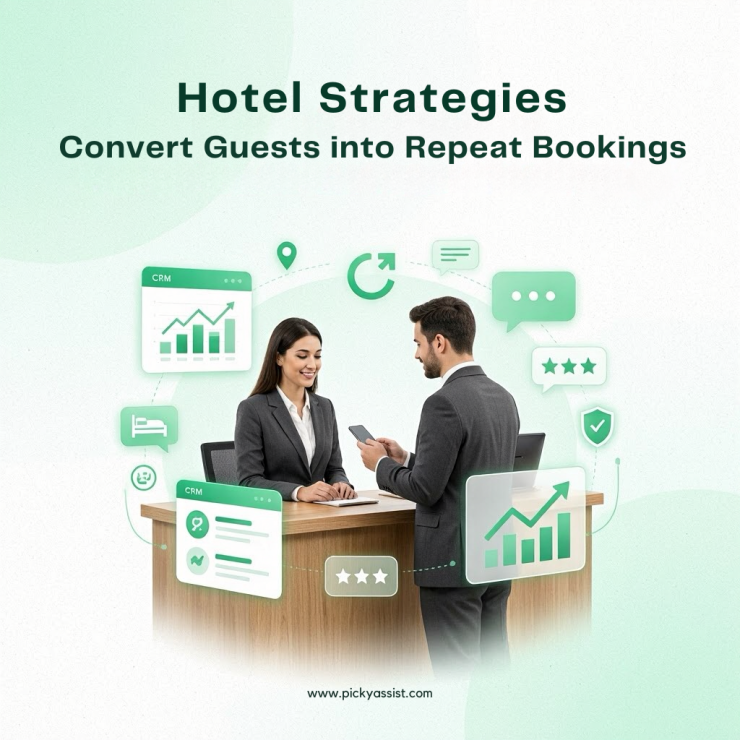
Most hotels don’t struggle to attract interest. They struggle to manage it. A guest sends an inquiry, waits longer than expected, and books elsewhere. Another completes a stay but never receives a follow-up. These gaps don’t feel critical in isolation, but over time they quietly erode revenue. Hotels that operate with structured communication systems tend to close these gaps faster. In many cases, that structure is built around hotel CRM software, not as an additional layer of complexity, but as the mechanism that keeps conversations moving without relying on manual effort.
The shift is already visible across the industry. Guest expectations have changed. Speed, relevance, and continuity now matter as much as pricing or location. Hotels that adapt their systems accordingly tend to convert more consistently and retain guests longer.
What Changes When Guest Interactions Are Structured?
In a typical setup, communication is scattered. Messages come through WhatsApp, email, website forms, and calls. Staff respond when available. Follow-ups depend on memory.
This approach works until volume increases.
With a structured system in place, every interaction follows a defined path. A hotel CRM doesn’t just store guest details. It determines what happens next after each touchpoint.
For example, an inquiry isn’t just logged. It triggers a response, captures intent, and initiates follow-up logic. Over time, these small improvements compound into measurable gains.
Why Traditional Hotel Systems Fall Short on Engagement?
Most properties already rely on a hotel software system to manage operations. That layer is essential, but it focuses on logistics, rooms, rates, check-ins, billing. Communication, however, sits outside that system in many cases. This creates a disconnect:
- Guest history exists but isn’t used during conversations
- Inquiries are handled manually across channels
- Follow-ups are inconsistent
A hotel management system bridges this gap by linking guest data with communication workflows. Instead of treating each interaction as separate, it connects them into a continuous timeline.
What Actually Moves the Needle?
When evaluating the best CRM software for hotels, the real question isn’t what features exist. It’s what changes in day-to-day operations.
Conversations Become Context-Aware
A well-configured CRM hotel management setup builds depth into guest profiles. Past stays, preferences, and interactions become accessible during live conversations.
This allows responses to feel informed rather than generic. A returning guest doesn’t need to repeat preferences. The system already holds that context.
Response Time Stops Being a Constraint
Delays often come down to availability. When staff are busy, responses slow down.
With a capable hotel management CRM, the system handles the first layer of interaction automatically. Guests receive immediate responses, and conversations continue even when teams are occupied.
Picky Assist plays a focused role here. It strengthens the communication layer; especially on WhatsApp, so inquiries don’t stall.
Follow-Ups Happen Without Friction
Most hotels lose potential bookings not because of pricing, but because of missed follow-ups.
A structured hotel sales CRM ensures that no inquiry simply fades away. If a guest pauses, the system re-engages. If interest is high, the conversation progresses.
These aren’t complex workflows. They’re consistent ones.
Hotel CRM Example 1 – Managing High-Intent Inquiries
A guest messages the hotel asking about weekend availability. In a manual setup, the response depends on staff availability. Delays are common.
In a structured flow:
The system responds instantly. Available room types are shared. The guest selects an option, and their details are captured. If the conversation pauses, a follow-up is triggered after a defined interval.
This type of CRM in the hotel industry example shows how communication can move forward without constant human intervention.
Picky Assist supports this by enabling automated conversations that still feel natural to the guest.
Hotel CRM Use Case 2 – Building Repeat Business Through Timing
Retention rarely fails because of poor service. It fails because communication stops after checkout.
A well-implemented CRM system in hotel industry setup keeps the connection active.
After a stay:
A thank-you message is sent. Feedback is collected. The guest is categorized based on behavior.
Later, a targeted message reaches them at the right time, aligned with their previous stay pattern.
This creates familiarity. Over time, it increases the likelihood of repeat bookings.
Where Implementation Breaks Down?
Even with the right tools, outcomes depend on how systems are used.
Manual Processes Still Dominate
If staff need to remember follow-ups, consistency drops. Systems should remove that dependency, not reinforce it.
Messaging Is Treated as Secondary
Guests increasingly prefer messaging over email. Systems that don’t prioritize this channel lag behind in responsiveness.
Complexity Slows Adoption
Many CRM software used in hotel industry options introduce more functionality than most teams can realistically use. When systems feel heavy, they get bypassed.
How Picky Assist Strengthens the Existing Stack?
Instead of replacing core systems, Picky Assist focuses on making communication structured and reliable.
Conversations Become Trackable
Messages received through WhatsApp are not isolated. They become part of a structured interaction flow, with contact data captured and organized.
Automation Fits Real Workflows
Hotels don’t need overly complex automation. Simple flows; responses, reminders, broadcasts, cover most operational needs.
Practical Alternative to Heavy Systems
For many properties, a full-scale hotel management CRM introduces unnecessary complexity.
What tends to work better is a focused approach:
- Capture inquiries instantly
- Respond without delay
- Follow up consistently
That’s the gap Picky Assist fills!
Choosing the Right Approach
Finding the best CRM for hotels starts with identifying where friction exists.
- Are inquiries going unanswered?
- Are responses delayed?
- Are past guests not being re-engaged?
Once the bottleneck is clear, the solution becomes easier to evaluate.
In many cases, a communication-first approach delivers faster results than a feature-heavy system.
The Direction Hospitality Systems Are Moving
Guest behavior is shifting toward real-time interaction.
Forms and delayed responses are being replaced by instant conversations. This is influencing how Hotel CRM Software evolve. Systems are no longer built only around operations. They are being shaped around responsiveness.
Hotels that align with this shift tend to:
- Respond faster
- Convert more inquiries
- Maintain stronger guest relationships
Conclusion
Small delays, missed follow-ups, and disconnected interactions rarely feel urgent. Yet they account for a significant share of lost revenue.
Structured communication changes that.
When guest interactions are handled consistently, outcomes improve across the board, from first inquiry to repeat booking.
For many hotels, the most effective way to achieve this isn’t by expanding their tech stack, but by strengthening how communication is managed within it.
Picky Assist supports this shift by making conversations continuous, organized, and scalable. Once that foundation is in place, conversion and retention tend to follow naturally.
FAQs on Hotel CRM Software
1. What is a CRM platform for hotels?
A CRM platform for hotels is a system that helps manage guest interactions, communication, and relationship data across the entire stay lifecycle. It enables hotels to respond faster, personalize engagement, and improve bookings through structured follow-ups and automation.
2. How do hotels use CRM in daily operations?
It helps manage inquiries, automate responses, track interactions, and ensure follow-ups happen without relying on manual effort.
3. Does CRM directly impact bookings?
Yes. Faster responses and consistent follow-ups increase the likelihood of converting inquiries into confirmed stays.
4. Is CRM useful for smaller properties?
Absolutely. Smaller hotels often benefit more because they can implement structured workflows quickly.
5. What role do messaging platforms play?
They act as primary communication channels. Systems that support them effectively tend to perform better.
6. Can CRM work alongside existing hotel systems?
Yes. It complements operational tools by focusing on communication and engagement.
7. How does CRM improve retention?
By maintaining contact after a stay and sending relevant, timely offers based on guest history.
8. What features matter most?
Automation, communication tracking, and segmentation typically have the highest impact.
9. How quickly do results show?
Improvements in response time and conversion rates are often visible within weeks.
Add comment