
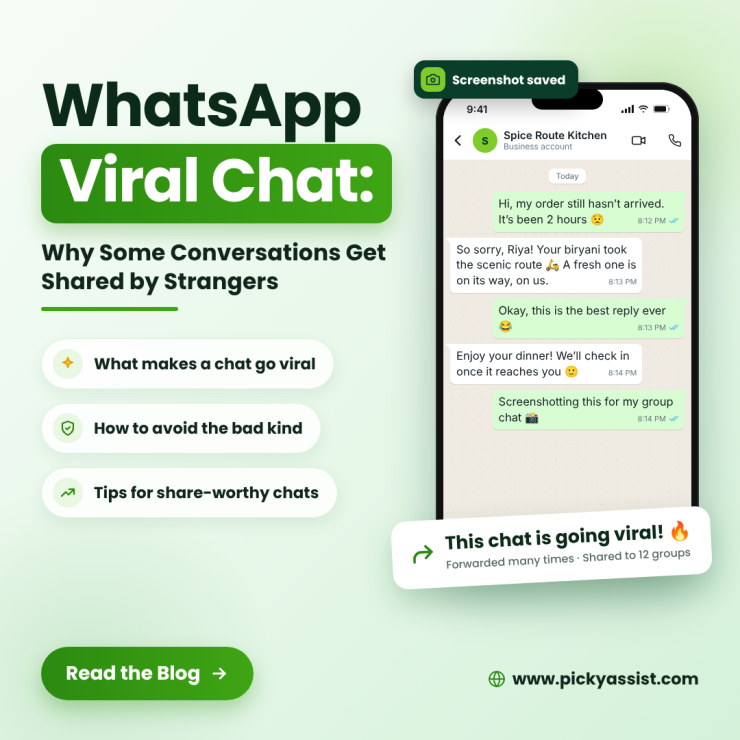
A WhatsApp viral chat is a private conversation that strangers end up reading, because one participant screenshotted it and posted it. For any business, the key detail is who makes that call: almost never the brand. A customer, a friend or someone in a forwarding group decides, usually minutes after reading a reply they found remarkable, for better or worse. This guide explains why chats spread, what separates the flattering ones from the damaging ones, and how to run business WhatsApp so your conversations are the kind people are happy to share.
What is a WhatsApp viral chat?
A WhatsApp viral chat is a conversation, or a screenshot of one, that travels far beyond the two people who had it. It usually spreads as an image on X, Instagram, Facebook or other WhatsApp groups. Also a content formats like: creators build chat-style videos that mimic a WhatsApp thread because the layout feels instantly familiar.
It is not the same as a viral message. A viral WhatsApp message is content people forward on purpose, and the sender chose to share it. A viral chat carries nobody’s consent, which is why it matters more for brands. For the forwarded-content side, see our guide to WhatsApp viral messages.
Why do WhatsApp chats go viral?
Almost every viral chat runs on the same engine: a gap between what readers expected a reply to say and what it actually said. Five patterns repeat:
- Tone shock: a rude, dismissive or unexpectedly warm reply to a routine question.
- Visible mistake: a reply meant for someone else, or a template with its placeholder left in.
- Wit: a sharp, funny answer to an ordinary request.
- Ignored customer: long gaps and silence on a payment or delivery.
- Robotic loop: a bot repeating the same menu to someone who clearly needs a person.
| Pattern | What strangers see | Brand impact | Prevent or earn it |
|---|---|---|---|
| Dismissive reply | A business arguing with a customer | Trust damage | Escalation rules, tone training |
| Placeholder left in template | A careless operation | Embarrassment | Test sends with sample data |
| Quick, witty, helpful reply | A brand with personality | Goodwill | A tone guide instead of rigid scripts |
| Customer ignored | Unreliable service | Complaints go public | Instant acknowledgement, clear owner |
| Bot loop | A business hiding behind automation | Frustration | Always offer “talk to a person” |
The stranger test: Review before you go live!
Before any template, quick reply or bot flow goes live, read the whole thread as a stranger would: no context, no goodwill, and a screenshot tool within reach. Ask four questions:
- Would the reply still sound reasonable if quoted alone?
- Is anything personal, such as a customer’s phone number, visible?
- If the customer is angry, does the next message calm things down or escalate?
- Can the customer reach a human within two messages?
If any answer is “no,” fix the flow before customers find the problem for you.
How to run chats that deserve to be shared?
- Fix the first minute. An instant acknowledgement prevents the “ignored” screenshot. It doesn’t need to solve the problem, only to show someone owns it.
- Keep templates honest. Test every variable with sample data so a name field never goes out blank or as a code. Use approved templates for business-initiated messages and keep the wording human.
- Write escalation rules. Refund disputes, repeat complaints and abusive language go to a senior person, not whoever is free. Never debate a customer in writing.
- Let bots hand over gracefully. Automate FAQs, and say plainly when a person is taking over.
- Review real threads weekly. Read a handful of conversations, including the unhappy ones, and fix the pattern, not just the agent.
Why Picky Assist for businesses?
Picky Assist covers the mechanics behind these rules. Chatbots deliver the instant first reply and handle common questions. Complex cases move to a human on the team inbox, so a thread has an owner. The conversational CRM keeps the full history, so a customer never repeats the problem to a second agent, a classic trigger for an angry message. Broadcasts and automated funnels keep campaign messaging on approved templates. So Picky Assist has automated chatbots and assistants delivers messages which supports business branding and marketing alike. The broadcaster, funnels catalogs, AI assistants, call tracking feature, along with catalogs flourish your businesses with minimum investment but actual ROI that reflects from implementation. Picky Assist offers official Meta WhatsApp API like Wati and Aisensy that drives business growth.
Earning the good kind of viral chat
Praised chats are rarely engineered. They happen when an agent solves a problem in two messages, answers with warmth, or fixes a mistake without defensiveness. If you want to showcase chats as testimonials, ask permission, hide names and numbers, and never stage or fabricate one. Fake screenshots are easy to spot and cost more trust than a missing testimonial. Depending on your market, privacy law may also apply to customer conversations.
Conclusion
A WhatsApp viral chat isn’t a campaign you launch. It is a verdict strangers deliver on conversations you are already having. Run the stranger test, fix the first minute and give customers a clear path to a human, and you shift the odds toward the version people share with a smile. Picky Assist brings chatbots, a team inbox and CRM history together, so every conversation is one you’d be comfortable seeing on a stranger’s screen. Start a free trial and test your own chat flows before a customer does.
FAQs on WhatsApp Viral Chat
A conversation, or a screenshot of one, that spreads well beyond the people in it, usually because the reply was surprising, funny, careless or kind.
They contrast with expectation: an unusually rude or warm reply, a visible mistake, a witty answer or a customer ignored on something important.
No. A viral message is content forwarded on purpose. A viral chat is a private exchange shared by someone, often without the other party’s knowledge.
Not reliably. Businesses can raise the odds of positive sharing through fast, human, helpful replies, but staged or fabricated chats damage trust.
It depends on your country, the content and whether personal data or defamation rules apply. Ask for permission before publishing customer chats. This is general information, not legal advice.
Forwarding limits apply to forwarded messages. Screenshots sit outside them, so brands should assume any reply can be shared.
Acknowledge instantly, test templates, set escalation rules, offer a human handover and review real threads weekly.
Check the facts, respond once, calmly and publicly, resolve the issue privately with the customer, and avoid deleting or arguing. Then fix the process that caused it.

Add comment