
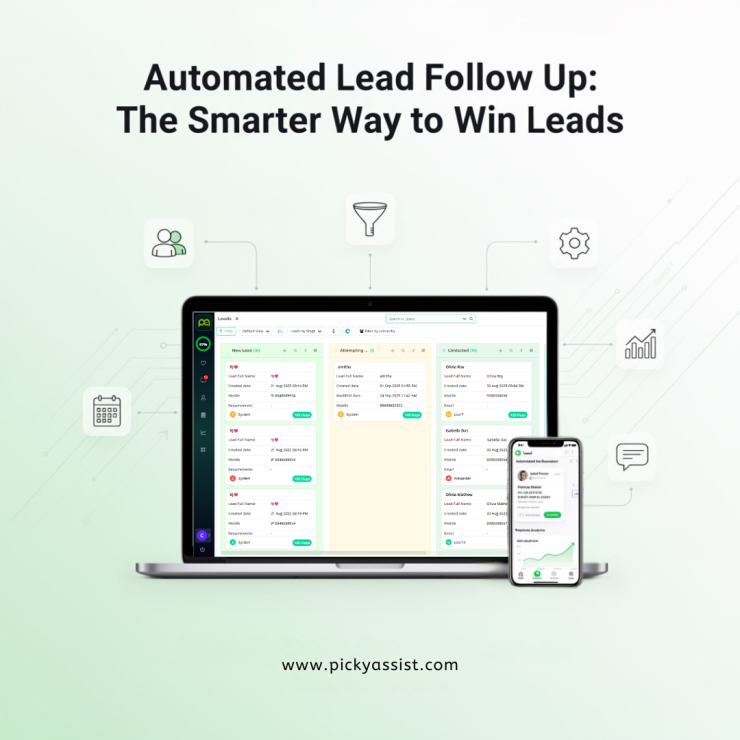
Businesses spend thousands of dollars generating leads through advertising, websites, and marketing campaigns. But many of those leads never convert, not because the product is poor, but because businesses fail to follow up quickly and consistently. This is where automated lead follow up becomes a game-changer. By using automation tools and AI-powered workflows, businesses can respond to leads instantly, nurture prospects automatically, and move them through the sales funnel with minimal manual effort.
In this guide, you will learn how automated lead follow up systems work, why they are critical for modern sales teams, and how automated sales follow up funnels can dramatically improve conversions, efficiency, and customer engagement.
What is Automated Lead Follow Up?
Automated lead follow up refers to the process of automatically contacting and nurturing potential customers using software tools, workflows, or AI systems.
Instead of manually sending emails, making calls, or remembering to follow up with leads, automation systems handle these tasks automatically based on predefined triggers.
A typical automated lead follow up system works like this:
- A visitor fills out a form or submits an inquiry.
- The system immediately sends a personalized message.
- The lead is added to an automated follow-up sequence.
- Additional messages are triggered based on the lead’s behavior.
- When the lead shows strong interest, the sales team is notified.
These systems can send follow-ups through:
- Email
- SMS
- WhatsApp
- Phone calls
- Chatbots
- CRM notifications
This ensures every lead receives timely and consistent communication without manual intervention.
Why Automated Lead Follow Up is Critical for Modern Sales?
Many companies lose potential customers simply because they respond too slowly or fail to follow up consistently.
Research shows that:
- 80% of sales require at least 5 follow-ups, yet many salespeople stop after just one attempt.
- Companies that respond to leads within an hour are 9× more likely to qualify them as customers.
- Leads contacted within one minute are 391% more likely to convert.
- 30% of sales opportunities are lost due to delayed follow-ups.
Manual follow-ups simply cannot keep up with the speed required in today’s competitive sales environment.
An automated sales follow up system solves this problem by responding instantly, maintaining consistent communication, and nurturing leads until they are ready to buy.
Key Benefits of Automated Lead Follow Up
1. Instant Lead Response
Speed is the most important factor in converting leads into customers.
Automated systems send immediate responses when a lead submits an inquiry or downloads a resource. This instant engagement captures the prospect’s attention while their interest is still high.
Studies show that responding within the first five minutes dramatically increases conversion chances compared to delayed responses.
2. Consistent Follow-Up With Every Lead
One of the biggest challenges for sales teams is maintaining consistent follow-ups.
Automation ensures that every lead receives multiple follow-up messages at scheduled intervals, preventing prospects from being forgotten.
This persistence is critical because most customers require several touchpoints before making a purchase decision.
3. Increased Conversion Rates
Automated follow-up sequences nurture leads over time by providing valuable information, reminders, and offers.
Businesses that use structured follow-up processes experience 20–30% higher conversion rates on average.
This improvement occurs because automation ensures:
- Faster responses
- Consistent communication
- Better timing of messages
4. Reduced Manual Work for Sales Teams
Sales representatives spend a significant portion of their time performing repetitive tasks like sending emails or reminders.
Automation eliminates these repetitive activities and allows sales teams to focus on higher-value tasks such as:
- Building relationships with prospects
- Conducting product demos
- Closing deals
Automation tools can also reduce manual administrative work by more than 35%, improving overall team productivity.
5. Improved Lead Nurturing
Not every lead is ready to purchase immediately.
An automated lead follow up system keeps leads engaged through nurturing campaigns that provide educational content, product information, and helpful resources.
This approach builds trust and gradually moves prospects toward making a purchase decision.
How an Automated Lead Follow Up System Works?
An effective automated lead follow-up system typically includes several stages.
1. Lead Capture
The process begins when a potential customer interacts with your business.
Common lead sources include:
- Website forms
- Landing pages
- Social media ads
- Webinar registrations
- Live chat inquiries
Once captured, the lead is automatically stored in the CRM or automation platform.
2. Immediate Response
The system sends an instant response to acknowledge the inquiry.
For example:
- Thank you for contacting us
- Here is your requested resource
- Would you like to book a demo?
This immediate communication reassures prospects that their request has been received.
3. Automated Follow-Up Sequence
After the first contact, the lead enters a scheduled follow-up sequence.
Example sequence:
- Day 1 — Welcome message
- Day 3 — Educational content
- Day 5 — Customer success story
- Day 7 — Demo invitation
- Day 14 — Limited-time offer
This sequence keeps the lead engaged without overwhelming them.
4. Lead Qualification
Automation tools track lead behavior such as:
- Email opens
- Link clicks
- Website visits
- Content downloads
Based on these signals, the system identifies which leads are most interested.
High-intent leads are then automatically assigned to a sales representative.
5. Sales Team Engagement
Once a lead is qualified, the system notifies the sales team.
The salesperson can then contact the lead personally to:
- Answer questions
- Provide product demonstrations
- Close the sale
This combination of automation and human interaction creates an efficient sales process.
Best Channels for Automated Sales Follow Up
Effective follow-up automation uses multiple communication channels.
Email Follow-Up
Email automation allows businesses to send educational content, offers, and updates to nurture leads over time.
SMS Follow-Up
SMS messages have extremely high open rates and are ideal for reminders and quick updates.
WhatsApp Follow-Up
WhatsApp automation enables businesses to engage leads through conversational messaging and instant responses.
Chatbot Follow-Up
AI-powered chatbots provide 24/7 support and instantly answer common customer questions.
CRM Notifications
CRM systems notify sales teams when leads take important actions, enabling timely follow-up calls.
Best Practices for Automated Lead Follow Up
To maximize results, businesses should follow these best practices.
Respond Immediately
The faster you respond to leads, the higher your chances of converting them.
Personalize Every Message
Use personalization tokens such as:
- Lead name
- Company name
- Product interest
This makes automated messages feel more human.
Use Multi-Channel Communication
Combine email, SMS, and messaging apps to reach leads through their preferred channels.
Track Engagement Data
Monitor metrics such as:
- Open rates
- Click rates
- Response rates
- Conversion rates
These insights help optimize your follow-up sequences.
Balance Automation With Human Interaction
Automation should support your sales team, not replace it entirely.Human conversations are still essential for building trust and closing deals.
Common Mistakes to Avoid in Automated Lead Follow Up
Even though automation is powerful, mistakes can reduce its effectiveness.
Over-Automation
Too many automated messages can make communication feel robotic or spammy.
Poor Timing
Sending follow-ups too frequently can annoy prospects.
Lack of Personalization
Generic messages reduce engagement and trust.
Ignoring Analytics
Without analyzing data, businesses cannot improve their follow-up strategies.
The Future of Automated Lead Follow Up
Automation technology is evolving rapidly with advancements in artificial intelligence and predictive analytics.
Future automated lead follow up systems will include:
- AI-powered conversation bots
- Predictive lead scoring
- Personalized message generation
- Behavioral triggers for smarter engagement
These innovations will allow businesses to respond to leads faster, nurture prospects more effectively, and close deals more efficiently.
Conclusion
Lead generation alone does not guarantee sales success. The real difference between companies that grow and those that struggle often lies in their follow-up process.
An effective automated lead follow up system ensures that every lead receives immediate attention, consistent communication, and personalized nurturing.
By implementing automated sales follow up, businesses can increase conversion rates, reduce manual workload, and create better customer experiences.
In today’s fast-paced digital marketplace, companies that automate their lead follow-ups gain a significant competitive advantage, capturing more opportunities and converting more leads into loyal customers.
FAQs on automated lead follow up
1. What is automated lead follow up?
Automated lead follow up is a process where software automatically contacts and nurtures leads using emails, SMS, chatbots, or messaging apps based on predefined triggers and workflows.
2. What is an automated lead follow up system?
An automated lead follow up system is a tool that sends scheduled follow-up messages, tracks lead behavior, and alerts sales teams when prospects show buying intent.
3. Why is automated sales follow up important?
Automated sales follow up ensures faster responses, consistent communication, and better lead nurturing,leading to higher conversion rates and improved customer engagement.
4. How many follow-ups should businesses send?
Studies show that most sales require at least five follow-ups, but many businesses stop after one or two attempts. Automation ensures consistent follow-ups without manual effort.
5. Which businesses benefit from automated lead follow up?
Almost every industry can benefit from follow-up automation, including:
- Real estate
- Education
- SaaS companies
- Healthcare services
- Automotive sales
- Financial services
6. Can small businesses use automated lead follow up?
Yes. Many CRM platforms and marketing automation tools provide affordable solutions for small businesses to automate their lead follow-up processes.
Add comment